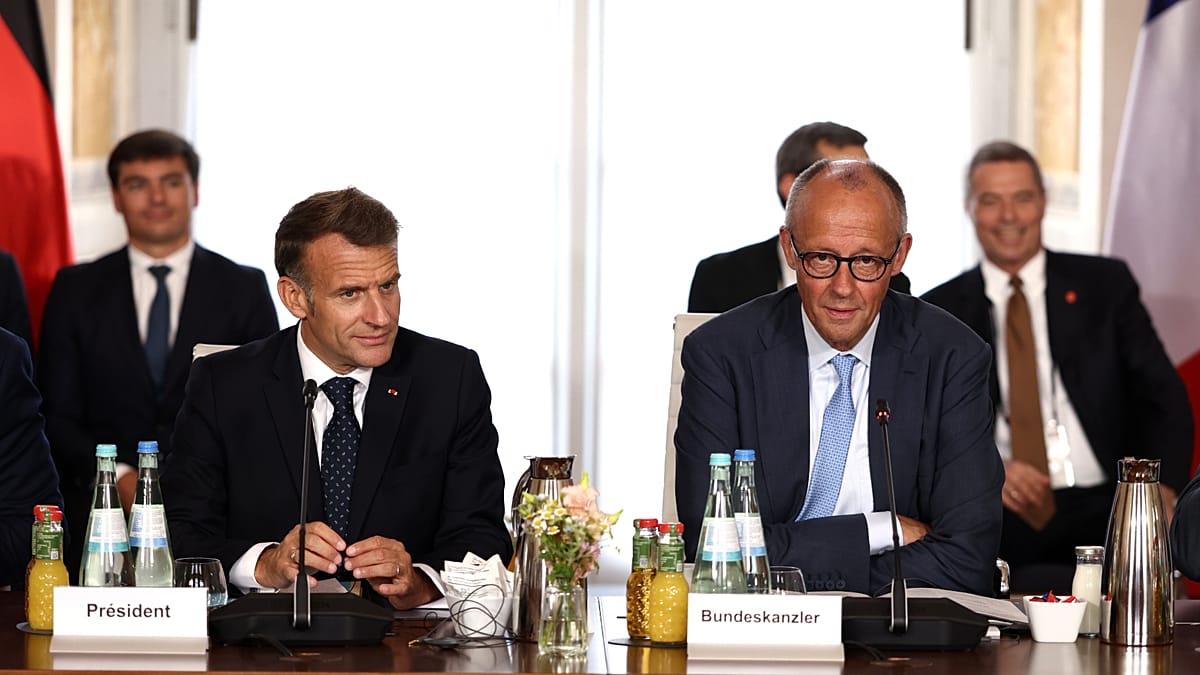
France and Germany have reached a joint position on the future of the EU's car emissions rules, linking a softening of the planned 2035 combustion-engine phase-out to stricter requirements for European-made components. The agreement, announced on the sidelines of a Brussels summit, marks a rare compromise between the bloc's two largest economies, which have often clashed over industrial and climate policy.
Under the deal, carmakers would be required to cut their fleet-average CO₂ emissions by 90% by 2035, without having to offset the remaining 10% through other measures, as the European Commission had initially proposed. The revision would effectively replace the current 100% reduction target, which would have banned new petrol and diesel cars and vans from that date.
In exchange, the agreement introduces a European preference for car production. At least 70% of vehicle components, excluding batteries, would need to be manufactured in Europe, while 10% of battery content would have to come from European sources. An Élysée official said the aim is to ensure that European factories do not become mere assembly plants for foreign technology.
The two governments said in a joint statement that they share the ambition of transforming the automotive industry while maintaining climate goals and ensuring that future cars are produced in Europe. The statement also stressed the need for regulatory flexibility to reflect different market realities and technological conditions across member states.
The compromise reflects growing concern in Paris and Berlin about the competitive pressure on European carmakers from Chinese manufacturers, as well as the high costs of the electric transition. However, the two countries have different priorities. Germany, home to Volkswagen, BMW and Mercedes-Benz, has long pushed for more technological flexibility, allowing some combustion-engine and hybrid models to continue after 2035. France, by contrast, has championed a strict European preference limited to the EU's 27 member states.
The deal also extends the 'Made in Europe' label to several non-EU countries with close ties to the bloc: Norway, Iceland, Switzerland and the United Kingdom. These countries would need to sign agreements with the EU to ensure fair access to public contracts and government funding for European companies, and to prevent third countries from using them as a backdoor to bypass the rules.
The Franco-German position is now set to influence negotiations among other member states and the European Parliament. MEPs are due to vote on the Commission's proposal in plenary in Strasbourg on 23 November. The Commission had proposed the revision in December 2025, responding to pressure from Germany, Italy and carmakers worried about weak demand for electric vehicles and competition from China.
The agreement has already drawn criticism from some quarters. Germany's Social Democratic environment minister has advocated a more ambitious 95% emissions reduction target, with the remaining 5% offset through the use of low-carbon steel. The compromise may also face resistance from other member states and environmental groups, who argue that any softening of the 2035 rules undermines the EU's climate commitments.
The deal comes as the EU is also debating the broader Industrial Accelerator Act, proposed in March, which would introduce a European preference in public procurement. France has been a vocal advocate of such measures, while Germany has preferred a more open approach that includes trusted non-EU partners. The Franco-German agreement on car rules is seen as a test case for how these competing visions might be reconciled.
For the European automotive sector, the stakes are high. The industry employs millions of workers across the continent, and the transition to electric vehicles is reshaping supply chains and production locations. The agreement aims to strike a balance between climate ambition and industrial competitiveness, but its success will depend on whether other member states and the European Parliament back the compromise.
As the debate moves to Brussels, the Franco-German deal provides a potential blueprint for aligning environmental goals with the protection of European manufacturing. Whether it holds will depend on the willingness of other capitals to accept the trade-offs involved.