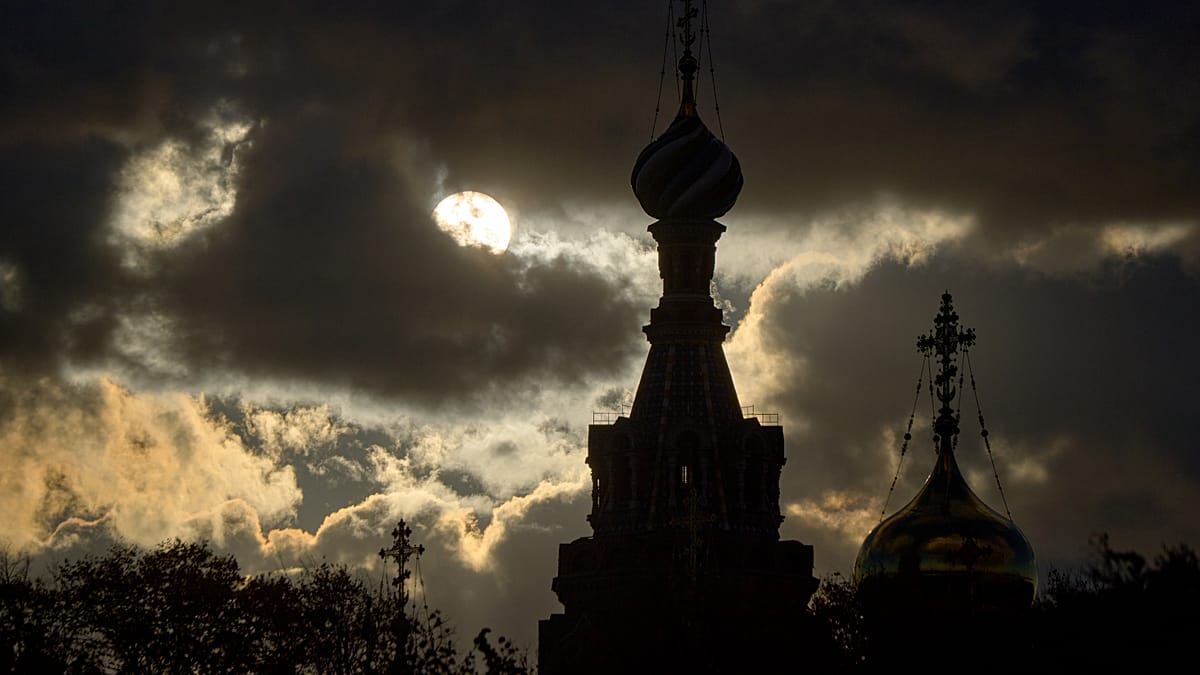
In one of the most significant attacks on Russia's second city since the full-scale invasion began, Ukrainian drones struck targets in St Petersburg and the surrounding Leningrad region overnight into Sunday. The strikes hit an oil terminal, a data centre belonging to the VK social networking service, and other infrastructure, according to Russian officials and local media.
Regional governor Aleksandr Drozdenko said 144 drones were intercepted over the Leningrad region, but debris fell on residential areas in Gatchina and other districts, causing fires and damaging 55 vehicles. One person was killed and 15 were injured, local authorities reported. Emergency power cuts affected parts of the region, with two transformer substations in Yanino still offline, leaving around 20,000 residents in 50 apartment blocks without electricity.
In St Petersburg, governor Aleksandr Beglov reported fires at civilian infrastructure sites in the Nevsky, Krasnoselsky, Krasnogvardeisky, and Moskovsky districts, as well as on the grounds of the St Petersburg oil terminal in the Great Port. The terminal, which handles up to 1.1 million tonnes of fuel monthly via four berths, saw one of its storage areas hit. Preliminary reports indicated no injuries at the terminal itself.
A fire also broke out at an Ozon warehouse, prompting staff evacuations and road closures in the area. Pulkovo airport suspended flights for more than seven hours, with restrictions lifted at 10 am Moscow time.
The VK press office confirmed an attack on its data centre in the Leningrad region but assured users that services remained operational. The company, which operates Russia's largest social network, has faced increasing pressure to maintain infrastructure amid the conflict.
Russian strikes on Ukraine's energy grid
The drone offensive came as Ukrainian President Volodymyr Zelenskyy reported fresh Russian attacks on Ukraine's energy infrastructure. In a statement on Sunday, he said Russian forces targeted substations in the Vinnytsia, Zhytomyr, Khmelnytskyi, and Odesa regions overnight, leaving tens of thousands of families without power. Energy workers were working around the clock to restore supply, he added.
Zelenskyy also said strikes on residential buildings had killed two people and injured 12 others. The attacks underscore the ongoing reciprocal targeting of critical infrastructure, with both sides seeking to degrade each other's war-fighting capability and civilian morale.
The strike on St Petersburg is notable not only for its scale but also for its location. The city, often seen as a symbol of Russian imperial and Soviet history, has largely been spared the kind of drone attacks that have hit border regions and Moscow. The targeting of an oil terminal and a major tech company's data centre suggests Ukraine is expanding its reach to disrupt Russia's economy and logistics.
Analysts note that the attack may also be intended to send a political message, demonstrating that no part of Russia is beyond reach. The choice of targets — energy, technology, and transport — mirrors the tactics Russia has used against Ukrainian cities, where strikes on power grids and residential areas have caused widespread suffering.
The incident comes amid heightened tensions between Kyiv and Washington, with recent reports of friction over military aid and strategy. Zelenskyy has increasingly turned to European allies for support, seeking security guarantees as US commitments waver. The EU has sought to close ranks behind Ukraine, but divisions remain, as seen in Hungary's recent diplomatic overtures.
For the people of St Petersburg, the attack brings the war closer to home. While Russian authorities have sought to maintain a sense of normalcy, the sight of drones over the city and the sound of explosions have shattered that illusion. The long-term impact on public morale and on the city's role as a logistical hub remains to be seen.
As the conflict enters its fourth year, both sides show no sign of backing down. The strikes on St Petersburg and the continued Russian bombardment of Ukrainian energy infrastructure suggest that the war of attrition will continue, with civilians on both sides bearing the heaviest cost.