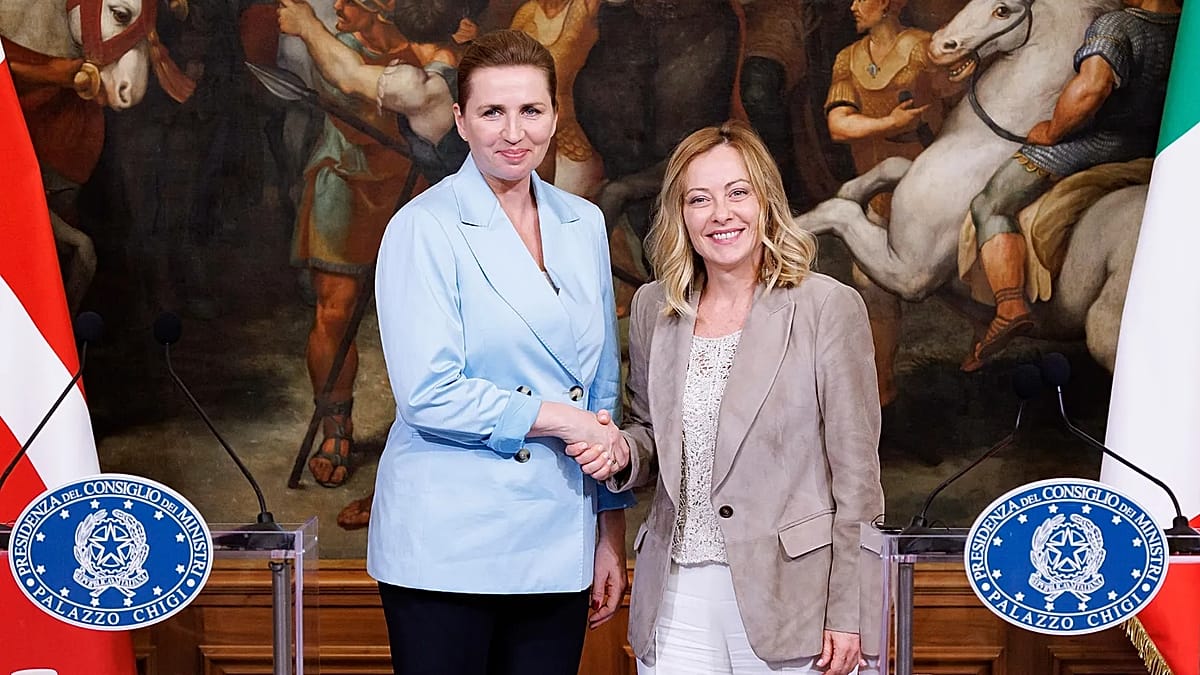
Italian Prime Minister Giorgia Meloni and Danish Prime Minister Mette Frederiksen have issued a joint statement reaffirming their hardline stance on migration, calling for the establishment of return hubs in third countries and vowing to defend what they describe as Europe's Christian cultural heritage.
The two leaders, who are the only women currently heading EU member state governments, released the statement on Monday, presenting a united front despite their different political backgrounds and geographic positions. They emphasized a shared commitment to protecting European values and security.
Rejecting 'uncontrolled immigration'
In a Facebook post, Meloni wrote: "We do not accept uncontrolled immigration into Europe, and we have promoted a rigorous migration policy, both in our own countries and across Europe." The post went on to argue that the negative impacts of illegal immigration are undeniable, citing rising crime rates, increased pressure on public services, and an erosion of public trust. It specifically highlighted violent crimes, drug trafficking, and sexual violence committed by irregular migrants who have no legal right to remain.
Frederiksen and Meloni have become the EU's most vocal proponents of stricter migration policies, particularly following the crisis in the Spanish enclave of Ceuta, where tens of thousands of irregular migrants crossed the border within hours. In response, Italy and Denmark led an open letter to EU institutions, signed by 22 member states, calling for coordinated action to combat illegal migration, strengthen external borders, and address so-called "pull factors."
The two prime ministers argue that ordinary citizens have paid too high a price for uncontrolled migration for too long. They contend that a tougher approach to migrants who commit serious crimes will lead to greater security and protection for communities.
"So what more can we do? We need to set up repatriation centres in third countries, as well as other innovative solutions outside Europe. We are working hard on this," the post reads, referring to return hubs—an approach Italy has been trialling in Albania and that was recently written into a controversial EU law.
The statement adds: "But this is not enough. Compliance with our laws must go hand in hand with respect for European values. This applies to irregular migrants, but also to the millions of foreign nationals living legally in our countries and across Europe."
For Meloni and Frederiksen, the migration issue ultimately comes down to respect for Europe's Christian cultural heritage and shared values, which both vowed to defend. Their joint statement underscores a growing alignment among EU leaders on the need for more robust external border controls and externalized migration management.
The push for return hubs has drawn criticism from human rights groups, who question their legality and ethical implications. However, the Italian government has defended the approach, and the recent inclusion of such mechanisms in EU legislation signals a broader shift in policy direction.
As Europe grapples with migration challenges, the Meloni-Frederiksen axis represents a significant political force, one that is likely to influence future EU debates on asylum and border security. Their stance resonates with voters in several member states, where migration remains a top concern.