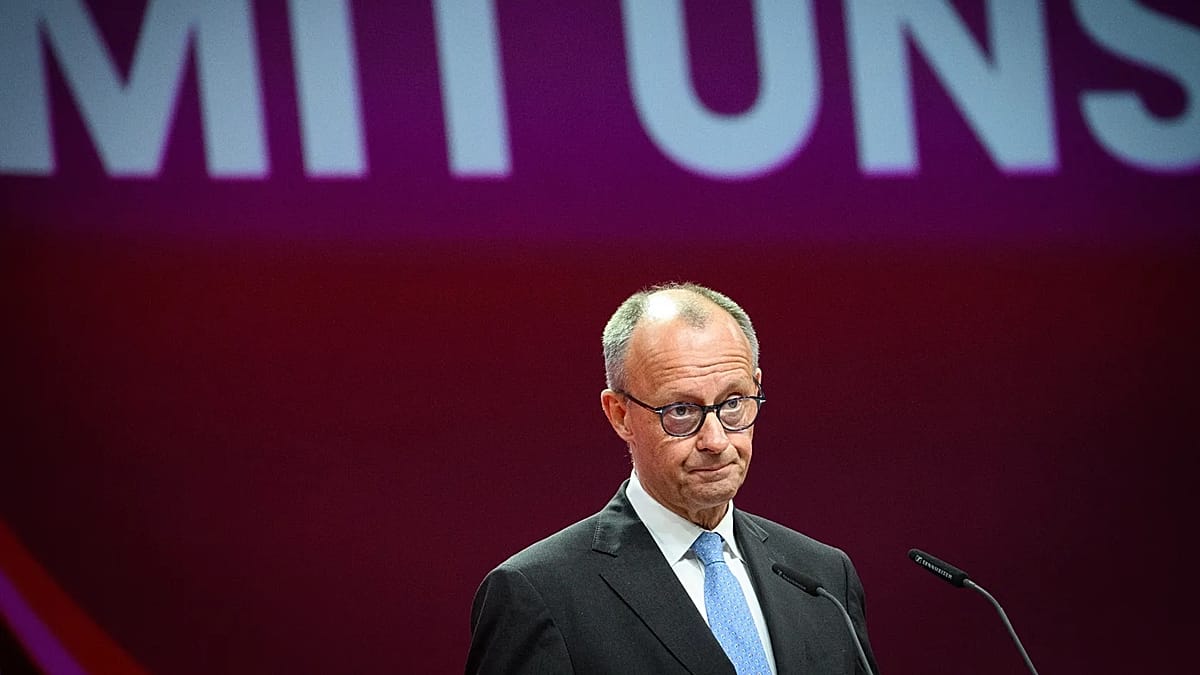
German Chancellor Friedrich Merz used his address at the Charlemagne Prize ceremony in Aachen on Thursday to firmly restate his rejection of common European borrowing, directly challenging the vision laid out by former European Central Bank President Mario Draghi. Draghi was receiving the prize for his contributions to European unity, but Merz made clear that Berlin would not support the kind of joint debt issuance that Draghi has championed as essential for the bloc's economic future.
A Fundamental Disagreement on Financing
Speaking in Aachen Cathedral, Merz acknowledged the urgency of boosting European competitiveness—a goal Draghi has long advocated—but drew a sharp line on how to fund it. "Some now believe we can evade this painful task by taking on new debt, European debt, by financing regular spending through debt," Merz said. "Germany cannot follow this path for constitutional reasons alone, and, ladies and gentlemen, we also need resources for future crises."
The Chancellor's remarks directly target the proposals in Draghi's 2024 report on European competitiveness, which called for joint EU borrowing to mobilise an additional €800 billion in annual investment. Draghi has argued that without such public investment, the bloc risks falling behind global rivals in technology, energy, and defence. While private capital would cover a portion, the report insists that public spending is indispensable.
Merz countered that excessive debt undermines sovereignty. "The reality is that excessive debt threatens sovereignty and limits our ability to act," he said. "Let me state it frankly: some countries are already spending more on interest payments than on defence due to their immense debt."
Divisions Within the EU
Merz's position places Germany in direct opposition to France, Spain, and Greece, which have called for the issuance of new eurobonds—a form of joint European borrowing—to cushion the economic fallout from the war in the Middle East, including surging energy prices. The debate over how to finance the bloc's economy and address energy costs will be central to discussions on the EU's long-term budget for 2028–2034, particularly at the European Council meeting in Brussels on 18–19 June.
The German Chancellor's stance echoes longstanding fiscal conservatism in Berlin, rooted in constitutional debt brake rules and a political culture wary of mutualising liabilities. However, critics argue that without collective investment, Europe's industrial base—especially in sectors like semiconductors, green energy, and defence—will continue to lose ground to the United States and China.
Draghi, who steered the eurozone through its debt crisis with his "whatever it takes" pledge, has become a symbol of bold fiscal intervention. The Charlemagne Prize awarded to him this week underscores his stature as a pro-European figure, but Merz's speech highlighted the persistent ideological rift between northern and southern member states over fiscal solidarity.
The debate also intersects with security concerns. As Europe grapples with rising defence spending needs, some member states argue that joint borrowing could free up national budgets for military investment. Germany itself has been active in defence innovation, including integrating AI into military systems alongside France and the UK. Yet Merz insisted that fiscal discipline remains paramount.
Observers note that the disagreement is not merely technical but political: it tests the limits of European integration and the willingness of member states to pool sovereignty in times of crisis. With the next EU budget cycle approaching, the clash between Merz's austerity instincts and Draghi's investment agenda is likely to define the bloc's economic direction for years to come.