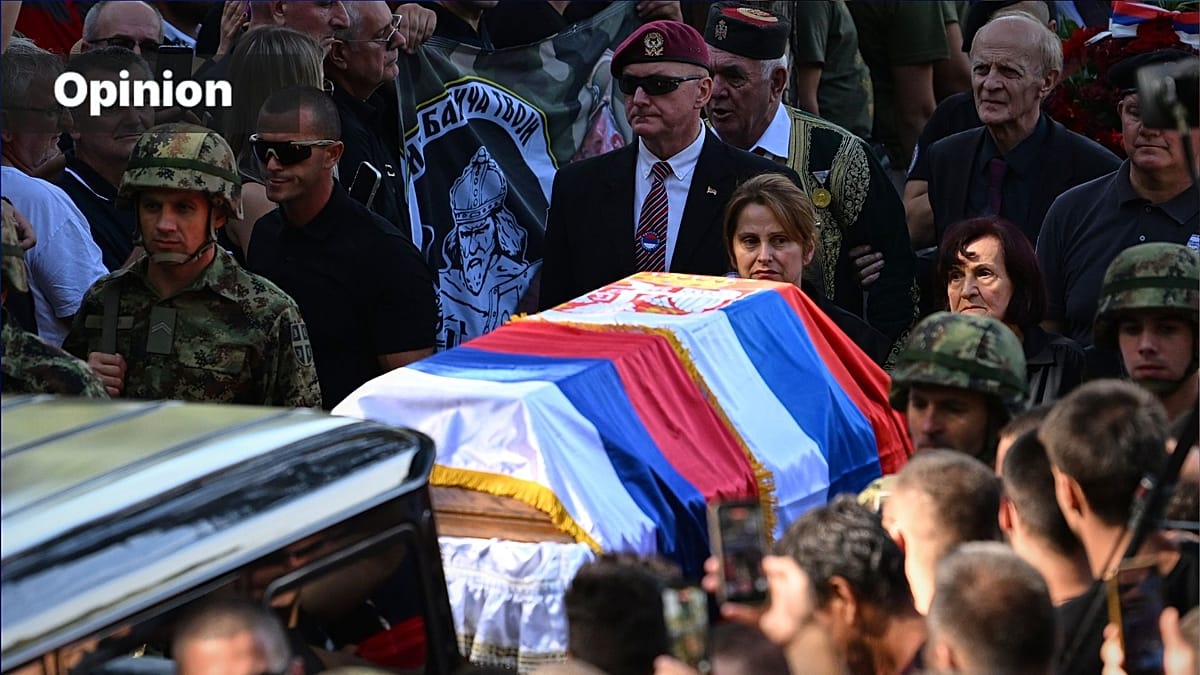
When Ratko Mladić died in a Hague prison cell in June 2021, the question of his burial became a political minefield for Serbia. The former Bosnian Serb military commander, convicted of genocide and crimes against humanity by the UN tribunal for the former Yugoslavia, remained a hero to many Serbs and a mass murderer to others. The Serbian state, led by President Aleksandar Vučić, chose a middle path: no state honours, but no obstruction either. The funeral, held in Belgrade on 23 June, drew thousands of mourners, yet the government kept its distance.
A delicate balancing act
Serbia's decision to neither fully embrace nor reject Mladić's legacy reflects the country's broader struggle with its wartime past. On one hand, Belgrade seeks EU membership and improved relations with its neighbours, which require acknowledging the crimes committed in the 1990s. On the other, a significant portion of the Serbian public still views Mladić as a defender of the nation. The government's approach—allowing the funeral to proceed without official participation—was a calculated attempt to avoid inflaming either side.
This balancing act was evident in the funeral's details. The Serbian Orthodox Church, which has often been accused of glorifying wartime leaders, conducted the service. But no senior state officials attended, and the government did not declare a day of mourning. As reports from Belgrade noted, the event was a display of popular sentiment, not state endorsement.
The regional dimension
The funeral also tested Serbia's relations with Bosnia and Herzegovina, where the Republika Srpska entity continues to celebrate Mladić as a hero. Bosniak leaders, who remember the Srebrenica massacre, watched with alarm as Serbian nationalists used the occasion to rally. The European Union, which has warned that such events could derail Serbia's accession talks, is monitoring the fallout closely.
Mladić's burial in Belgrade, beside his daughter who committed suicide in 1994, was a compromise. The family had wanted a Belgrade burial, and the authorities could not refuse without appearing disrespectful to the dead—a deeply held value across the Balkans. But by keeping the ceremony low-key, the state avoided the appearance of endorsing a convicted war criminal.
Historical precedents and missed opportunities
Serbia could have followed the example of Bosnia, which gave a state funeral to Rasim Delić, a convicted war criminal, in 2010. But Vučić's government chose a different path, perhaps mindful of international criticism. The decision was not without political cost. Nationalist groups accused the government of betraying Mladić, while human rights activists argued that even a private funeral was too much honour for a man responsible for so much suffering.
The funeral has not closed the book on the 1990s wars. Instead, it has highlighted how unresolved the past remains in the Balkans. As the region's leaders look toward EU integration, they must confront the uncomfortable truth that many of their citizens still revere men like Mladić. The challenge is to find a way to honour the dead without glorifying their crimes—a task that requires more than political calculation.
In the end, Mladić's death may not be the final word on his legacy. The divisions he embodied are still alive, and the way Serbia handles his memory will shape its future. The government's careful neutrality may have prevented an immediate crisis, but it has done little to heal the wounds of the past.