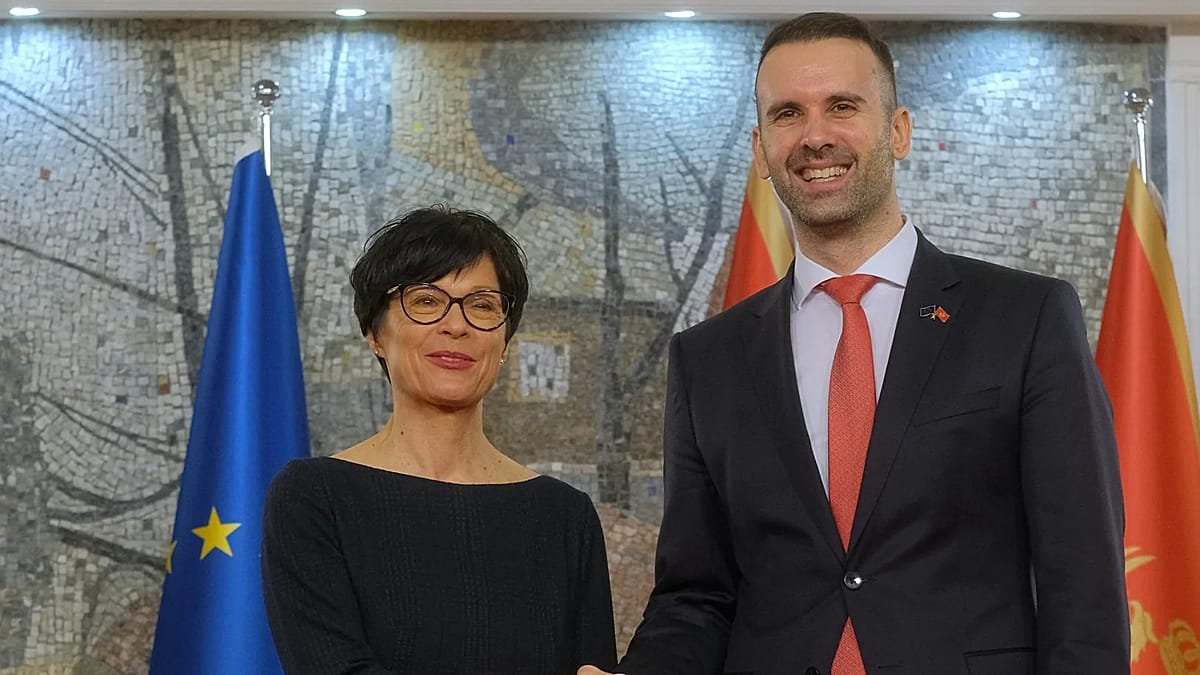
Montenegro's governing party, Europe Now! (Pokret Evropa sad!), has taken a concrete step toward deeper integration with the European Union by securing observer membership in the European People's Party (EPP). The decision, approved by the EPP's Political Assembly earlier this month, was announced by EPP President Manfred Weber, who wrote on social media: "A bigger EPP family means a stronger future."
Weber specifically thanked Prime Minister Milojko Spajić, the party's leader, "for your leadership and commitment to Montenegro's path to the EU. United by values, building a Europe that puts people first." Observer status allows Europe Now! to attend EPP congresses and political assemblies and participate in policy discussions, though it does not grant voting rights within the group.
What Observer Status Entails
The EPP, the largest political group in the European Parliament, maintains several tiers of affiliation. Observer membership is designed for parties that share the EPP's centre-right values but are not yet ready for full or associate membership—typically because their country is not an EU member state. The group includes heavyweight parties such as Germany's Christian Democratic Union (CDU), Spain's People's Party (PP), Poland's Civic Platform, and Greece's New Democracy.
For Montenegro, this affiliation signals a strategic alignment with the EU's mainstream conservative bloc, reinforcing the country's ambition to become the next member state. It also provides access to networking opportunities and institutional support from Brussels.
Montenegro's EU Accession Accelerates
The development comes as Montenegro has accelerated its EU accession process. In April 2026, EU member states voted to begin drafting Montenegro's accession treaty, marking a new phase in negotiations that have been ongoing for over a decade. President Jakov Milatović told the European Parliament that Montenegro is ready to join the bloc and reiterated the government's target of 2028.
At a Joint Consultative Committee meeting held on 24 April in Podgorica, Minister of European Affairs Maida Gorčević described the drafting of the accession pact as the "final lap of a fourteen-year marathon on the path towards the EU." The country has already closed several negotiation chapters and is widely seen as a frontrunner among Western Balkan states seeking membership.
Montenegro's progress stands in contrast to the slower pace of other aspirants in the region, such as Serbia, Albania, and North Macedonia, which face various political and bilateral hurdles. The EPP's embrace of Europe Now! adds a layer of political credibility to Podgorica's campaign, linking the party directly to the EU's most influential political family.
As the bloc prepares for potential enlargement, Montenegro's case will be closely watched. The country's ability to meet the remaining criteria—including judicial reforms, anti-corruption measures, and alignment with EU foreign policy—will determine whether the 2028 target is realistic. For now, the EPP's welcome signals that Brussels sees Podgorica as a serious candidate.