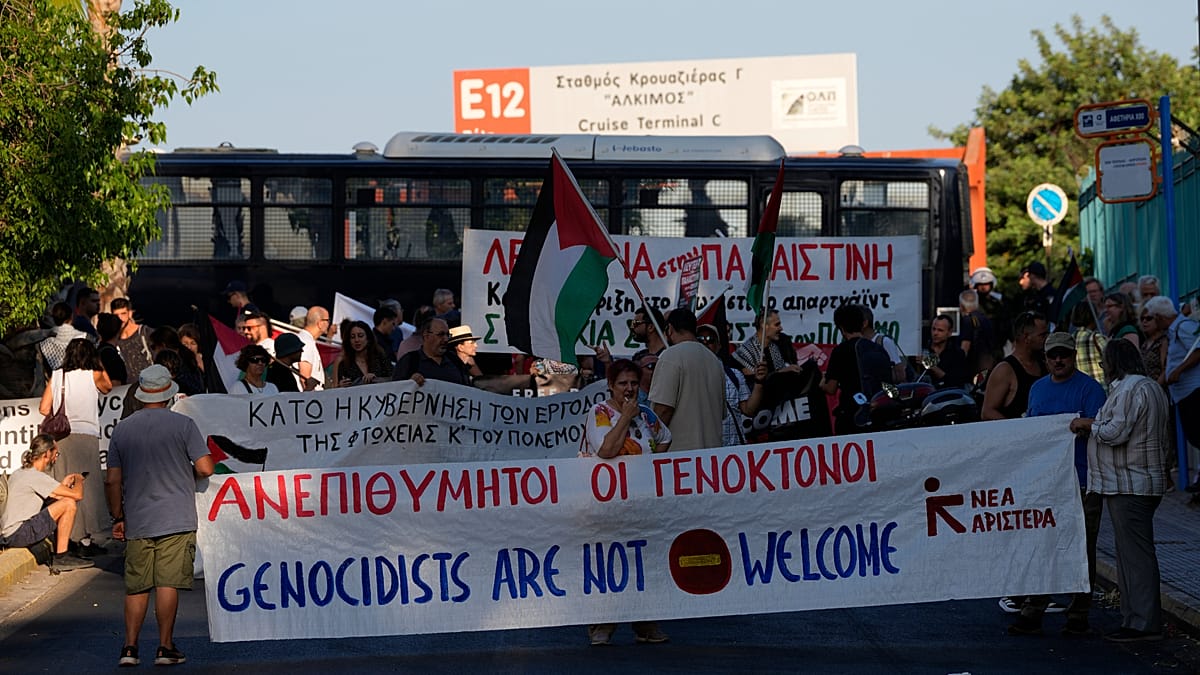
For the second time in recent months, the Israeli cruise ship Crown Iris arrived in Greek waters to a hostile reception. On Tuesday, hundreds of demonstrators gathered at the port of Piraeus, responding to a call from trade unions, civic groups, and pro-Palestinian organisations to voice their opposition to the vessel's presence.
The luxury ship, operated by the Israeli firm Mano Maritime and capable of carrying up to 2,000 passengers, has become a recurring flashpoint for Greek solidarity with the Palestinian cause. Police cordons prevented protesters from approaching the vessel, but the atmosphere was charged with chants in support of Palestine and against Israel.
“They are common criminals and, yes, we don’t want them in our country. We don’t want them,” one protester told reporters.
Another demonstrator added: “We continue to support the Palestinians’ struggle to have their own homeland, to live independently and freely, and to put an end to the genocide they are suffering.”
Growing demands for a policy shift
The organisers behind Tuesday's protest are not merely objecting to a single cruise ship. They are calling on the Greek government to sever all forms of cooperation with Israel and to withdraw from any involvement in Israeli initiatives in the Middle East. The demonstrations reflect a broader unease within Greek society about the country's deepening ties with Israel, particularly in the defence sector.
At the governmental level, Athens and Jerusalem have cultivated a close partnership in recent years. Greek Prime Minister Kyriakos Mitsotakis and his Israeli counterpart Benjamin Netanyahu have met on multiple occasions, most recently in March 2025, when they reaffirmed the “strategic relationship” between the two nations and discussed “further deepening of bilateral cooperation, particularly in the field of defence,” according to a statement from the Greek PM's office.
That defence relationship was underscored last month when Athens announced it had approved the purchase of an air defence system from Israel worth up to €3.5 billion. The deal, one of the largest defence procurements in Greece's recent history, has drawn criticism from opposition parties and civil society groups who argue that it compromises Greek neutrality and fuels regional instability.
The protests in Piraeus are part of a wider pattern across Europe, where public opinion on the Israeli-Palestinian conflict has become increasingly polarised. Similar demonstrations have occurred in other Mediterranean ports, and the issue has strained diplomatic relations in several EU member states. The Crown Iris has faced repeated protests whenever it has docked in Greece over the past year, making it a symbol for activists of what they see as complicity in Israeli policies.
Greek authorities have so far maintained a firm stance, allowing the ship to dock and ensuring public order. Police reported no major incidents on Tuesday, though the presence of the vessel continues to divide local communities. For many in Piraeus, the arrival of the Crown Iris is a reminder of the delicate balance between economic interests, diplomatic alliances, and public sentiment.
As the summer tourist season peaks, the Greek government is keen to project an image of stability and hospitality. Yet the recurring protests highlight a persistent undercurrent of dissent that is unlikely to fade soon. With the defence deal still fresh and further Israeli ship visits expected, the debate over Greece's role in the Middle East is far from over.