NASA has released new details about its ambition to establish a permanent human outpost on the Moon, a project that will unfold in multiple phases over the next decade. The first robotic cargo missions are scheduled for 2026, with astronauts expected to land on the lunar surface by mid-2027 as part of the Artemis III mission.
A Base at the Lunar South Pole
The proposed base will be located near the Moon's south pole, specifically in a region known as the Shackleton Connecting Ridge. Scientists believe this area may contain water ice trapped in permanently shadowed craters—a resource that could be used for drinking water, oxygen, and rocket fuel. This strategic choice mirrors the growing interest among European space agencies, such as ESA, in polar lunar exploration.
NASA Administrator Jared Isaacman confirmed that the agency is already planning three initial Moon base missions, with more to follow. "These represent the first of more than a dozen missions we expect to announce," he said.
Robotic Precursors and Commercial Partnerships
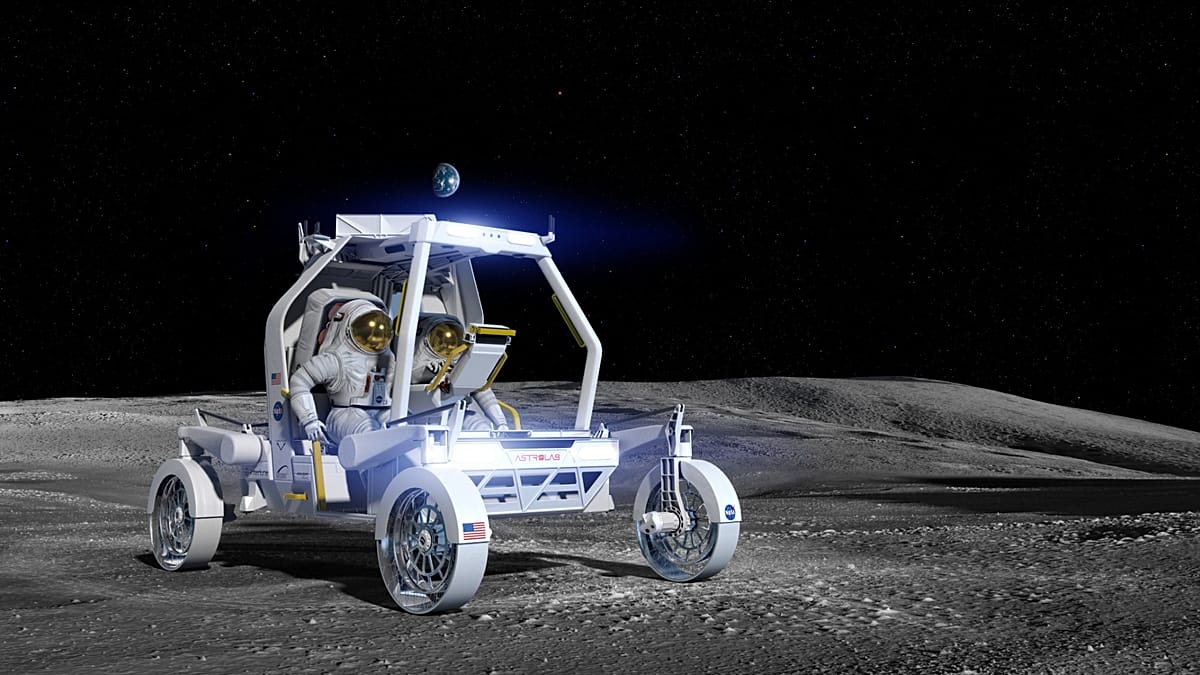
The first phase relies heavily on commercial partners. Blue Origin, founded by Jeff Bezos, will send its Mark 1 Endurance Lander to the Moon no earlier than autumn 2026, carrying cargo and scientific instruments. A second mission will use an Astrobotic Griffin lander to deliver over 500 kilograms of equipment, including Astrolab's FLEX rover—what NASA calls the largest commercial payload ever sent to the lunar surface. A third robotic mission will focus on experiments selected through NASA's PRISM initiative.
These robotic missions are designed to pave the way for human habitation, testing landing systems, mobility, and resource extraction. The approach mirrors the incremental strategy seen in other large-scale space projects, such as the International Space Station, which involved contributions from European partners like Airbus and Thales Alenia Space.
Astronaut Missions and Surface Operations
Artemis III, currently targeted for mid-2027, will test docking procedures between NASA's Orion spacecraft and lunar landers developed by Blue Origin and SpaceX. After that, NASA plans to send one crewed mission to the Moon each year. Artemis IV, set for early 2028, will see astronauts transfer from Orion to a commercial lander for a surface landing.
During initial stays, astronauts will focus on testing rovers, habitats, and surface operations. Later phases could include pressurised vehicles that allow crews to live and travel across the lunar landscape. "They can hop on the Pressurised Rover and basically work and explore the Moon," said Carlos Garcia-Galan, NASA's Moon Base Program Executive.
Long-Term Vision and European Connections
NASA's ultimate goal is a permanent human presence on the Moon, with permanent infrastructure such as power systems and habitation modules expected to be built between 2029 and the early 2030s. The base will also serve as a testing ground for technologies needed for future missions to Mars.
Europe has a stake in these developments. The European Space Agency has its own lunar ambitions, including the development of AI-driven systems for space exploration. Meanwhile, the broader geopolitical context includes discussions about US military presence in Greenland, which touches on Arctic and space security issues relevant to European defence.
"For those waiting patiently, the grand return is close at hand and we will not slow down," Isaacman said. "We are really just getting started."