When the sixth World Nomad Games opened in Kyrgyzstan in September 2026, the scale surprised many visitors and journalists. What began in 2014 as a regional effort to revive nomadic traditions has grown into a global sporting event, with more than 3,000 athletes from 109 countries competing in 43 disciplines.
The Games draw participants from nations with no historical link to nomadic life, reflecting a broader fascination with skills forged on the Eurasian steppe. For Central Asian peoples—Kazakhs, Kyrgyz, Uzbeks, Turkmens, Tajiks, and Mongols—these sports are not just competitions but living expressions of history and identity.
From Battlefield to Playing Field
Many of these sports originated as training for mounted warriors or as practical skills for hunting and herding. Wrestling, archery, and horsemanship were essential to survival and social life across the steppe. Today, they are organized sports, but their roots remain visible.
“Just as every nation has its own national games, our equestrian and national sports can be called the soul of the Kazakh people,” said Baurzhan Mugyzharov, trainer of Kazakhstan’s kokpar team. “In a developing world, riding horses and shooting arrows might seem unusual to some, but for us, national sports are our wealth.”
Kokpar: A Test of Strength and Skill
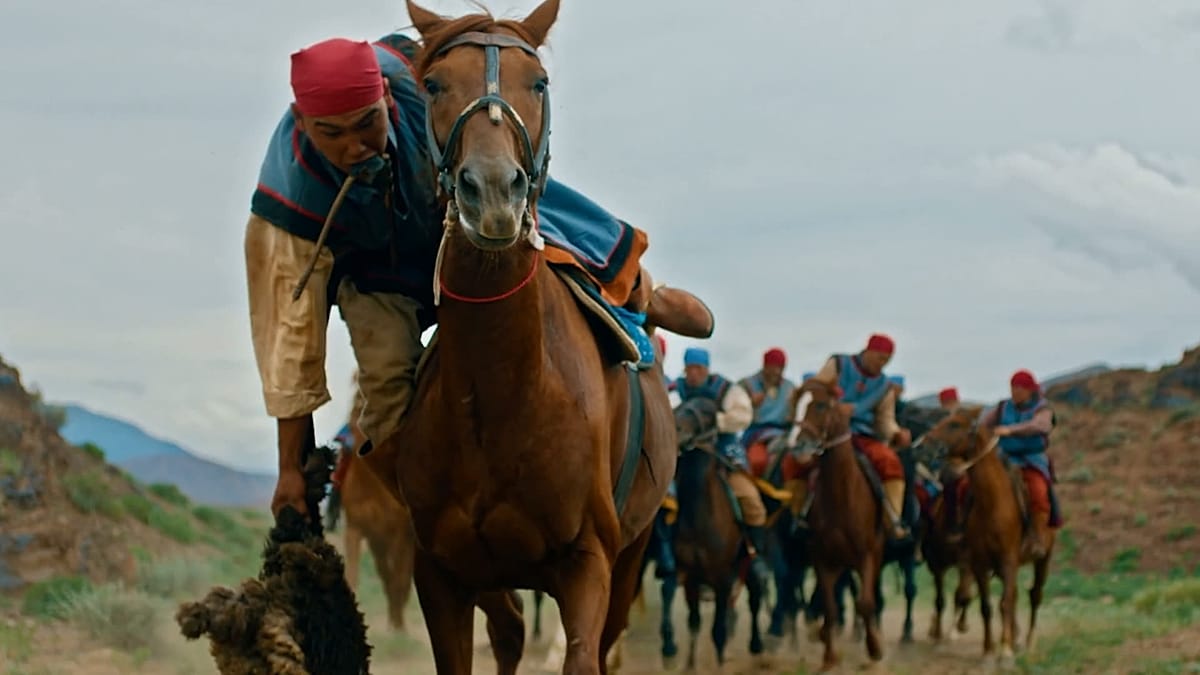
Among the most popular events is kokpar, a game described in the 19th century by American diplomat Eugene Schuyler as a contest where “one man holds a kid thrown over his saddle and everyone else tries to tear it from him.” In modern play, four riders per team compete to carry a dummy carcass—weighing 30 to 33 kilograms—into a scoring circle.
The sport demands immense strength and agility from both horse and rider. In Kyrgyzstan, the equivalent is known as kok boru. Thousands of Kazakh fans traveled to the 2026 Games to watch the finals, and young Kazakhs continue to take up the sport.
“Kazakhs have a tradition of getting children onto horses from a very tender age,” Mugyzharov explained. “Once they grow up enough to hold the reins properly, they are made to race and play kokpar. We guide each child according to their aptitude, because this is our national sport and a tradition handed down from our ancestors.”
Endurance and Equestrian Arts
Traditional horse racing in Central Asia emphasizes stamina over sprint speed. The 2026 Games featured a 25-kilometre race and a separate 300-kilometre endurance marathon held over three days.
Horsemanship also underpins audaryspak, or horseback wrestling, where two riders try to unseat each other while controlling their horses. This sport clearly descends from mounted combat techniques.
“At the recent World Nomad Games, we saw significant progress in the development of audaryspak in Kazakhstan,” said Zhanbatyr Bekmusaev, Vice-Chairman of Kazakhstan’s Audaryspak Association. “National championships are held systematically for youth, juniors, and adults. At Issyk-Kul, four of our six wrestlers won gold, one silver, and one bronze, giving Kazakhstan first place in the team standings.”
Wrestling and Archery: Precision and Ritual
Wrestling is a staple of nomadic sports, with distinct regional forms. In Mongolian bökh, wrestlers wear traditional zodog and shuudag and perform a ritual dance before competing; a loss is declared when any part of the body above the knee touches the ground. Kazakh kuresi is fought standing, with competitors in special jackets aiming to throw their opponent onto their back or shoulders. Uzbek kurash also prohibits ground wrestling and below-the-waist grips, relying on throws and sweeps.
Archery, particularly from horseback, reflects the skills of steppe warriors who needed to shoot accurately at speed. Kazakh archer Nurzhan Zhaksylikuly explained the technique: “Our ancestors shot while riding, so the arrows need to stay in place. We use our thumbs to pull the string, with a thumb ring made of leather, wood, or brass, unlike Europeans who used long bows and three fingers.”
The World Nomad Games have become a platform for these traditions to reach a global audience, blending sport with cultural heritage. As the event grows, it offers a window into the resilience and adaptability of nomadic peoples—and a reminder that ancient survival skills can still captivate the modern world.