North Korea has sharply condemned the United Kingdom for imposing asset-freeze sanctions on the Songdowon International Children's Camp, a facility London accuses of being complicit in Russia's programme to forcibly deport and re-educate Ukrainian children. Pyongyang's state-run Korean Central News Agency (KCNA) on Friday described the sanctions as a 'heinous unethical politically-motivated provocation' designed to damage North Korea's international reputation and undermine its relationship with Moscow.
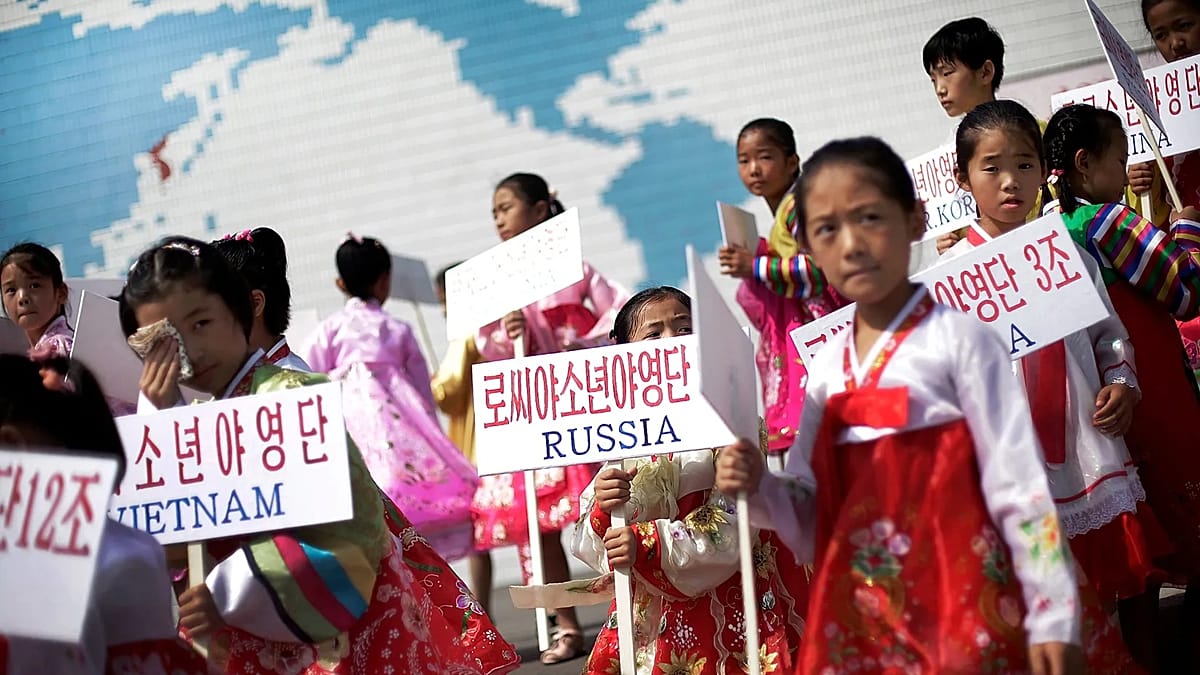
The UK Foreign Office imposed the sanctions on 11 May, citing suspicions that the camp, located near the eastern city of Wonsan, had been 'engaging in and providing support' for Russia's efforts to remove children from occupied Ukrainian territories. According to a 2025 report by the Ukraine-based Regional Centre for Human Rights, two children from occupied regions—a 12-year-old boy named Misha and a 16-year-old girl named Liza—were sent to Songdowon, where they were taught to 'destroy Japanese militarists' and met veterans who attacked a US Navy ship in 1968.
European Concerns Over Child Deportations
The sanctions come amid broader European efforts to address the forced displacement of Ukrainian children. The European Union has already targeted Russian officials over the issue, and the UK's move adds pressure on Moscow's allies. Since Russia's full-scale invasion in February 2022, Ukrainian authorities report that 2,318 children remain missing, 20,570 have been deported or forcibly displaced, and 704 have been killed. Human rights groups have raised alarms about political indoctrination in camps across Russia and its allied states.
Pyongyang's foreign ministry spokesperson, quoted by KCNA, accused London of 'unreasonably linking our children's camping facility with the groundless issue of forcible migration of Ukrainian children.' The statement further claimed the sanctions were 'conspiratorial moves to demonise Russia' and an 'intolerable insult' to North Korea. Songdowon, established in 1960, is described by KCNA as 'a sacred base for education and growth of children,' while British tour operator Koryo Tours notes it was created to foster international friendship, hosting up to 1,200 students and around 400 foreign visitors annually from countries including Russia, China, Thailand, Mongolia, and Mexico.
The UK sanctions also accuse the camp of providing 'support for policies or actions which undermine or threaten the territorial integrity, sovereignty or independence of Ukraine.' This aligns with broader Western sanctions regimes that have targeted individuals and entities linked to the forced transfer of Ukrainian children, a practice that the International Criminal Court has classified as a war crime.
North Korea's response reflects its deepening alignment with Russia, a relationship that has grown since Moscow's invasion. The two countries have strengthened diplomatic and economic ties, with Pyongyang providing military support to Russia, including artillery shells and missiles, in exchange for food, fuel, and technology. The UK's move is seen in Brussels as part of a coordinated effort to isolate both regimes, though some EU diplomats have noted that sanctions on North Korean entities remain limited compared to those on Russian officials.
For European readers, the controversy underscores the transnational nature of the conflict in Ukraine. The forced displacement of children has become a key humanitarian and legal issue, with the EU, the UK, and other allies pressing for accountability. The involvement of North Korea—a state with a long history of human rights abuses—adds a disturbing dimension, as it suggests that Ukrainian children may be exposed to propaganda and ideological training far from home.
The UK's sanctions on Songdowon are unlikely to have a significant economic impact on North Korea, but they serve as a symbolic rebuke. Pyongyang's angry response indicates that it views the move as a threat to its carefully cultivated image as a host for international youth exchanges. As the war in Ukraine continues, the fate of thousands of missing children remains a pressing concern for European policymakers and human rights organisations alike.