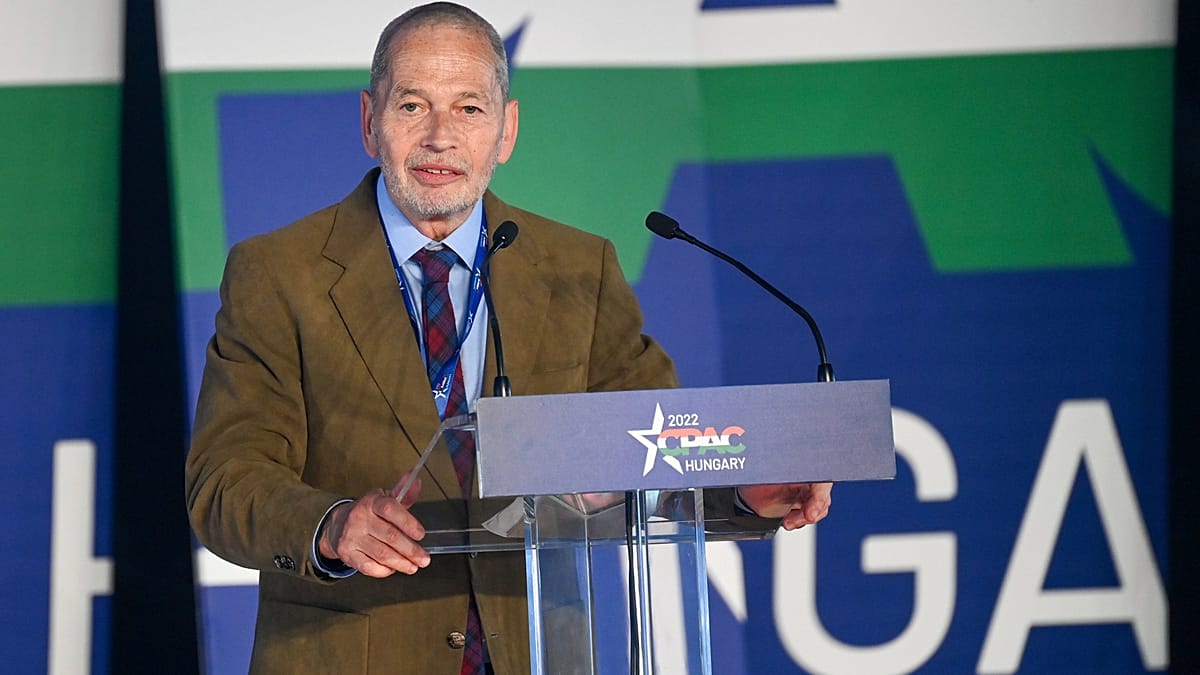
MCC Brussels, the Eurosceptic think tank established by the Hungarian government under Viktor Orbán, is winding down after its state-linked funding was cut off. Frank Furedi, the organisation's director, confirmed the closure and announced his resignation in protest, describing the move as “unprofessional and childish.”
The Brussels-based outfit, launched in 2022 with the stated aim of “shaking up European debate,” was widely seen in the EU capital as a vehicle for promoting Orbán's vision of a more nationalist, less integrated Europe. Its board was chaired by Balázs Orbán, the Hungarian prime minister's political director, and it received funding through the Mathias Corvinus Collegium (MCC), a Hungarian educational foundation.
MCC's finances were largely derived from dividends on a package of shares donated by the Hungarian state. As those funds dried up, the Brussels branch found itself without the resources to continue. Furedi told Euronews that “in its present form, it's finished,” and urged the Hungarian government to honour existing contracts with staff.
A political shift in Budapest
The closure comes after a change of government in Hungary. Incoming Prime Minister Péter Magyar, who has vowed to dismantle Orbán's political ecosystem, moved to nationalise the assets of the foundation that runs MCC. In a video posted on social media, Magyar said: “We have given Hungarians back the right to control those common assets. We will keep the important programmes, but we will end a system in which public assets became the spoils of politics.”
Magyar's government sent a liquidator to MCC's headquarters in Budapest, signalling a decisive break with the previous administration's approach to state-backed institutions. The move has broader implications for how European populist networks are funded, particularly those that have sought to influence debates in Brussels.
Furedi, a former sociology professor in the UK and a founding member of the Revolutionary Communist Party in the 1970s, is now calling for outstanding salaries and severance payments for MCC Brussels staff. He argued that a “professional, democratically minded government” would have closed the organisation while respecting contractual obligations, including redundancy pay.
“A professional, democratically minded government would have said: 'We hate MCC, we're going to close them down. But we are going to give the employees their salary for the time they worked, as laid down in their contracts, and maybe a month's redundancy payment,'” he said.
At its peak, MCC Brussels employed 25 people, a number that had fallen to 12 by this year. The think tank, which frequently criticised the EU for lacking transparency and being ideologically driven, operated on a budget of around €5 million last year.
Furedi dismissed criticism of the organisation's spending on presentations, networking events and receptions, insisting that “everything we did was part of our work and part of our approach to work.” He also noted that the think tank was prevented from raising its own funds, saying: “We didn't have the freedom to raise money. I wanted to charge for our receptions, but we were prevented from carrying out any financial transactions.”
The closure marks the end of a controversial chapter in Brussels' think tank landscape. MCC Brussels events were frequently targeted by Antifa activists, who accused the group of promoting far-right narratives. In June, the EU Transparency Register suspended the organisation's registration, barring it from lobbying EU officials.
Furedi is now working on a new initiative with a smaller team and alternative funding, including fundraising. The episode underscores the fragility of politically aligned think tanks, which can rise and fall with shifts in national power. As Hungary's new government moves to reclaim public assets, the fate of MCC Brussels serves as a reminder of how quickly political fortunes can change in Europe.