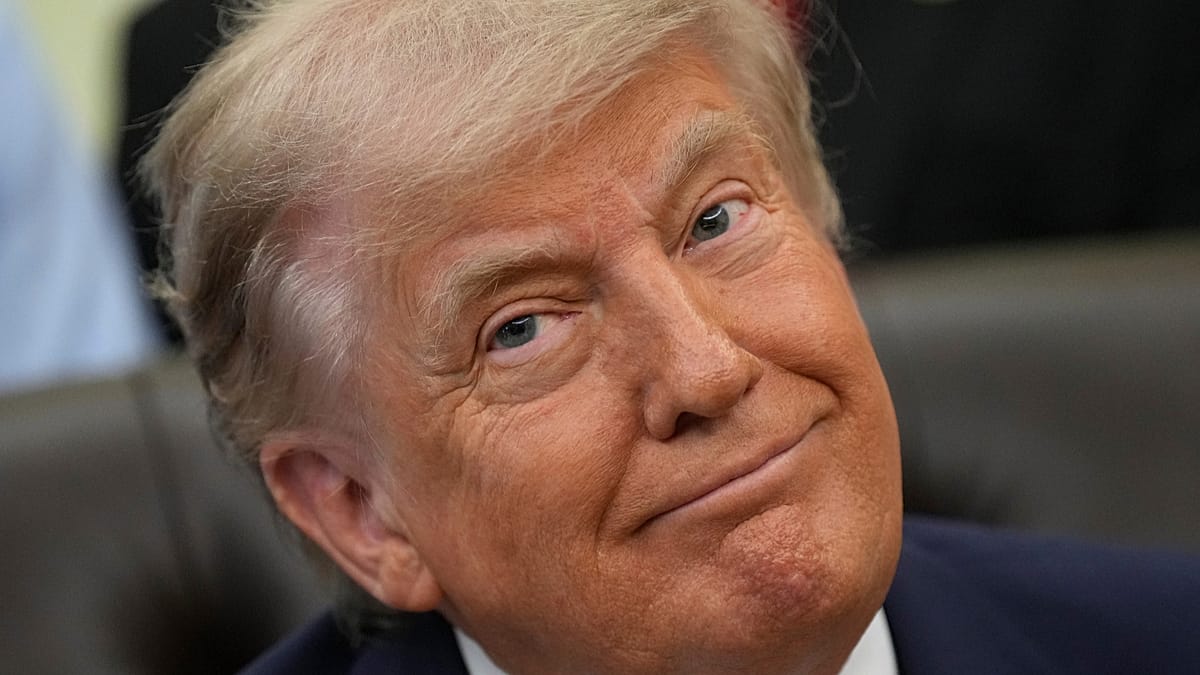
Late on Thursday evening, Polish time, US President Donald Trump posted on his social media platform Truth Social that he would send an extra 5,000 troops to Poland. The decision, which Trump linked to the electoral success of Polish President Karol Nawrocki, whom he had endorsed, took both the Polish government and the US administration by surprise.
According to US media reports, Trump did not consult anyone before making the announcement. The New York Times noted that the Pentagon was not informed; the Department of Defense is referring questions to the White House and declining to comment. Politico, citing anonymous sources in Warsaw and Washington, reported that no such decision was expected in either capital and that Trump had not informed other NATO allies.
Mixed Reactions from US Officials and Analysts
Republican congressman Don Bacon, previously critical of US troop movements in Poland, welcomed the news on X, calling it "good news for Poland and our Baltic allies." He added that Poland is keeping its promises and deserves close cooperation. Daniel Fried, a former US ambassador to Poland, described it as "a good decision by Trump and those who worked to reverse initial bad intentions," but raised tactical doubts. "The question remains where the 5,000 troops for Poland will come from," Fried wrote on X, warning that a politically motivated reshuffle of forces is possible. He stressed that moving troops mainly to reward or punish leaders is not a sound way to make defence decisions.
Retired diplomat Ian Kelly told the Associated Press that the decision appears impulsive, based on Trump's moods rather than a considered process. "Most likely, at the highest levels of government there is a lack of any considered decision-making process regarding issues such as the deployment and manoeuvring of military units," Kelly said.
NATO Chief Welcomes the Move but Calls for European Strength
NATO Secretary General Mark Rutte, speaking before a meeting of NATO foreign ministers in Helsingborg, Sweden, welcomed the announcement. "Of course I welcome this announcement," he told reporters, adding that military commanders are working out the details. However, Rutte also emphasised the need for Europe to reduce its reliance on the United States. "Let us be clear: the course we have set is for a stronger Europe and a stronger NATO so that, over time, step by step, we are less dependent on a single ally, as has long been the case with the United States," he said.
Polish Leaders Express Gratitude, but with Nuance
President Karol Nawrocki thanked Trump on X for his friendship and the practical impact of the decision. The Chancellery of the President of the Republic of Poland posted a photo of the two leaders from Nawrocki's visit to the White House last year. Prime Minister Donald Tusk and his office have not commented so far, but Deputy Prime Minister and Defence Minister Władysław Kosiniak-Kamysz posted a message of thanks, calling the decision a confirmation of strong Polish-American relations. Interior Minister Marcin Kierwiński also thanked those who prioritised homeland security, but notably did not include Nawrocki in his list of acknowledgements.
Former Prime Minister Mateusz Morawiecki, now an opposition MP, praised Nawrocki's tough and consistent approach in Poland-US relations. Opposition politicians from Law and Justice echoed this sentiment, highlighting Nawrocki's role.
The announcement comes amid broader discussions about US military posture in Europe. While Poland and its Baltic allies see the additional troops as a deterrent against Russian aggression, the manner of the decision has raised eyebrows. The lack of consultation with NATO partners and the Pentagon's apparent surprise suggest that the move was driven more by political calculation than strategic planning.
As Europe grapples with its own defence capabilities, the episode underscores the tension between relying on US commitments and building a more autonomous European security framework. For now, Poland welcomes the reinforcements, but the long-term implications for NATO cohesion remain uncertain.