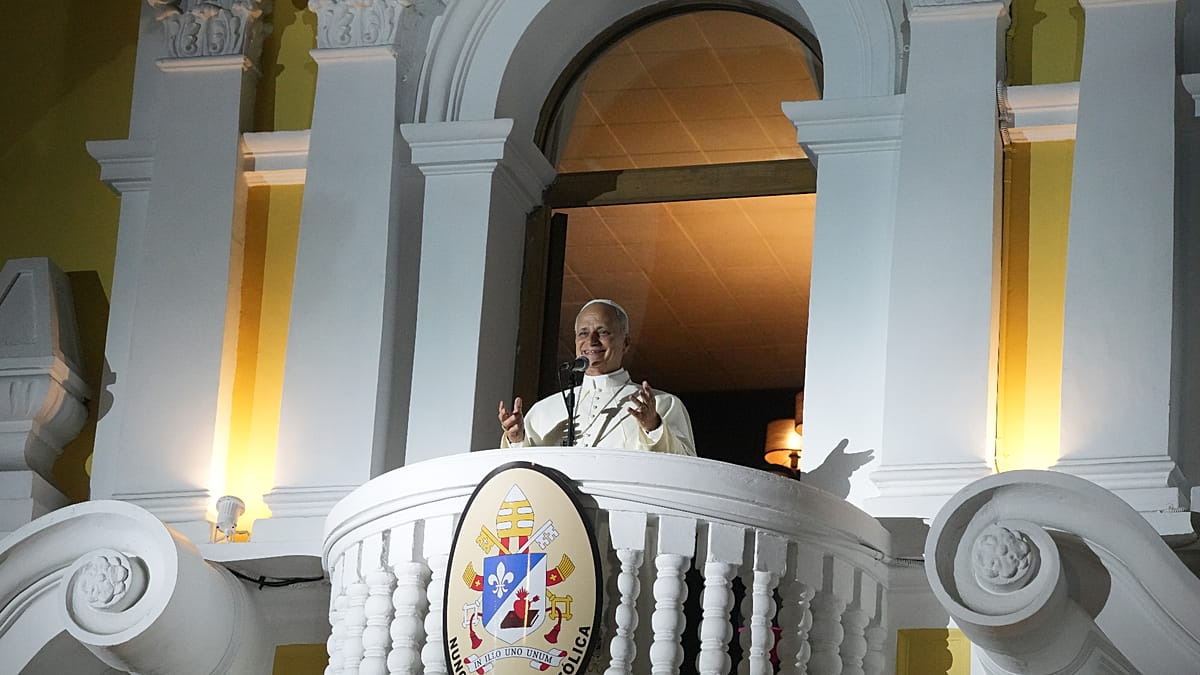
Pope Leo XIV has returned to Peru, the country he calls his second homeland, to a reception that bordered on the ecstatic. Vatican estimates put the crowd at around three million people who lined the motorcade route through Lima, waving Peruvian and Vatican flags and chanting “The Pope is Peruvian!” as the 71-year-old Pontiff passed.
Born in Chicago, Leo XIV spent more than two decades in Peru as a missionary and bishop, and he acquired Peruvian nationality in 2015. On his arrival, he took part in the official welcome ceremony at the Presidential Palace, where he sang the national anthem alongside President Keiko Fujimori and a children's choir.
In his first address to the authorities and the diplomatic corps, the Pope spoke of the deep ties that bind him to the country. “Today I understand how much of this land remains in me and how much of my own story also belongs to you,” he said. He added, to applause, “That is why I can say to you, with deep gratitude, that I am also returning to my homeland.”
The visit is the final leg of a Latin American tour that has already taken him to Uruguay and Argentina. Over the next six days, he is scheduled to travel from the Amazon to the Andes, including a stop in Cuzco at more than 3,400 metres above sea level, and an especially poignant return to Chiclayo, where he served as bishop for a decade.
A call for justice and healing
Leo XIV used his first meeting with political representatives to urge Peru to confront the most painful chapters of its history with “justice and sensitivity,” a clear reference to the deep divisions that still mark national politics. Among those present was President Fujimori, daughter of the late Alberto Fujimori, whose 1990s rule was marked by violence, human rights abuses, and the fight against the Shining Path guerrilla movement.
The Pope's visit comes at a time of significant difficulties for Peru, which is grappling with political instability, rising crime, soaring living costs, and recurrent natural disasters. In this context, he called for citizens to be able to live and work “without fear” and urged authorities to step up efforts to prevent natural disasters and protect lives.
His Latin American tour has also been notable for its social appeals. During his stay in Argentina, Leo XIV argued for a more inclusive economy and greater protection for vulnerable groups, including the poor, migrants, the sick, and prisoners—remarks widely interpreted as a critique of the spending cuts implemented by Javier Milei's government.
The emotional weight of this homecoming was evident as the Pope, visibly moved, greeted the crowds. For many Peruvians, his presence is a source of pride and comfort in uncertain times. As one Lima resident told reporters, “He is one of us.”