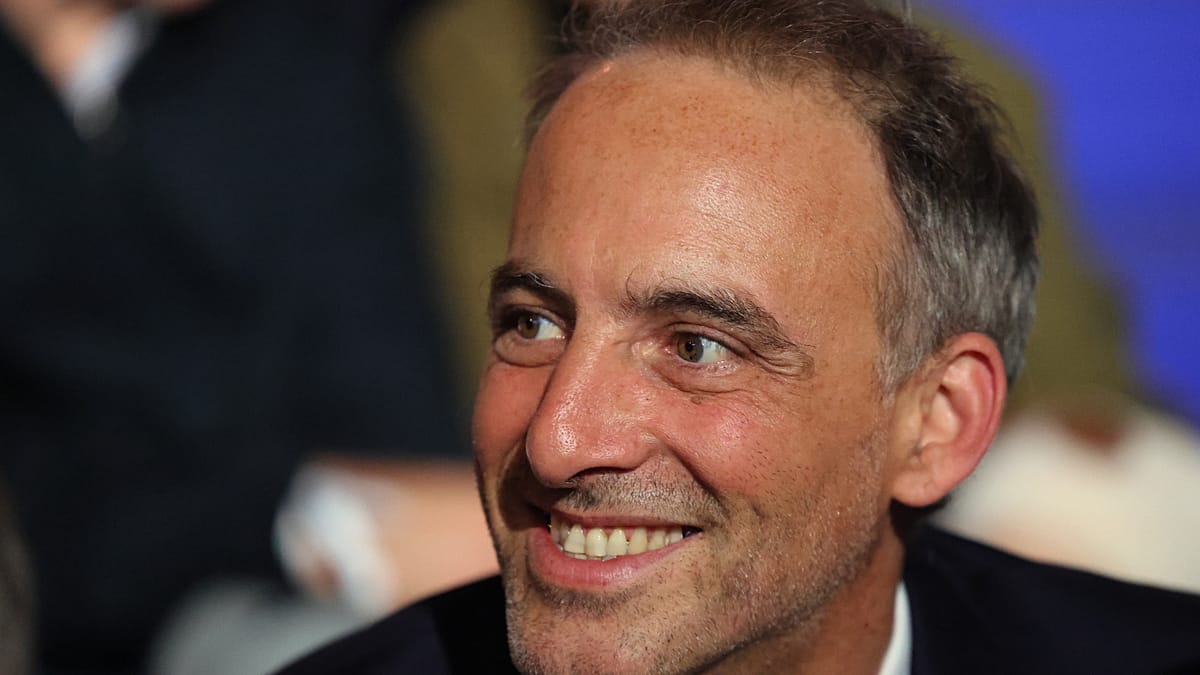
French MEP Raphaël Glucksmann has decisively won the primary of France's social democratic camp, securing 66.17% of the vote in the first round. The organisers announced that 120,787 voters participated in the contest, which was disrupted by a cyberattack that slowed voting and forced an extension until 6 p.m. on Sunday.
Glucksmann, who leads the Place publique party, finished far ahead of his closest rival, Socialist Party chief Olivier Faure, who took 14%. Ségolène Royal, a former presidential candidate in 2007, came third with less than 8%, while Jérôme Guedj and Emmanuel Maurel each garnered around 6%.
In a message on X, Glucksmann declared that "a left faithful to its values can unite, govern and win." He added: "We are not here to win a squabble on the left. We are here to win the presidential election: turn the page on Macronism, stop the far right and change lives."
The primary's turnout was seen as a critical test, and with 86% participation, the social democratic strand hopes to build momentum. The cyberattack, which began on Friday morning, did not deter voters, and the high participation rate exceeded the 80% threshold that political journalist Rachel Garrat-Valcarcel had suggested was necessary for the primary to be considered a success. Garrat-Valcarcel, author of the "Blocs & Partis" newsletter, spoke to Euronews during the second day of voting.
Glucksmann's victory positions him as a leading contender for the French left in the 2027 presidential election. However, he will face stiff competition from other political forces already in the race, notably the far right's Marine Le Pen and the radical left's Jean-Luc Mélenchon.
A crowded political landscape
The French left has been fractured in recent years, with Mélenchon's La France insoumise dominating the radical wing and the Socialist Party struggling to regain its footing. Glucksmann's strong showing suggests a desire among social democratic voters for a unified alternative that can appeal to a broad electorate.
His campaign has focused on turning the page on President Emmanuel Macron's policies, which he argues have failed to address social inequalities. Glucksmann has also positioned himself as a bulwark against the far right, which has been gaining ground across Europe.
The primary's outcome was closely watched as a barometer of the health of social democracy in France. With a turnout of 86%, organisers and supporters alike see reason for optimism. The cyberattack, while disruptive, ultimately did not undermine the legitimacy of the vote.
Glucksmann's next challenge will be to broaden his appeal beyond the primary electorate. He must attract voters who may have drifted to Macron's centrist coalition or to the radical left, while also mobilising those who have become disillusioned with politics altogether.
The road to 2027 is long, and the political landscape could shift significantly. But for now, Glucksmann and his supporters are celebrating a decisive win that could reshape the French left.



