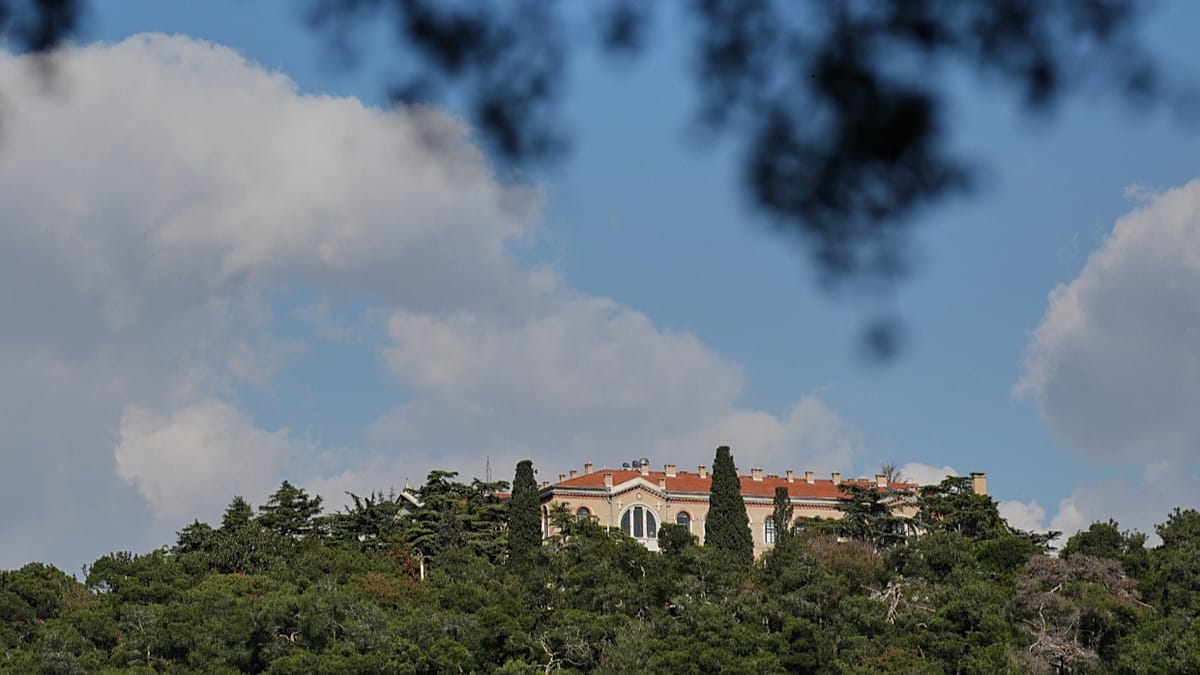
The Ecumenical Patriarchate of Constantinople has confirmed that the long-awaited renovation of the Theological School of Halki will be finished by September. Yet the institution, which has been shuttered for over five decades, still lacks the necessary authorisation from Turkish authorities to resume its educational mission.
Located on Heybeliada, one of the Princes' Islands in the Sea of Marmara, the school was founded in 1844 and quickly became the foremost theological seminary for the Greek Orthodox world. Its closure in 1971 followed a Turkish law that banned private higher religious schools, a measure that disproportionately affected non-Muslim minority institutions.
Despite repeated appeals from Patriarch Bartholomew and successive Greek governments, Ankara has not lifted the ban. The issue gained renewed attention when the Patriarch met with then-US President Donald Trump at the White House in September 2024. According to reports, Trump pledged to support efforts to break the deadlock, raising hopes among Orthodox communities.
A Symbol of Religious Freedom in Europe
The case of Halki is more than a bilateral dispute between Greece and Turkey. It touches on broader questions of religious freedom and minority rights within Europe's neighbourhood. The European Union has consistently criticised Turkey over restrictions faced by non-Muslim minorities, including the Greek Orthodox community. The school's reopening is seen as a litmus test for Ankara's commitment to pluralism and rule of law.
Patriarch Bartholomew, himself a graduate of Halki, has made the school's revival a personal priority. In a statement, the Patriarchate noted that the renovation covers the main building, library, and chapel, restoring the campus to its original 19th-century splendour. But without a change in Turkish legislation, the school cannot admit students or hold classes.
The Turkish government has occasionally signalled flexibility, but no concrete steps have been taken. Critics argue that the issue is entangled in broader tensions between Turkey and Greece, as well as in domestic politics. The school's fate also resonates in the wider Balkans, where Orthodox churches have long looked to Halki as a centre of theological learning.
Meanwhile, the United States and the EU continue to monitor the situation. The European Parliament has passed resolutions urging Turkey to reopen the school, linking it to the country's stalled accession process. For now, the renovated buildings stand ready, but the classrooms remain empty.
As the renovation nears its end, the question remains whether political will in Ankara will match the physical restoration. For many in Europe, the answer will signal how seriously Turkey takes its commitments to religious freedom and minority rights.