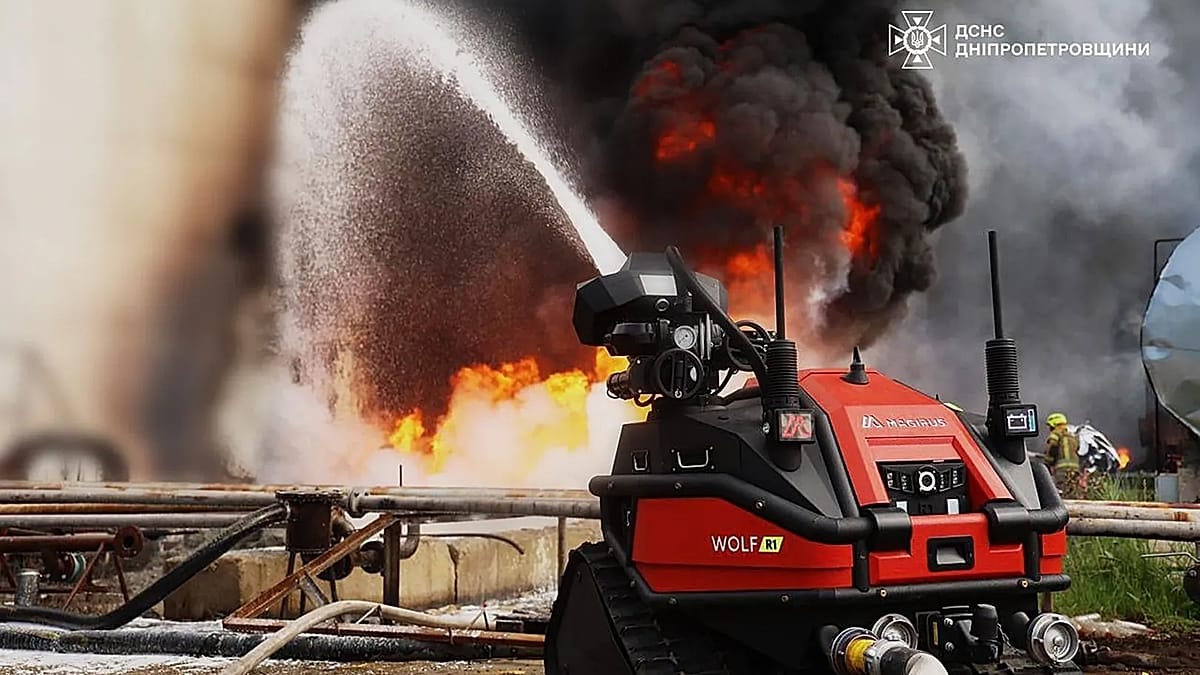
Moscow launched a massive daytime aerial assault on Ukraine on Wednesday, deploying hundreds of drones in an apparent effort to overwhelm the country's air defences. The attack killed at least three people and wounded 12 others, according to Ukrainian officials.
Ukraine's military intelligence warned the population of a “prolonged combined attack on Ukraine's critical and civilian infrastructure” as air raid sirens sounded across the country around 11:00 local time. The Ukrainian Air Force reported detecting at least eight groups of Shahed-type drones approaching from multiple directions.
According to the Ukrainian monitoring channel Monitor, dozens of drones entered Ukrainian airspace from Belarus, flying over the Chernobyl region toward the northwest. Another group of Shahed drones came from the Black Sea, heading west toward the Ivano-Frankivsk, Chernivtsi, and Ternopil regions. A significant number of drones appeared to be targeting the central city of Khmelnytskyi.
Explosions from air defence activity were heard in Kyiv shortly after the first sirens. Ukraine's military intelligence stated that after the initial drone wave, Russian forces planned to follow up with a substantial number of air- and sea-launched cruise missiles, as well as ballistic missiles.
Russia's New Tactic
Until recently, Russia had primarily conducted mass drone and missile strikes at night. However, the tactic shifted in March-April, when Moscow began daytime assaults. According to the US-based Institute for the Study of War, this new approach—combining a major night-time strike with an equally heavy daytime attack—is likely to increase damage to Ukrainian civilians. The strategy allows Russia to threaten more areas of Ukraine for longer periods, disproportionately affecting civilian districts.
The attack comes amid a broader escalation of hostilities. In recent weeks, Russian forces have intensified strikes on Ukrainian cities, including a drone barrage that hit a residential area in Kharkiv, underscoring the ongoing threat to civilian life.
European leaders have condemned the attacks, with the EU reiterating its support for Ukraine. The bloc has committed billions in financial and military aid, though debates over accountability persist. For instance, the Estonian minister insisted that the EU's €90 billion loan to Ukraine must be accountable, highlighting the need for transparent use of funds.
Meanwhile, cultural protests against Russia's actions continue. Groups like Pussy Riot and FEMEN have protested Russia's return to the Venice Biennale, drawing attention to the war's cultural dimensions.
As the conflict enters its third year, the human toll remains severe. Wednesday's attack is a stark reminder of the ongoing danger faced by Ukrainian civilians, even as international support for Kyiv remains robust.