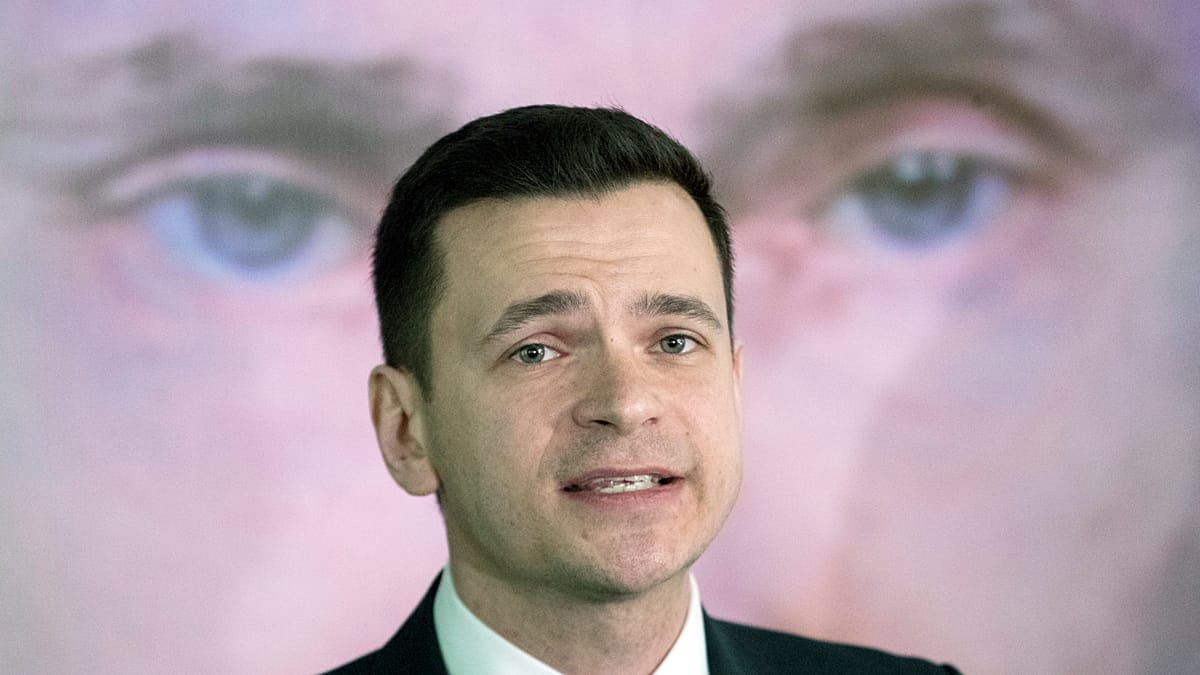
As Russia tightens domestic restrictions and public discontent simmers, opposition groups operating from exile are attempting to lay the groundwork for a democratic future. On Friday, members of a newly founded political party led by Kremlin critic and former political prisoner Ilya Yashin gathered in Berlin to elect their leadership and outline their agenda. The movement, called "The Peaceful Forces of Russia," aims to promote a peaceful future for the country, with Yashin declaring on Telegram: "Putin leads the party of war, and we lead the party of peace."
Yet the challenge is immense. According to the state-run polling agency VCIOM, around 71% of Russians approve of President Vladimir Putin's performance. Against this backdrop, the influence of opposition groups operating from abroad remains uncertain. The question is whether Yashin can become a unifying figure akin to a Russian Nelson Mandela.
Fragmentation and the Search for a Leader
Andreas Heinemann-Grüder, a Russia expert and professor at the University of Bonn, points to a fundamental problem: "The Russian opposition is highly fragmented and struggles to accept leadership." He notes that in the past, many opposition figures wanted to be "a little Lenin," fostering personal rivalries that hindered collective action. Heinemann-Grüder argues that the opposition's only realistic path forward is to form a government-in-exile, which would be the opposite of a Leninist party structure. In that model, a small group around a leader makes decisions and views the wider public merely as followers—a system he describes as "democratic centralism" in practice, involving high centralisation and little genuine democracy.
According to the professor, similar patterns persist among many opposition figures today, with a strong emphasis on centralised leadership. A government-in-exile, he argues, would need to be far broader and more decentralised, reflecting Russia's multiethnic character, and would require a single person who clearly represents it.
Heinemann-Grüder draws a comparison with Iran, where much of the opposition has rallied around Reza Pahlavi, the son of the last shah, providing a clear figurehead. In Russia, by contrast, names like Kasparov, Khodorkovsky, Kara-Murza, or Yashin come up, but there is no single recognised leader. "If a foreign ministry were to ask which phone number to call and which email address to write to, they would come up with dozens," he says.
The Navalny Legacy and the Need for a Broader Vision
Until his death in 2024, Alexei Navalny was widely regarded as the most prominent figure in the Russian opposition. Heinemann-Grüder describes the Navalny phenomenon as a response to the crisis of Yabloko, the liberal opposition party founded in 1993. Navalny built a single-issue movement centred on anti-corruption. But the professor argues that era is now over. The Russian opposition in exile has likewise placed a single issue at the centre of its agenda: ending the war in Ukraine. However, Heinemann-Grüder contends that a war cannot be ended from abroad, and the opposition's ambitions must extend far beyond that.
Today's Russian opposition, he says, must learn from both Yabloko and Navalny while addressing issues that have been largely neglected in the diaspora. The new party needs to define what kind of Russia it wants to build: a Great Russian state, a presidential system, a federation, or a multiethnic state. The opposition has yet to provide a clear answer to those questions. In his view, any future alternative to the current Russian government would need to be more decentralised, reflect the country's multiethnic character, and give a voice to the Russian diaspora across Europe.
The ability of opposition groups in exile to influence developments inside Russia remains limited. The longer opposition figures remain abroad, Heinemann-Grüder warns, the greater the risk that they lose touch with a society that continues to evolve without them, particularly younger generations. For now, their most immediate task is to establish themselves as credible and legitimate interlocutors for governments and institutions in Germany and across the European Union.
Heinemann-Grüder also stresses that the Russian opposition must recognise that the roots of the current political system predate Putin. The 1993 constitution, adopted after the collapse of the Soviet Union, grants the president extensive powers, including the ability to concentrate authority. Parties such as Yabloko focused their criticism on Putin himself rather than on the constitutional framework that made his rise possible. Addressing that legacy, he says, is one of the key challenges facing the new opposition movement.
As the war in Ukraine continues, the opposition's ability to present a credible alternative remains uncertain. The new party in Berlin may be a step forward, but without unity and a clear vision, its impact may be limited.