The first Moroccan F-16 Block 72 completed its maiden flight in early October at Lockheed Martin's facility in Greenville, South Carolina, marking a milestone in a rearmament drive that Madrid is watching closely. The aircraft is now undergoing pre-delivery testing after earlier delays, and it is the most visible symbol of a broader military modernisation that is shifting the balance of power in the western Mediterranean.
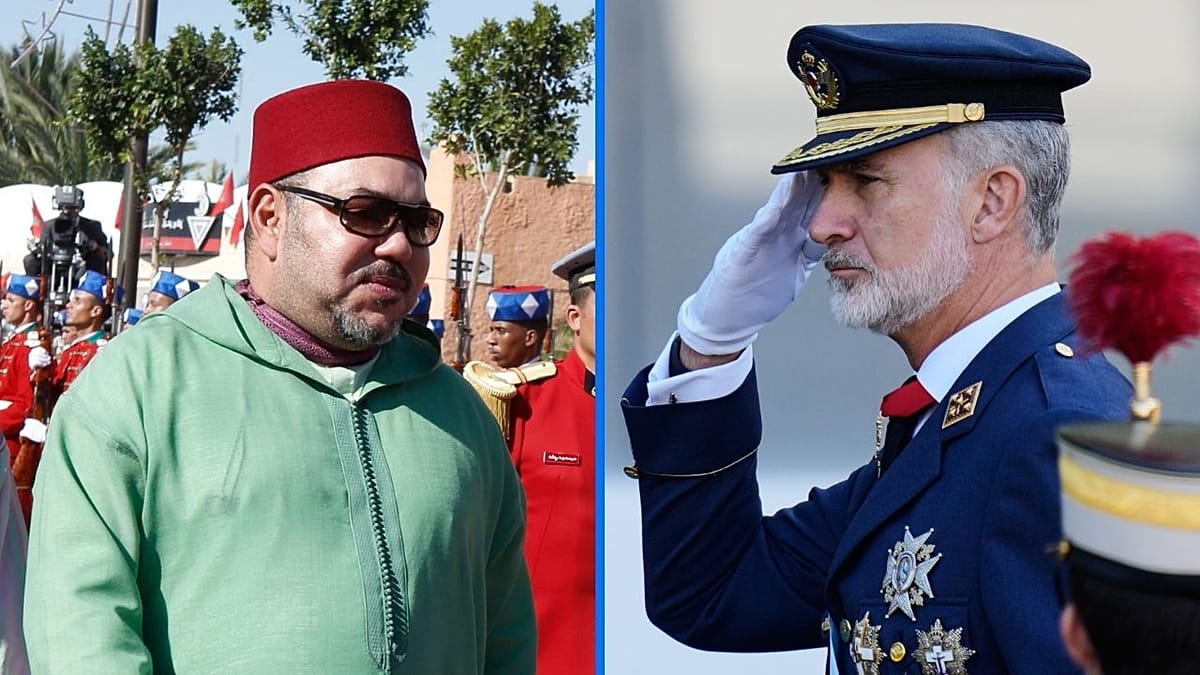
Yet a closer look at the numbers reveals a more nuanced picture. Spain remains far ahead in defence spending and dominates at sea, while Morocco fields a larger army and a rocket artillery capability that the Spanish Army has lacked for fifteen years. The gap is closing, but not as quickly as some headlines suggest.
Defence budgets: a six-to-one gap
According to the Stockholm International Peace Research Institute (Sipri), Spain allocated approximately €34.3 billion to defence in 2025, a 50% increase over the previous year, pushing its military burden to 2.1% of GDP. Morocco, by contrast, spent €5.6 billion, up from €4.9 billion in 2024, making it Africa's second-largest military spender after Algeria, which outlays €22.7 billion.
The disparity reflects the size of the two economies: Morocco's GDP stood at €138.7 billion in 2025, while Spain's was around €1.69 trillion—twelve times larger. The often-cited claim that Morocco spends 10% of its GDP on defence is misleading. Sipri puts the figure at 3.54% of GDP for 2025. The 10% figure actually refers to defence's share of public expenditure, which Sipri calculates at 10.28%.
Similarly, Morocco's 2026 finance law authorises future spending commitments of 157.2 billion dirhams (€14.7 billion) for the National Defence Administration, a multi-year line that is sometimes presented as a single-year budget. Actual disbursements in 2026 will amount to 55.3 billion dirhams (€5.2 billion). Spain, meanwhile, reached 2% of GDP in 2025 and aims to consolidate that in 2026, though it remains the only NATO ally to have refused to sign up to the 5% target for 2035.
Manpower: Morocco's edge in numbers
When it comes to personnel, the balance tips south of the Strait of Gibraltar. Morocco maintains between 195,000 and 200,000 active-duty troops, plus some 150,000 reservists, and it reintroduced compulsory military service in 2019. Spain, by contrast, has a staffing problem: on 1 January 2025, the armed forces counted 116,739 active personnel, below the legal minimum of 130,000 set by the Military Career Act, and the year ended with 832 fewer troops. The reserve is even thinner, with just over 3,000 voluntary reservists.
The often-quoted figure of 400,000 Moroccan troops, which has gone viral in some media, should be treated with caution. It comes from Global Firepower's profile updated in January 2026, which also credits Morocco with 250,000 reservists, but no independent source corroborates those numbers.
Air power: Eurofighter versus F-16 Viper
Spain flies more aircraft, but faces a long-term question mark. FlightGlobal's World Air Forces 2026 directory lists 81 EF-18 Hornets and 67 Eurofighters, with another 45 on order. The first twin-seat Halcón rolled out of the Getafe plant in June, and the second batch will arrive from 2030. However, Spain shelved the F-35 in August 2025 to buy European, and in June 2026 the FCAS programme—the fighter it was banking on—collapsed between France and Germany. Paris will now develop its own aircraft alone.
Morocco is taking a different path. Washington approved the sale of 25 F-16 Block 72s in 2019 for around €3.4 billion, plus 23 upgrade kits for its existing fleet. There are also signs of advanced talks for the F-35, with specialist media reporting a possible deal for 32 aircraft worth €13.5 billion over 45 years, including maintenance, but no official confirmation has been made.
In helicopters, Rabat has already received 12 of the 24 AH-64E Apaches it ordered, with the rest due in phases between 2026 and 2027. Spain will upgrade its 18 Tigers to the MKIII standard. Morocco has also completed delivery of the Israeli Barak MX air defence system, with three batteries and 225 interceptor missiles with a range of up to 70 kilometres, according to Sipri's database.
Ground forces: where Rabat presses hardest
It is on land that Morocco's military strength comes closest to Spain's. Rabat operates the US M1A2 Abrams tank, with an estimated 200 in service and another 150 on order, though exact numbers are hard to verify. Spain fields 220 Leopard 2E tanks and around 50 2A4s, and plans to upgrade them to the 2A8 standard.
The most striking asymmetry is in multiple rocket launchers. Global Firepower credits Morocco with 185 systems, while Spain has none—the Army lost that capability when the Teruel system was withdrawn in 2011. Morocco combines Chinese systems with Israel's PULS, already in service, and is awaiting the US HIMARS, of which Washington has approved the sale of 18 launchers.
There is a paradox here. Spain's Silam programme was to be based precisely on PULS, but the contract was cancelled because of the embargo on Israeli arms. That decision, taken in the context of the Gaza conflict, has left a capability gap that Morocco is exploiting.
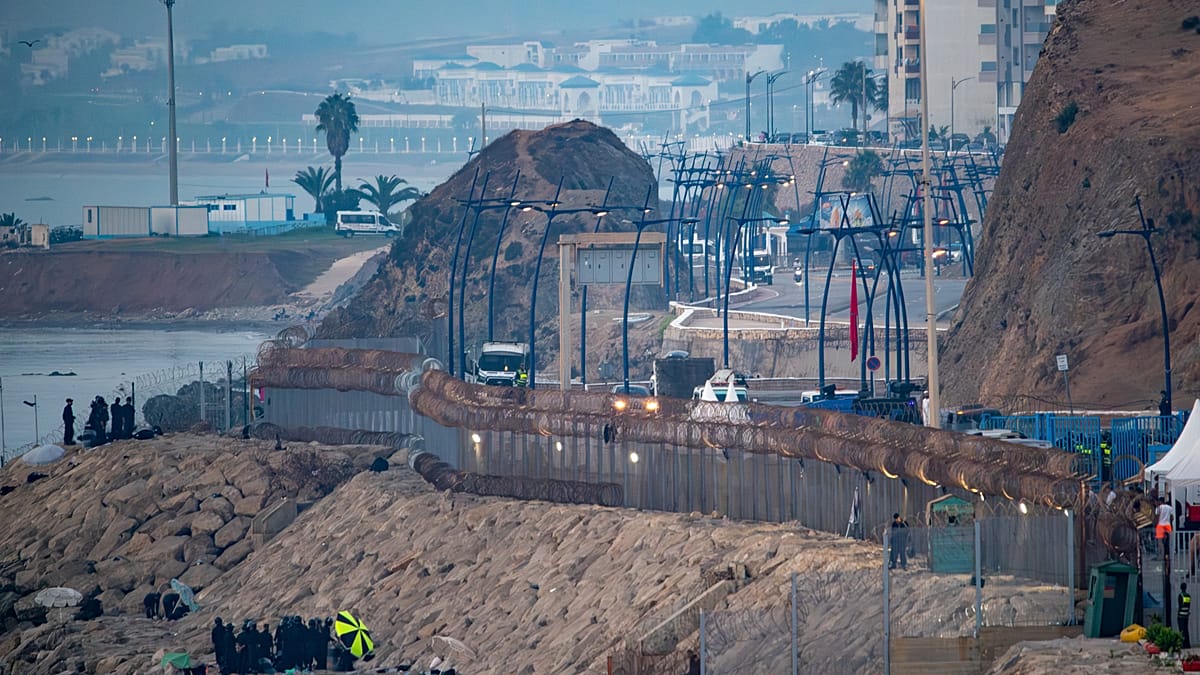
The military balance between the two countries is not static. Morocco's US-backed rearmament is narrowing the gap in several key areas, but Spain retains significant advantages in budget, air power, and naval capability. The question is whether Madrid can address its manpower shortages and modernise its ground forces in time to maintain its edge. As tensions over Ceuta and Melilla persist, the stakes are high for both sides.