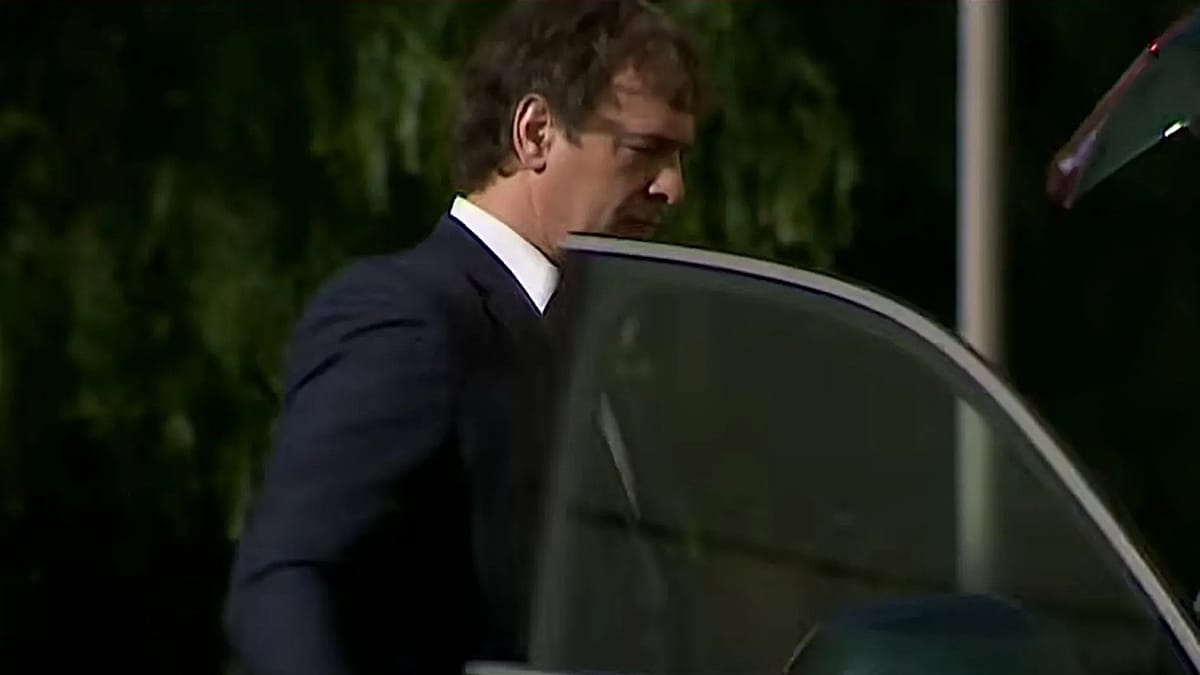
A court in Badajoz, in Spain's western Extremadura region, has convicted David Sánchez, the brother of Prime Minister Pedro Sánchez, of administrative misconduct. The ruling, issued on Tuesday, bans him from holding public office for nine years and suspends his voting rights for the same period. He was acquitted of the more serious charge of influence peddling, which could have carried a prison sentence.
The case revolves around a position created in 2016 for Sánchez as coordinator of music conservatories in the province of Badajoz. The court found that the role was "neither necessary nor urgent" and had been designed "to serve the private interest of its recipient and not the public interest." The ruling further stated that "such unethical practices harm democratic institutions and foster corruption and unequal opportunities."
Tailored Job Under Scrutiny
David Sánchez, a composer and orchestra director who has trained and worked in Saint Petersburg, Toulouse, Tokyo, and Madrid, was tried alongside ten other defendants. Prosecutors alleged that the position was created specifically for him, later evolving into the head of the province's performing arts office. He remained in the post until at least early 2025, well after his brother became prime minister in 2018.
The job fell under the authority of the provincial council of Badajoz, then controlled by the Socialist Party, which also leads the national government. The court determined that the creation of the role was unlawful, with Sánchez acting as a "necessary accomplice."
This verdict adds to a growing list of corruption-related investigations involving figures close to Pedro Sánchez, raising questions about the stability of his minority left-wing coalition. In a separate case last month, his former right-hand man José Luis Ábalos was sentenced to 24 years in prison for corruption. Additionally, the prime minister's wife, Begoña Gómez, is under investigation for alleged influence peddling, and former Socialist prime minister José Luis Rodríguez Zapatero, an ally of Sánchez, is also being probed over similar allegations.
The Sánchez administration has faced repeated scrutiny over ethics, though the prime minister has consistently denied any wrongdoing. The case highlights broader concerns about nepotism and the misuse of public office in Spain, a country that has seen several high-profile corruption scandals in recent years.
For context, the European Union has been tightening rules on public procurement and anti-corruption measures, as seen in EU plans to tighten public procurement rules over foreign interference fears. Meanwhile, Hungary's recent decision to join the European Prosecutor's Office could open the door to probes into Orbán-era corruption, as reported in Hungary joins European Prosecutor's Office.
The ruling in Badajoz is likely to fuel further debate about the integrity of public institutions in Spain and the broader European context, where trust in governance remains a key issue.