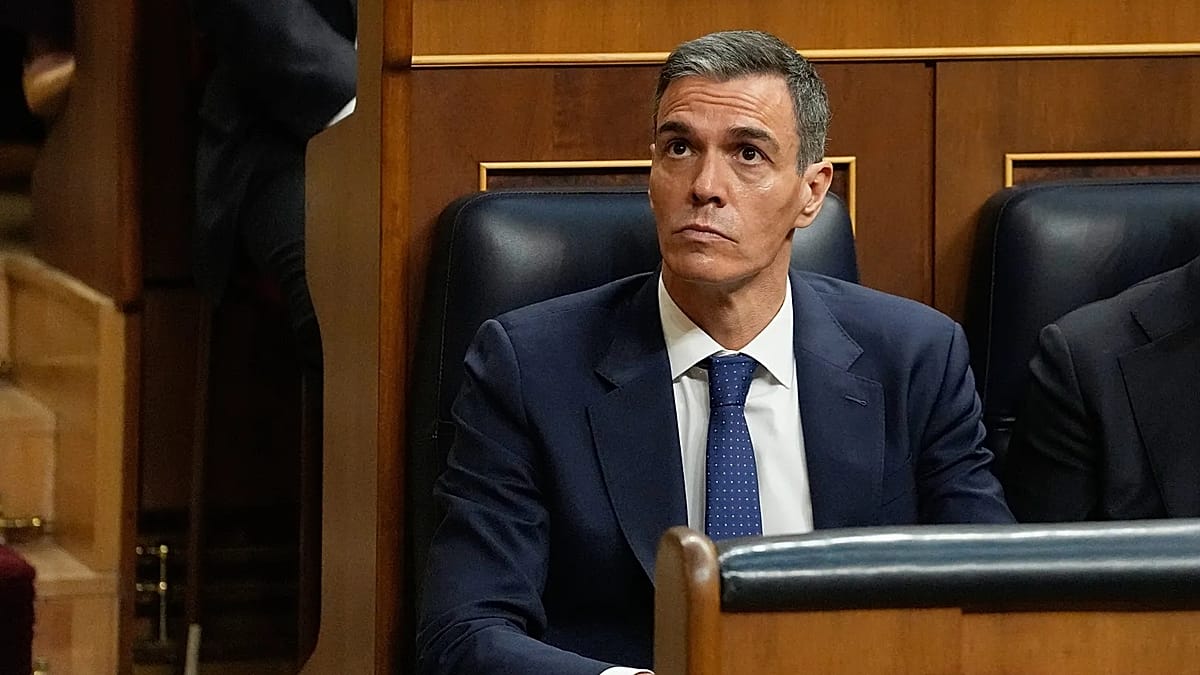
Spanish investigators have concluded that the initials “P.S.” found repeatedly in a personal diary seized from a former member of the ruling Spanish Socialist Workers’ Party (PSOE) refer to Prime Minister Pedro Sánchez. The finding, detailed in a report by the Central Operative Unit (UCO) of the Civil Guard, adds a new layer to an ongoing corruption investigation that has already shaken the party.
The diary belonged to Leire Díez, a former PSOE member, and was confiscated during a probe into alleged irregularities linked to the so-called Koldo network—a scandal involving public contracts and party financing. According to the UCO report, the notebook contains at least four entries from 2025 that mention “P.S.” in contexts ranging from meetings and information requests to media strategy and internal government affairs.
Investigators identified the initials by cross-referencing an entry where Díez herself refers to David Sánchez, the prime minister’s brother, as “brother of P.S.” This connection, the report argues, supports the interpretation that “P.S.” stands for Pedro Sánchez. The diary entries are part of what the UCO describes as a “possible strategy” to derail legal proceedings against David Sánchez, who is under investigation for alleged tax fraud and other offenses.
Alleged Strategy to Obstruct Justice
The report outlines two avenues that Díez and her associates allegedly pursued to interfere with the case. One entry lists a first point: “Be the lawyer for P.S.’s brother,” followed by a second: “Enter as a popular prosecution.” The UCO dates these moves to March 2025, suggesting a coordinated effort to challenge the presiding judge and replace David Sánchez’s legal representation.
The report also points to Santos Cerdán, the PSOE’s former number three and current organizational secretary, as the driving force behind these actions. According to the UCO, Cerdán was responsible for hiring the lawyers who devised the strategy alongside Díez and for covering the costs of her travel to meetings related to the case. This implicates a senior party figure in what investigators view as an attempt to shield the prime minister’s brother from prosecution.
Among the most significant diary entries is one dated 3 February 2025, where Díez notes a “meeting with P.S.” alongside other references to the Koldo network. Another earlier page contains the phrase: “Copy, USB stick, chain of custody, queries of Ábalos and P.S. databases,” apparently referring to former minister José Luis Ábalos, who has also been linked to the scandal. A third reference places Sánchez in the media sphere: “When Joseph arrives at Prisa he reaches an agreement with P.S. The editorial line is set by P.S. and the strategy by Joseph,” alluding to Joseph Oughourlian, chairman of the Prisa Group, which owns the newspaper El País.
The notebook also includes uninitialed sentences, such as “The UCO has all the WhatsApp messages between the prime minister and Ábalos” and “Pedro doesn’t trust the DAO,” suggesting a broader awareness of the investigation’s scope.
Political Fallout and Broader Context
The revelations come at a sensitive time for Sánchez’s government, which has faced mounting pressure over corruption allegations. The Koldo network scandal, named after a former advisor to Ábalos, has already led to arrests and resignations within the PSOE. The diary’s contents, if corroborated, could further erode public trust in the administration and fuel opposition calls for Sánchez’s resignation.
This story has clear European implications, as it touches on governance and rule-of-law issues that resonate across the continent. The European Union has increasingly scrutinized member states for judicial independence and anti-corruption measures, and Spain is no exception. The case also highlights the interconnectedness of European media and politics, with references to Prisa—a major Spanish media group—underscoring the role of press freedom in holding power to account.
For now, the UCO report is part of an ongoing investigation, and no formal charges have been filed against Sánchez or Cerdán. The prime minister’s office has declined to comment on the diary’s contents, while PSOE officials have dismissed the allegations as politically motivated. As the legal process unfolds, the diary’s entries will likely remain a focal point in Spain’s turbulent political landscape.