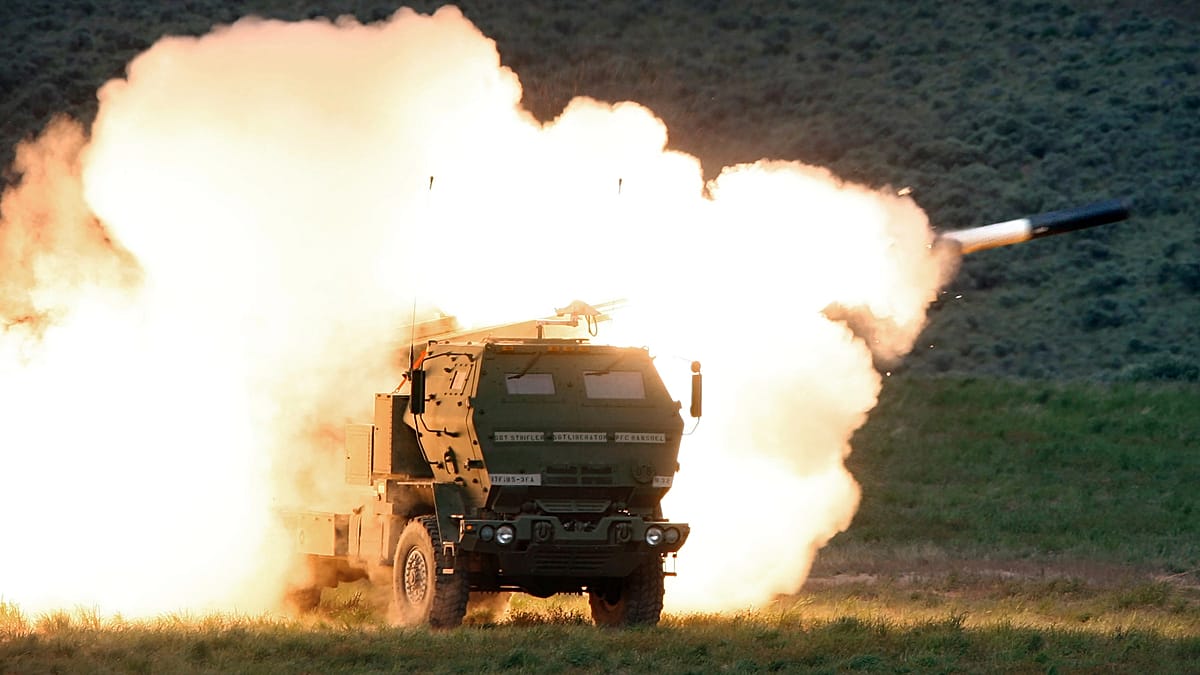
Stockholm is significantly extending its long-range strike capability. On Monday, the Swedish Ministry of Defence confirmed that the armed forces will acquire the High Mobility Artillery Rocket System (HIMARS) from Lockheed Martin in a deal valued at almost €630 million (7 billion Swedish crowns). The first systems are expected to arrive in 2027, with funding drawn from the military's regular investment budget.
The contract covers ten launchers plus ammunition, filling a capability gap that Swedish officials have long acknowledged. The ministry described the purchase as an “opportune acquisition,” noting that rocket artillery reaches considerably further than conventional tube artillery and is designed for precision strikes at distance. It will complement—not replace—Sweden's existing Archer self-propelled howitzers and grenade launchers.
With this addition, Swedish forces will be able to cover far larger areas than current equipment permits. The system is also interoperable with those used by NATO allies, a key consideration as Sweden integrates into the alliance it joined in 2024. The purchase falls under Sweden's total defence bill for 2025–2030, a spending framework adopted amid a continent-wide push to bolster military budgets.
Shared capability with Finland
Alongside the procurement, Swedish Defence Minister Pål Jonson and his Finnish counterpart Antti Häkkänen signed a joint declaration on cooperation and coordination in rocket artillery. The arrangement covers training, education, capability development, maintenance, security of supply, and even joint production. The logic is both technical and political: Finland already operates the Multiple Launch Rocket System, which uses the same munitions and core components as HIMARS, so the two neighbours can pool stockpiles and maintenance rather than duplicating them.
“The introduction of rocket artillery clearly demonstrates that Sweden is taking responsibility for security in Europe,” Jonson said. He added that “together, we are developing important capabilities for NATO's collective defence.” Häkkänen echoed that sentiment, stressing that the Nordic partnership strengthens deterrence in the High North and the Baltic Sea region.
The agreement also has an industrial dimension that keeps some value in Sweden. Lockheed Martin and Swedish defence group Saab are signing their own declaration covering the possible integration of Saab's Ground-Launched Small Diameter Bomb with HIMARS, as well as the production of munitions for HIMARS and other systems, including the Patriot air defence platform. That matters beyond this contract, as it could position Saab as a key supplier in future NATO-wide ammunition programmes.
The move comes as European nations accelerate defence spending in response to Russia's war in Ukraine and broader security uncertainties. Sweden's decision to buy American hardware rather than a European alternative has drawn some debate, but officials argue that interoperability with NATO's standard systems outweighs other considerations. Finland's parallel investment in the same family of weapons ensures that the two countries can operate seamlessly together in a crisis.
For Sweden, the HIMARS purchase is a clear signal of its post-neutrality posture. The country has moved from a policy of military non-alignment to becoming a frontline contributor to NATO's eastern flank. The new artillery will likely be deployed in joint exercises with Finnish and other allied forces in the coming years.
Analysts note that the deal also strengthens the transatlantic defence industrial link at a time when European leaders are debating strategic autonomy. While some EU members push for more European-only procurement, Sweden's choice underscores the practical reality that many advanced systems—especially rocket artillery—are most readily available from US suppliers. The parallel Saab agreement, however, ensures that Swedish industry retains a foothold in the production chain.
Deliveries are scheduled to begin in 2027, with full operational capability expected by the early 2030s. The Swedish armed forces will integrate the HIMARS into its existing artillery units, and training with Finnish counterparts is already being planned. The joint declaration signed in Stockholm on Monday sets the framework for that cooperation, which officials say will be a model for other Nordic defence collaborations.