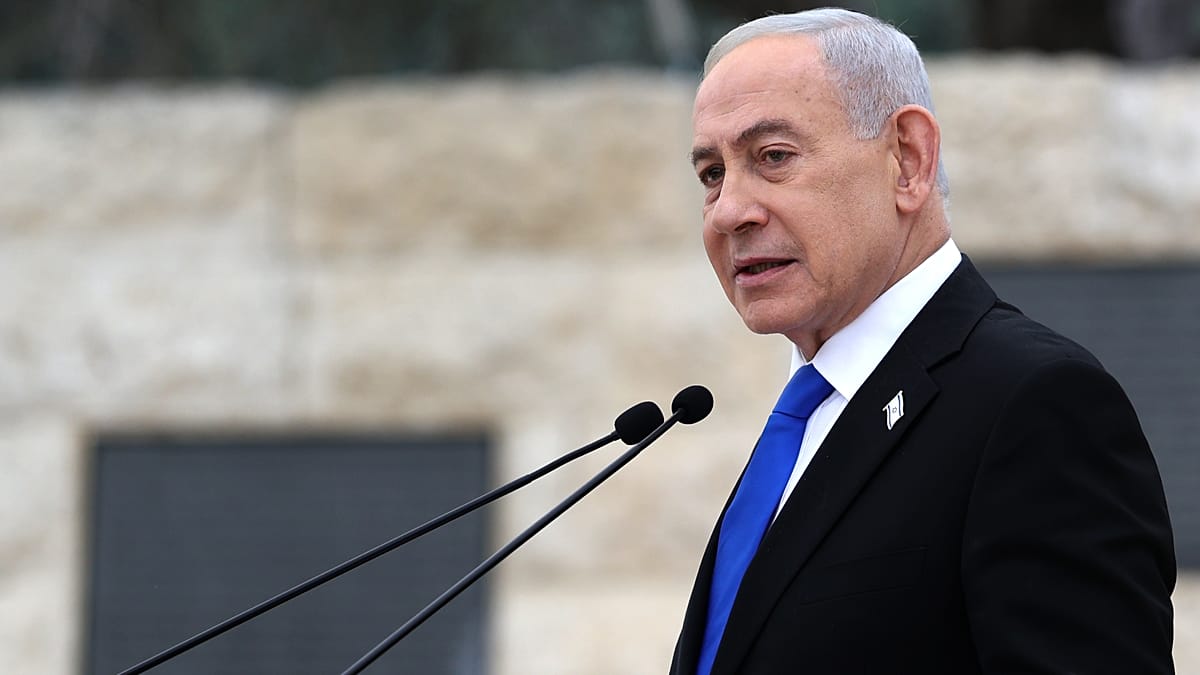
The United Arab Emirates has firmly rejected claims from Israeli Prime Minister Benjamin Netanyahu's office that he made a secret wartime visit to the Gulf state. The denial came as Iran's foreign minister issued a stark warning against any collaboration with Israel.
Netanyahu's office released a brief statement on Wednesday evening asserting that the premier had 'secretly' travelled to the Emirates 'in the midst of Operation Roaring Lion' and met with UAE President Sheikh Mohamed bin Zayed. The statement described the visit as a 'historic breakthrough in relations between Israel and the UAE.'
The Emirati Ministry of Foreign Affairs responded swiftly, calling the allegations 'entirely unfounded unless officially announced by the relevant authorities in the UAE.' The ministry emphasised that relations with Israel are conducted transparently under the Abraham Accords, which normalised ties in 2020, and are not based on 'non-transparent or unofficial arrangements.' It also denied receiving any Israeli military delegation.
Iran, which has long criticised the Abraham Accords and alleged an Israeli military and intelligence presence in the Emirates, reacted sharply. Foreign Minister Abbas Araghchi posted on X that 'enmity with the great people of Iran is a foolish gamble' and described 'collusion with Israel' as 'unforgivable.' He added that 'Netanyahu has now publicly revealed what Iran's security services long ago conveyed to our leadership' and warned that those 'colluding with Israel to sow division will be held to account.'
Regional Tensions Escalate
The dispute comes amid heightened regional tensions following the recent Iran-Israel conflict. The UAE itself faced Iranian missile and drone fire during the war, even after a ceasefire was reached last month. Emirati officials have stated the country remains open for business and safe.
Last week, the Emirati news agency WAM reported that Netanyahu was among leaders who called President Sheikh Mohamed bin Zayed to condemn Iranian attacks and express solidarity—a rare public acknowledgment of direct communication between the two countries. Israeli leaders have made occasional visits to the UAE in recent years, but none have been officially confirmed during the wartime period.
The controversy extends beyond the UAE. On Tuesday, Kuwait announced the detention of four men and the escape of two others who attempted to infiltrate Bubiyan Island in the Persian Gulf on 1 May. Iran's foreign minister accused Kuwait of trying to 'sow discord' by detaining four Iranians, whom Kuwait claims are IRGC operatives. Araghchi demanded their immediate release and reserved Tehran's right to respond. Bubiyan Island is home to Mubarak Al Kabeer Port, which was attacked by Iran during the war.
These incidents underscore the widening rifts in the region, with Gulf states navigating complex relationships between Israel and Iran. For European observers, the developments highlight the fragile security architecture in the Middle East, where European interests—from energy security to migration flows—are directly affected. The European Union has consistently supported the Abraham Accords as a step toward regional stability, but the current tensions risk undermining that progress.
As the situation evolves, European capitals will be watching closely. The UAE's denial and Iran's threats signal that the path to normalisation remains fraught with challenges, and any misstep could have broader implications for the continent's strategic interests.