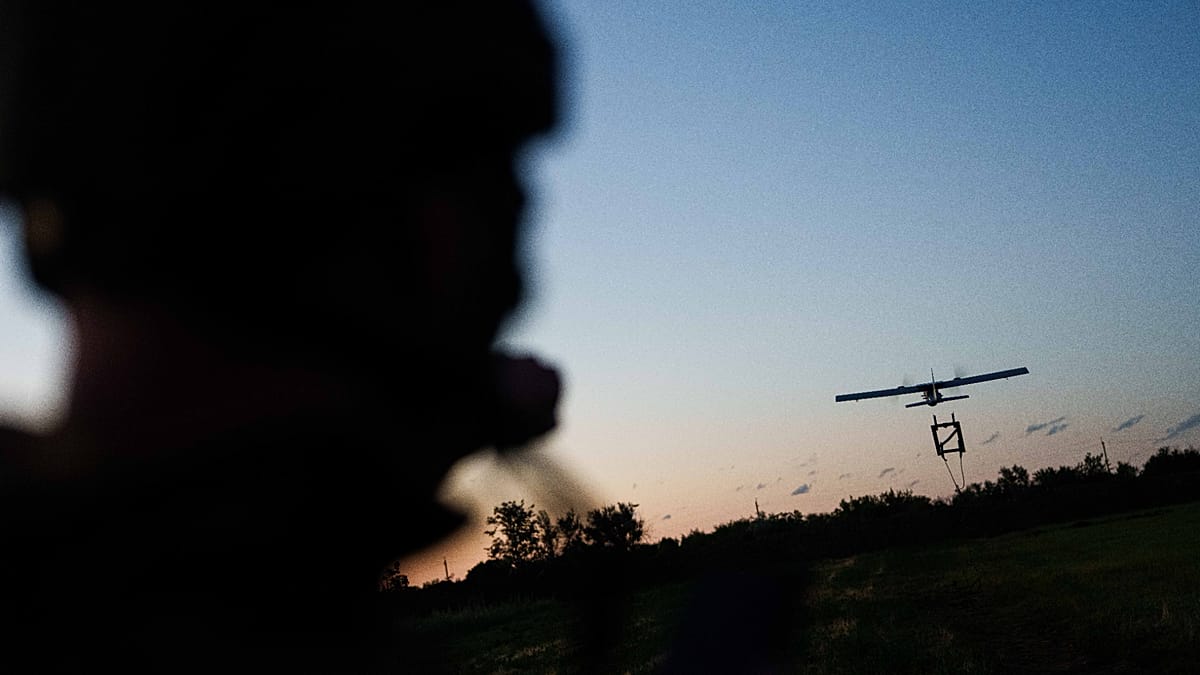
Ukraine has denied any deliberate action against Bulgaria after an unidentified drone exploded close to the Trans-Balkan gas pipeline near the Romanian border, an incident that has heightened tensions along NATO's eastern flank.
Bulgaria's defence ministry said the drone was of a type "widely used by the Ukrainian military," and the foreign ministry has summoned Ukraine's ambassador for talks on Monday. Kyiv, in turn, said it was "in close contact with the Bulgarian side to clarify the circumstances" and insisted that its forces had not intentionally directed any assets toward Bulgarian territory.
"We can say with certainty that the Ukrainian Armed Forces did not intentionally direct any assets toward Bulgaria," foreign ministry spokesman Georgiy Tykhyi said, blaming Russia's invasion for the incident.
Explosion near critical infrastructure
The drone entered Bulgarian airspace from Romania and exploded roughly 1,000 metres from the compressor station of the Trans-Balkan pipeline, which carries natural gas from Turkey through Bulgaria and Romania to Ukraine and other markets. The blast occurred near the Kardam border crossing, close to the Black Sea, and left no casualties, according to Bulgarian authorities.
Prime Minister Rumen Radev, speaking after an emergency meeting of the security council, said the drone was carrying "a significant amount of explosives," judging by the loud blast and the column of black smoke it produced. The wreckage came down in a sunflower field, he added.
Neither Bulgaria nor Romania had detected the drone before it crossed the border, Radev said, underscoring the difficulty of tracking small, low-flying unmanned aircraft. "Identifying and neutralising these drones poses a major challenge," he acknowledged.
Bulgaria's defence ministry said that, based on an initial analysis of the debris, "currently, nothing suggests that this was a deliberate incident." Still, the government has decided to increase surveillance and redeploy troops and anti-drone equipment along the borders.
Regional drone incidents on the rise
The episode is the latest in a series of drone incursions affecting NATO member states bordering the Black Sea. Romania has repeatedly reported Russian drones entering its airspace and even crashing on its territory since Moscow's full-scale invasion of Ukraine began in 2022. In late July, Bucharest expelled a Russian embassy staff member over such incidents.
Further west, German authorities confirmed that drones were detected this week above a military installation in Mechernich, western Germany, which houses a large underground depot for US-made Patriot air-defence systems. The sighting, reported by a German operational command spokesman, adds to concerns about espionage and sabotage across Europe.
The Black Sea itself has become a contested arena, with both Ukraine and Russia using drones to attack naval and civilian targets. Turkey's foreign minister, Hakan Fidan, on Saturday called for a "moratorium" on such attacks, telling state news agency Anadolu that the two sides had moved from targeting ports and military ships to striking all commercial shipping without distinction. Ankara had already condemned drone attacks on two Turkish civilian vessels earlier in the week, in which crew members were injured.
Bulgaria, for its part, halted military aid to Ukraine in June. Radev has said his country does not belong to the coalition supplying arms to Kyiv and prefers diplomatic efforts to end the war.
The incident comes as Ukraine continues to rely heavily on domestically produced drones, a sector that has shown resilience despite political changes in the defence ministry. Meanwhile, Western sanctions on Russian energy revenues remain a key lever in the broader conflict.