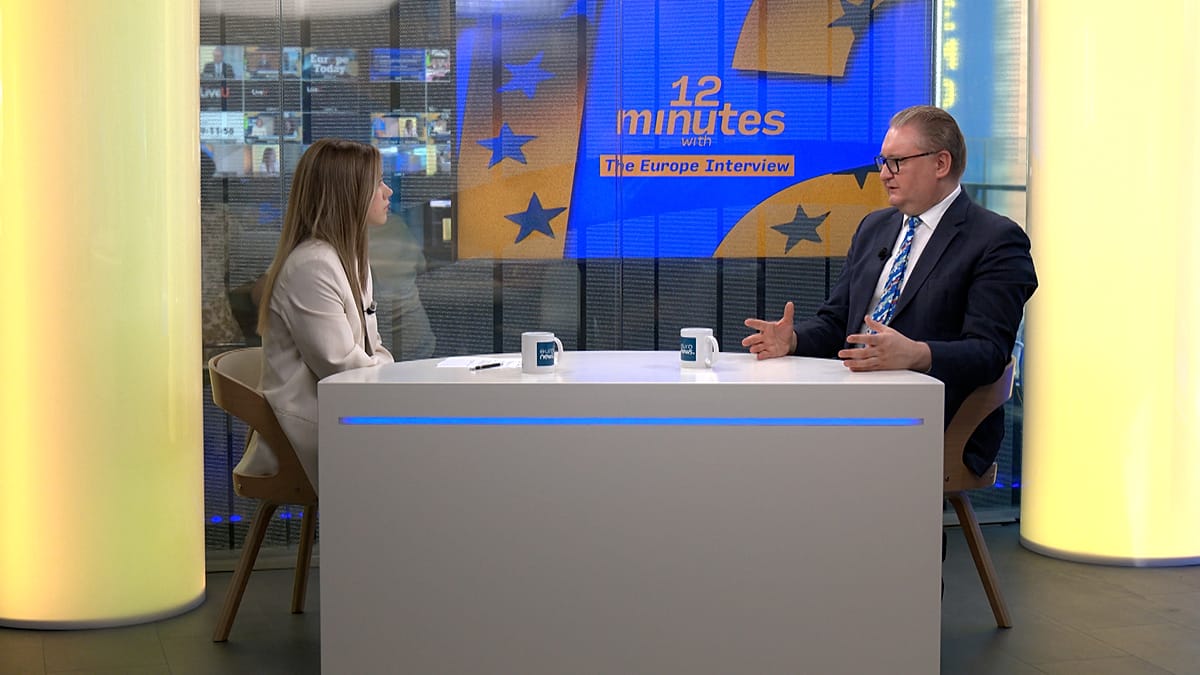
Ukraine has firmly dismissed any suggestion of a partial or alternative path to European Union membership, with Deputy Prime Minister for European and Euro-Atlantic Integration Taras Kachka telling Euronews that only full accession under Article 49 of the Treaty on European Union is acceptable.
Speaking in an exclusive interview, Kachka rejected a recent proposal by German Chancellor Friedrich Merz for Ukraine to become an "associate member" of the EU before attaining full membership. "There are no alternatives for the fast, merit-based, but full membership in the European Union," Kachka said. He described the associate membership idea as "unacceptable if it is an alternative to full membership," adding that what Ukraine needs is a "fast, comprehensive, normal accession process that will end with the signing of a treaty of accession."
Kyiv Pushes for Accelerated Timeline
Kyiv is now urging Brussels to open all six negotiation clusters in June 2026, ahead of the previously scheduled July timeline. "We believe that all six clusters can be open already in June," Kachka stated. "Our timeline is that we are already behind the deadline."
European Commissioner for Enlargement Marta Kos had earlier indicated that the first cluster could be opened in June under Cyprus's rotating EU presidency, with the remaining five following in July when Ireland takes over. Each cluster covers key reform areas—from rule of law to judicial reform—and requires unanimous approval from all 27 member states.
Kachka insisted that Ukraine has already completed the necessary groundwork, meaning the formal opening of clusters would not mark a fresh start. "So everything is already done, that's why we're already behind schedule," he said, noting that Ukraine's accession process effectively began 15 years ago with the negotiation of the association agreement. He added that all benchmarks defined by the EU can be implemented within the next 12 to 18 months.
This push for speed comes amid broader discussions about Ukraine's readiness. In a related interview, Kachka highlighted that anti-corruption probes show Kyiv meets EU standards, reinforcing the argument that the country is prepared for accelerated talks.
Hungarian Veto and Minority Rights
A major obstacle to Ukraine's accession has been Hungary's veto, which Budapest justified by citing concerns over the rights of the Hungarian minority in western Ukraine. However, with a new Hungarian prime minister, Péter Magyar, in office, Kyiv hopes the blockade will be lifted.
Kachka emphasized that Ukraine respects its Hungarian community fully. "We have almost 100 schools for Hungarians satisfying all demands," he said, adding that every child who wishes to learn in Hungarian or study the language while attending Ukrainian schools has that opportunity. He noted that Kyiv is now presenting Budapest the same offer it previously made to former Prime Minister Viktor Orbán: to fine-tune legislation to ensure the current positive atmosphere remains unchanged.
But Kachka suggested Budapest should not delay further. "The dialogue on national minorities between Ukraine and Hungary will last permanently," he said, implying that the veto should be lifted now rather than waiting for a final resolution.
Potential Vetoes from Other Member States
Even if the Hungarian veto is resolved, other EU capitals could pose obstacles. Kachka acknowledged that Polish agriculture views Ukrainian agriculture as competition, and that Kyiv is already in consultations with Warsaw and other member states to address sector-specific issues.
Ukraine's determination to pursue full membership remains unwavering. As Kachka put it, everything else "doesn't matter." The coming months will test whether Brussels and the member states can match Kyiv's urgency.