In the Fergana region of Uzbekistan, O‘lmasjon Jumayev has turned a modest greenhouse into a thriving family enterprise. Starting in 2013 with a 5 million soum (€370) preferential loan and a 70-square-metre plot, he now cultivates tomatoes, cucumbers, and herbs under plastic covers, while also managing nearly 1,000 bee colonies. “We never stay unemployed,” he said. “We create work for ourselves, and it supports our household.”
Jumayev’s story reflects a broader shift across Uzbekistan, where small-scale entrepreneurship has become a cornerstone of poverty reduction. According to the Ministry of Employment and Poverty Reduction, 8 million people have moved out of poverty over the past nine years, reducing the national poverty rate from 35% to 6.8%. The government’s “From Poverty to Prosperity” programme combines preferential loans, subsidies, vocational training, and local support systems to help low-income households build sustainable micro-businesses.
From Greenhouses to Livestock: Diversifying Rural Income
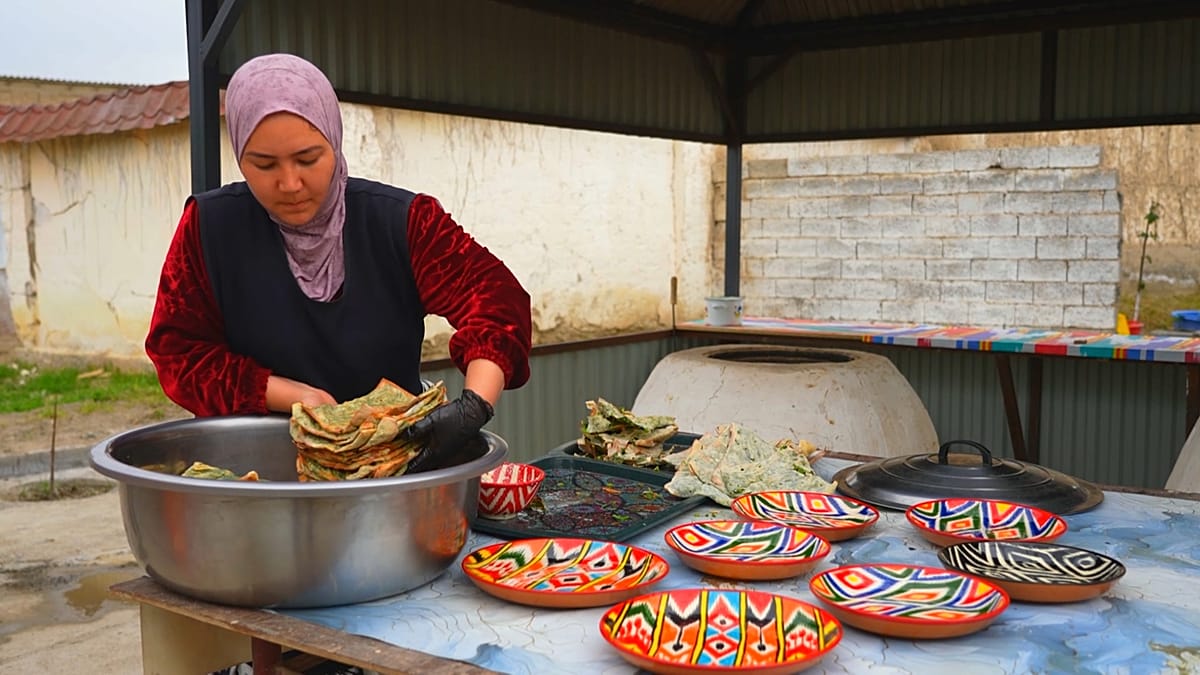
In the Samarkand region, entrepreneur Fazilat Jo‘rayeva launched a yurt-style dining concept in the Pastdarg‘om district, serving traditional Uzbek dishes like somsa and patir bread to travellers. The business now employs around 35 people, mostly women, and indirectly benefits about 100 families through suppliers and related services. “People finish work in the afternoon and return home with a stable income,” she said.
In Surkhandarya, Akmal Nazarov began cattle breeding in 2022 with a state-supported loan. He paid it off within two years and now supplies meat to local markets while expanding his livestock production. “We work on this business all year round,” he said. Livestock and household farming programmes are increasingly used in rural areas to support self-employment.
The mahalla system—a local community structure—plays a central role in connecting residents to opportunities. In Pastdarg‘om, assistant hokim Jahongir Normo‘minov said the number of small businesses in his mahalla grew from 18 to 61 within a year, focusing on export-oriented cherry production and metal manufacturing. “Before starting any project, we first study the market,” he said. “Only after that do we support residents.” Poverty in that mahalla fell from 19% to 2.9% in two years.
In Surkhandarya, governor assistant Farrukh Shoqambarov noted that livestock and agricultural programmes help unemployed residents build skills. “People come here to learn and start their own businesses,” he said.
Infrastructure improvements—including irrigation, electricity, and water supply upgrades—have also facilitated growth. The “Online Mahalla” digital platform tracks household income and support programmes in real time, improving efficiency. Meanwhile, the European Bank for Reconstruction and Development (EBRD) recently lent $50 million to an Uzbek bank to boost youth entrepreneurship, a move that echoes similar efforts across Europe to support small businesses. For context on how European farmers face funding challenges, see EU Farmers Face Funding Dilemma as Defence and Ukraine Accession Loom.
Gulnoza Alimova, head of the ministry’s press service, said more than 760,000 families received individual development plans in 2025 alone, with over 523,000 low-income households receiving support. Authorities allocated over 2.2 trillion soums (€162 million) in loans and 265 billion soums (€19.6 million) in subsidies. More than 700,000 entrepreneurs have established stable businesses over the past eight years. “Entrepreneurs themselves help generate jobs and incomes for people in need,” Alimova said.
Uzbekistan’s approach offers lessons for other regions, including Europe, where rural entrepreneurship is also reshaping livelihoods. For instance, in South Tyrol, family-run resorts like Das Mühlwald embrace a different model of rural tourism, as explored in Das Mühlwald Review: A South Tyrol Family Resort That Embraces Chaos. Meanwhile, the question of where Europe’s young hold the most wealth—often tied to family housing—remains a key factor in economic mobility, as discussed in Where Europe's Young Hold the Most Wealth: A Tale of Family and Housing.