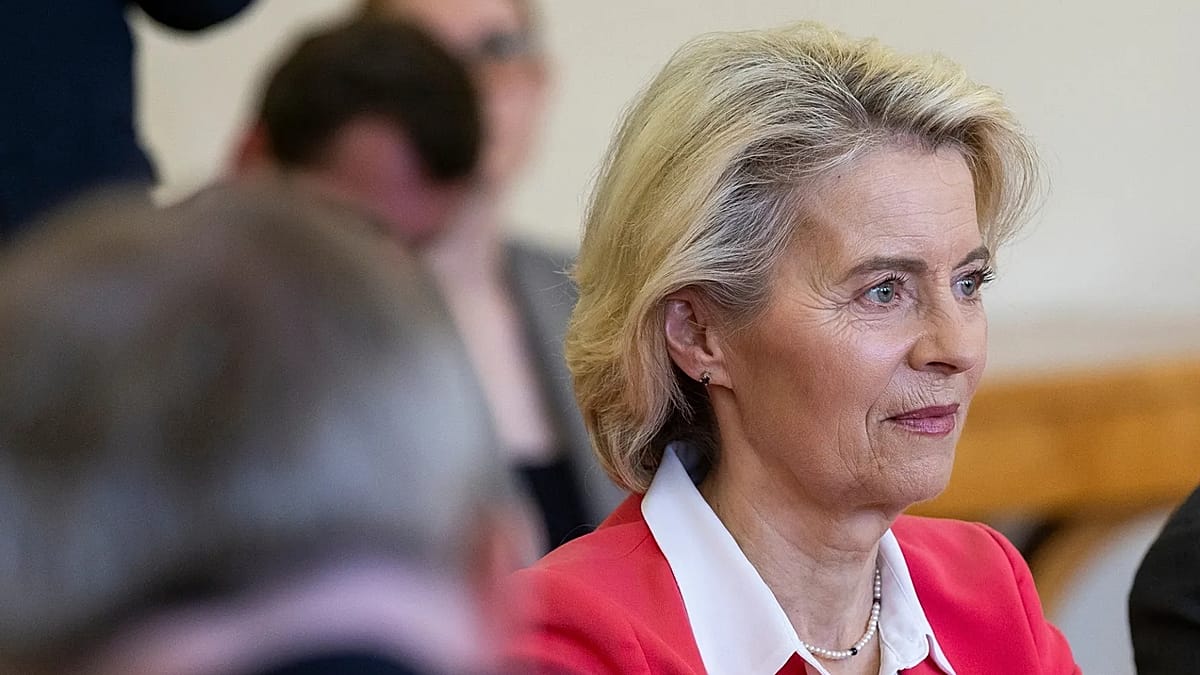
European Commission President Ursula von der Leyen is facing renewed scrutiny over her appointment of Jim Hagemann Snabe, the Danish chairman of German industrial giant Siemens, as the EU's first special envoy for industrial artificial intelligence. Forty-one centre-left MEPs have formally questioned the selection, citing potential conflicts of interest and a lack of transparency.
The role, confirmed by the Commission last week, is intended to accelerate the uptake of AI across European industrial sectors. Snabe, a veteran Danish businessman, will advise the EU executive on policy until 31 March 2027. The position is unpaid, and Snabe has agreed to suspend his membership on the advisory boards of Google Cloud and C3.ai, an enterprise AI company, for its duration.
However, MEPs led by Brando Benifei (S&D, Italy) argue that Snabe's continued chairmanship at Siemens—a company that sought to weaken the EU AI Act during its legislative passage—creates an inherent conflict. “The interests of one incumbent company cannot be equated with the interests of Europe's diverse industrial ecosystem, including SMEs, start-ups, workers, consumers, and independent experts,” the lawmakers wrote in a priority question to the Commission.
Demands for transparency
The MEPs are calling on the Commission to publish the mandate, selection procedure, declaration of interests, and a full conflict-of-interest assessment for the appointment. They also want to know what safeguards, recusals, and transparency obligations will prevent privileged access or undue influence by a single industrial actor over EU AI policy.
The Commission maintains that Snabe's role at Siemens does not constitute a conflict of interest. “The Commission is fully behind the AI Act,” said Thomas Regnier, the Commission's spokesperson for digital policy. “The special adviser that was appointed is there for the other side. The regulation always goes with innovation.”
This is not the first time von der Leyen's choice for a high-level envoy has sparked controversy. In 2024, she was forced to withdraw the appointment of Markus Pieper, a fellow German MEP from her own party, to the highly paid post of SME representative after a public backlash. The pattern echoes earlier criticism: in 2015, the EU Ombudsman found that the Commission had failed to address conflict-of-interest concerns in the appointment of Edmund Stoiber, another German politician, as a special adviser to then-Commission President Jean-Claude Juncker.
The debate comes as the EU seeks to balance regulation with industrial competitiveness. The AI Act, which entered into force in 2024, imposes strict rules on high-risk AI systems, but the Commission has also stressed the need to foster innovation. Critics argue that appointing a senior figure from a company that lobbied against the Act undermines the regulatory framework.
Snabe's appointment also raises questions about the influence of large corporations from von der Leyen's home country. Siemens, headquartered in Munich and Berlin, is a major player in industrial automation and digitalization, and its interests may not align with those of smaller European businesses or startups. The MEPs have pointed to the Commission's internal rules requiring special advisers to avoid conflicts of interest, noting that while the EU executive has said safeguards are in place, it has not specified what they are.
The controversy unfolds against a broader backdrop of geopolitical tensions and trade disputes. The EU is navigating a complex relationship with China, as highlighted by von der Leyen's own warnings about Chinese overcapacity and the need for economic security. Meanwhile, the Middle East conflict threatens up to 1.3 million EU jobs, according to Commission warnings, underscoring the importance of resilient industrial policy.
As the Commission defends its pick, the MEPs' questions remain unanswered. The episode underscores the persistent tension between leveraging private-sector expertise and maintaining public trust in EU institutions. For now, Snabe will advise on how to make European industry more AI-driven—but the debate over whose interests he truly represents is far from settled.