European Commission President Ursula von der Leyen has signalled that Brussels could propose a bloc-wide social media ban for children as early as this summer, responding to growing demands from several member states to tighten online safeguards for minors.
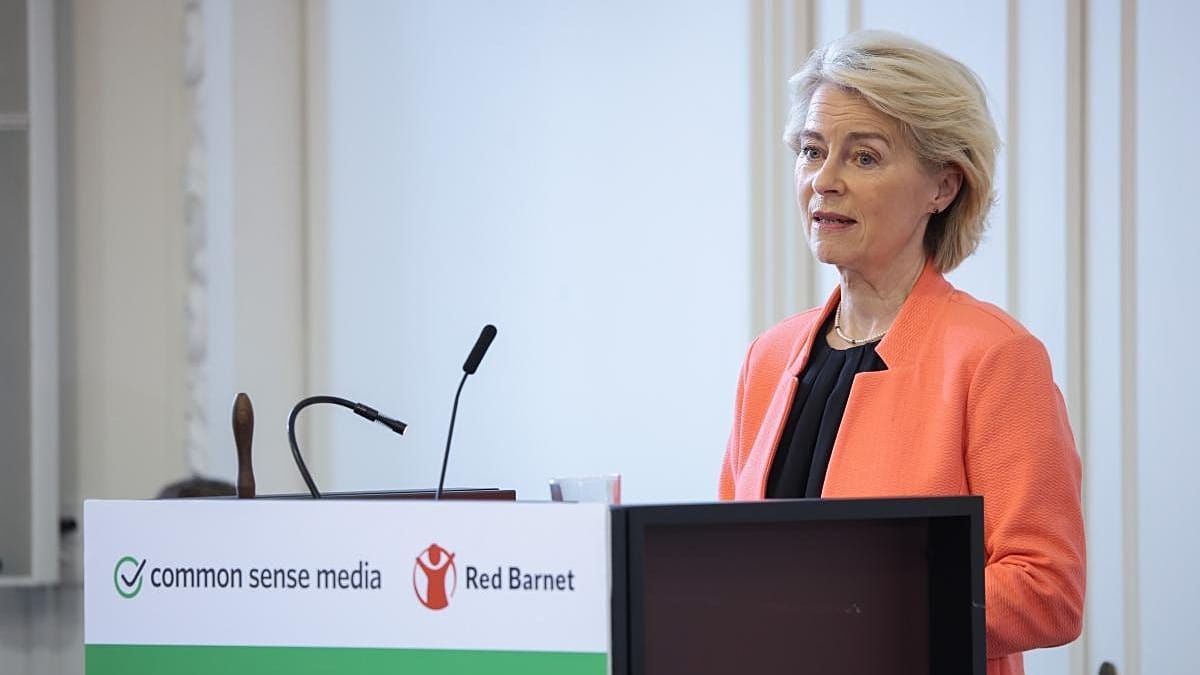
Speaking at the European Summit on Artificial Intelligence and Children in Copenhagen, von der Leyen acknowledged the rapid penetration of technology into childhood and adolescence. “We are witnessing the lightning speed at which technology is advancing – and how it penetrates every corner of childhood and adolescence,” she told delegates.
The Commission has established an independent expert panel on online child safety to evaluate potential measures targeting addiction and social anxiety among minors. Von der Leyen stressed that while she would not pre-empt the panel’s findings, she believes a social media delay should be considered. “Depending on the results, we could come forward with a legal proposal this summer,” she said.
National Legislation and Harmonisation Challenges
Several EU countries, including France, Spain, Greece, and Denmark, have already pursued national legislation to restrict minors’ access to social media. France, for instance, is set to enforce a law in September requiring platforms like Instagram and TikTok to block users under 15 and suspend existing accounts. The proposed EU timeline could allow Brussels to move ahead of these national efforts, maintaining a harmonised approach across the single market.
One of the key hurdles remains a common technical solution for age verification. Von der Leyen suggested an EU-wide age-verification app modelled on the bloc’s EU Digital COVID Certificate system, noting that “discussions about a minimum age for social media can no longer be ignored.” However, several member states have reacted cautiously, and cybersecurity experts have flagged potential technical vulnerabilities.
The EU is not alone in considering tougher restrictions. Australia and Indonesia have already introduced similar measures, and Brussels has placed platforms like Instagram and Snapchat under scrutiny under the Digital Services Act over concerns they failed to protect minors adequately. The bloc is also exploring a ban on certain addictive design features under the proposed Digital Fairness Act.
Von der Leyen acknowledged that sustainable change takes time but warned against hesitation. “If we are slow and hesitant, it will be another entire generation of children that pays the price,” she said.
The push for a unified EU approach comes amid broader debates about digital regulation and child safety. Meanwhile, European youth activists have challenged blanket social media bans, urging smarter regulation instead. The Commission’s expert panel is expected to deliver its findings in the coming months, setting the stage for a potentially landmark legal proposal.