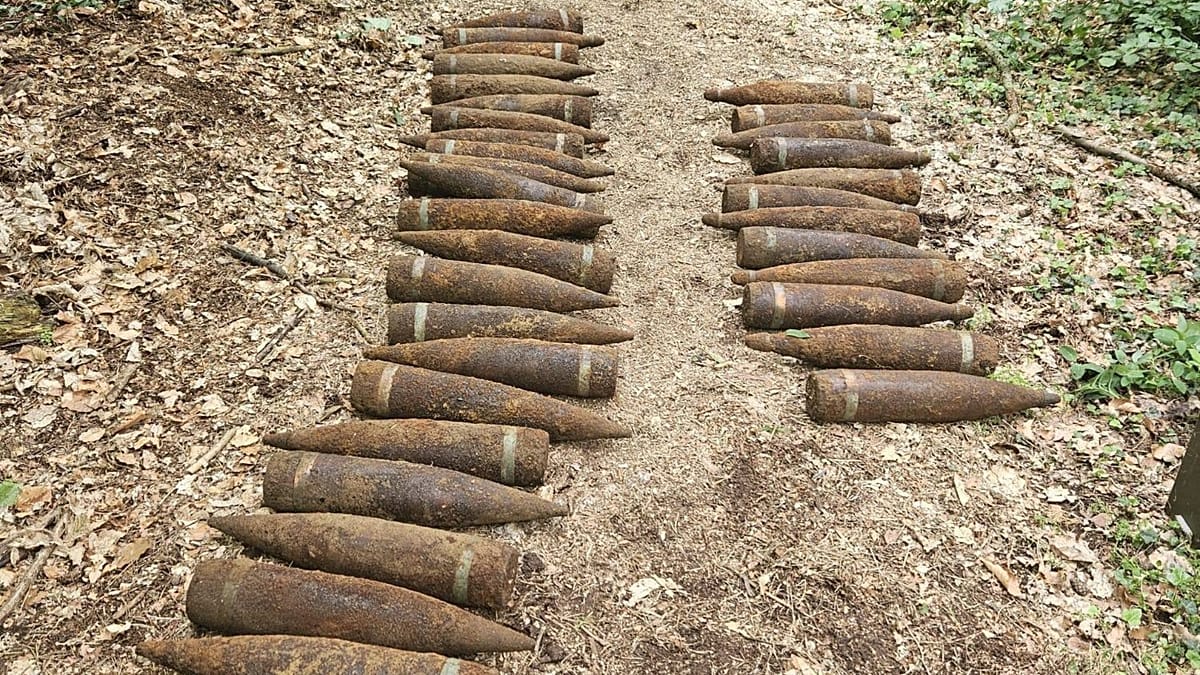
In the north of Berlin, a routine walk through woodland in the Pankow district took an unexpected turn when a passerby spotted a suspicious object. Specialists from the State Office of Criminal Investigation (LKA) were called in, and what they uncovered was far from ordinary: buried in the forest floor were 59 unfired shells of Soviet design, each with a calibre of 122 millimetres. The total weight of this Second World War ammunition reached approximately 1.5 tonnes.
The discovery highlights the enduring legacy of conflict in Europe, where unexploded ordnance from the war still surfaces decades later. Berlin, a city heavily bombed and fought over in 1945, regularly sees such finds, though the scale here is notable. The LKA teams carefully excavated the site, ensuring the shells were removed without incident.
Police Response and Public Safety
The Berlin police responded with a touch of humour on social media, posting on Facebook: "There turned out to be a bit more than just timber lying around in Pankow’s woods…" Despite the dramatic find, authorities stressed that there was no danger to the public at any point. The area was cordoned off during the operation, and the ammunition was transported away for disposal.
This incident is a reminder of the ongoing work by bomb disposal units across Germany. Similar operations occur frequently in cities like Berlin, Hamburg, and Dresden, where construction projects often unearth unexploded bombs. The find in Pankow, however, is unusual for its quantity and the fact that it was Soviet, rather than German or Allied, ordnance.
The shells, likely remnants of the Red Army's advance into Berlin in 1945, were found in a wooded area that may have been a temporary storage site or a battlefield dumping ground. The LKA has not disclosed the exact location to prevent further disturbances.
For context, Berlin's Pankow district is a residential and green area, home to many families and parks. The discovery underscores how the past remains physically present in the city's landscape. While such finds can be alarming, they are handled with routine professionalism by German authorities, who have decades of experience in ordnance disposal.
This story also connects to broader European themes of historical memory and safety. Across the continent, from the forests of Poland to the fields of France, unexploded munitions from both world wars continue to be discovered. In Spain, for instance, authorities recently unveiled a major forest fire campaign after record blazes in 2025, highlighting different environmental challenges. Meanwhile, in Portugal, a separate incident involving abandoned children in a forest led to an international search, as reported in this article.
The Berlin police have not announced any further investigations, as the find appears to be a historical remnant rather than a criminal matter. The ammunition will be destroyed in a controlled manner, a standard procedure for such ordnance.