Prime Minister Pedro Sánchez unveiled what he described as Spain's most ambitious campaign against forest fires on Thursday, following a devastating 2025 season that saw a record area of land consumed by flames. Speaking at the Torrejón airbase near Madrid, Sánchez outlined a package of resources including new helicopters, amphibious aircraft, drones, heat cameras, and advanced surveillance systems to combat what he called a growing threat.
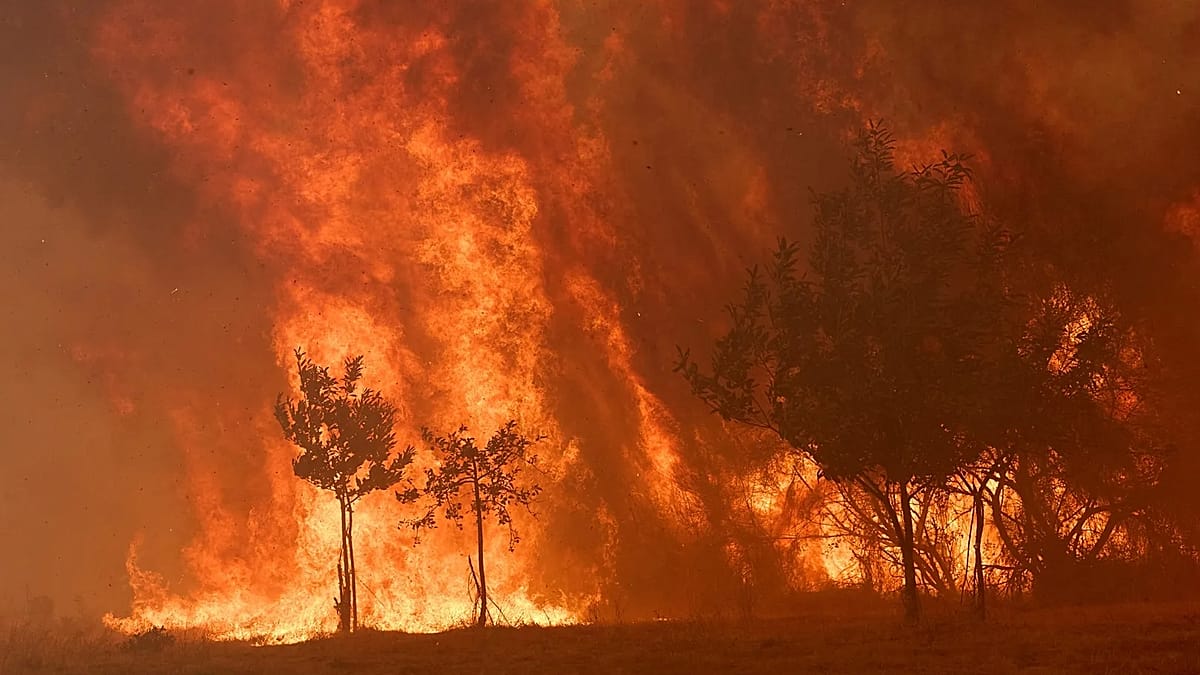
Spain, like much of southern Europe, is on the front line of climate change. Rising average temperatures have intensified heatwaves, droughts, and wildfires across the Iberian Peninsula. Last summer, the country endured its hottest on record, with nearly 4,000 square kilometres of land burned — the highest figure ever registered by the European Forest Fire Information System.
A Record Season and a Political Challenge
The worst-affected regions in 2025 were Galicia, Castile and León, and Extremadura, all governed by the centre-right People's Party. That has led to political friction with Sánchez's leftist coalition government, as Spain's decentralised system assigns primary responsibility for emergency management to the regions. Sánchez sought to defuse tensions, stating: "This battle is won together with unity, with institutional loyalty, and not with confrontation. Fire does not distinguish between administrations, it does not ask who governs." He reiterated his call for a national pact against the climate emergency.
The interior ministry confirmed that the official forest fire season will be brought forward by two weeks to 1 June for the second consecutive year, reflecting the earlier onset of dangerous conditions. Sánchez described the preparations as "the state's largest deployment for an anti-fires campaign," adding that the government would put all available resources into mitigating the emergency and preventing a repeat on such a scale.
Spain's experience mirrors broader trends across the Mediterranean. Neighbouring Portugal, France, Italy, and Greece have all faced increasingly severe wildfire seasons, prompting calls for greater EU-level coordination on firefighting resources and climate adaptation. The European Commission has already established a reserve of firefighting aircraft under the rescEU programme, but member states continue to bear the primary burden.
Sánchez's announcement comes as Spain also leads Europe in reindustrialisation, with 76% of firms adopting new strategies, according to recent data. The juxtaposition highlights the dual challenge facing the country: modernising its economy while adapting to a rapidly changing climate.
The new equipment includes amphibious aircraft capable of scooping water from reservoirs, drones for real-time monitoring, and heat cameras to detect hotspots before they escalate. Sánchez emphasised that fires now strike "with greater force, greater virulence" and are harder to extinguish than in the past. The campaign also involves enhanced coordination between national and regional authorities, a perennial source of friction in Spain's quasi-federal system.
Environmental groups welcomed the increased investment but urged the government to also focus on prevention, including better forest management and restrictions on building in fire-prone areas. The 2025 fires caused significant damage to ecosystems, property, and livelihoods, with several fatalities reported in Galicia and Extremadura.
As Europe grapples with the consequences of a warming planet, Spain's record-breaking season serves as a stark warning. The country's response — combining technological innovation, earlier preparedness, and political bridge-building — may offer lessons for other member states facing similar threats.