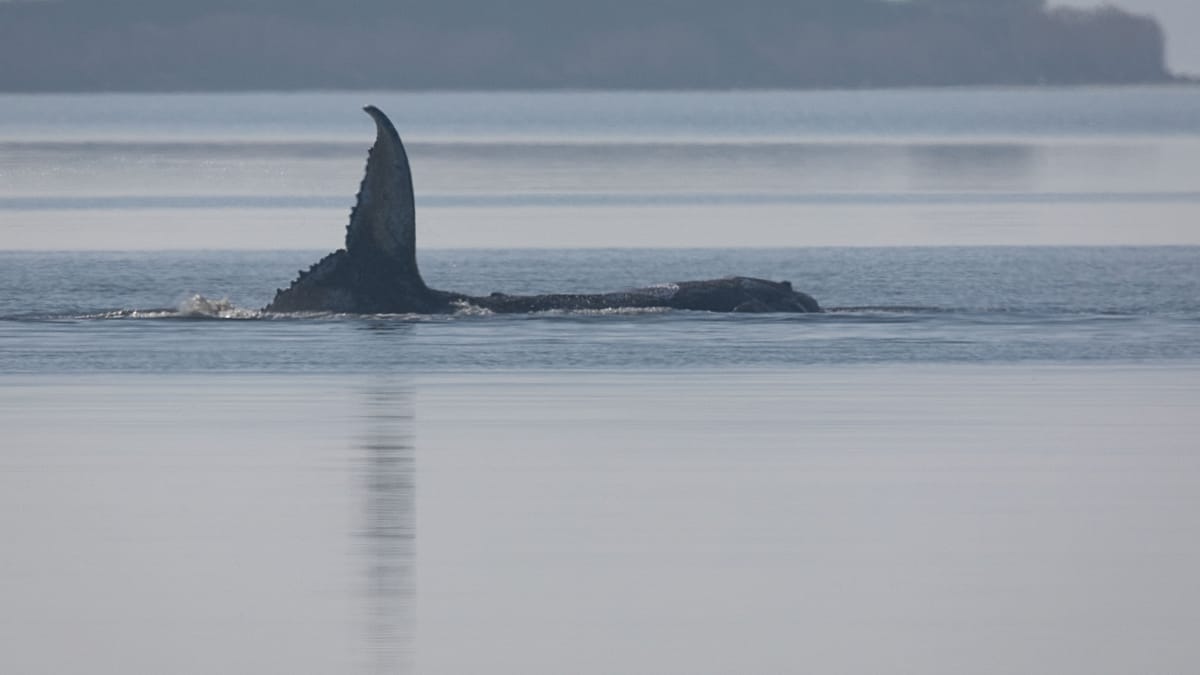
After days of speculation, Danish authorities have confirmed that the humpback whale found stranded off the island of Anholt is indeed Timmy, a well-known individual that had been tracked through the Baltic Sea. The identification was made possible by a GPS transmitter found on the carcass, according to the Danish Environmental Protection Agency (Miljøstyrelsen).
Transmitter Confirms Identity
The transmitter, which had been attached to Timmy during earlier monitoring efforts, provided a definitive match. “We can now confirm that the humpback whale stranded off Anholt is the same animal that previously became stranded in Germany,” said Jane Hansen, head of the agency, in a written statement reported by Danish news agency Ritzau and broadcaster TV 2.
Timmy had been the subject of intense interest after being sighted in the Baltic Sea, an unusual habitat for humpback whales, which typically prefer deeper Atlantic waters. The whale later appeared off the coast of Mecklenburg-Western Pomerania in Germany, where local authorities attempted to guide it back to safer waters.
Mecklenburg-Western Pomerania’s Environment Minister Till Backhaus also confirmed the whale’s death, expressing regret that rescue efforts had not succeeded. The Baltic Sea’s shallow, brackish waters and heavy ship traffic pose significant risks for large cetaceans, which can become disoriented and stranded.
The death of Timmy highlights broader challenges for marine life in European waters. In recent years, there has been a surge in dolphin and whale sightings around Cyprus, prompting new protection rules, but strandings remain a persistent issue across the continent.
Environmental groups have called for improved monitoring and rapid response systems to prevent such losses. The Baltic Sea, in particular, is a challenging environment for deep-water species, with limited food sources and high levels of noise pollution from shipping.
Timmy’s journey through the Baltic Sea had been tracked by researchers using the GPS tag, which allowed them to follow his movements in near real-time. The tag’s recovery from the carcass will provide valuable data on the whale’s final days and the conditions that led to its stranding.
The incident has also drawn attention to the broader issue of marine debris and pollution. While the GPS tag itself was not the cause of death, its presence on the carcass underscores the extent to which human technology is now embedded in marine ecosystems. Similar concerns have been raised in other contexts, such as the asbestos contamination found in hundreds of Hungarian roads, which poses risks to both human and environmental health.
For now, the Danish authorities are coordinating with German counterparts to determine the next steps for the carcass, which may be examined for further clues about the whale’s health and cause of death. The loss of Timmy is a reminder of the fragility of marine life in Europe’s inland seas and the need for continued conservation efforts.