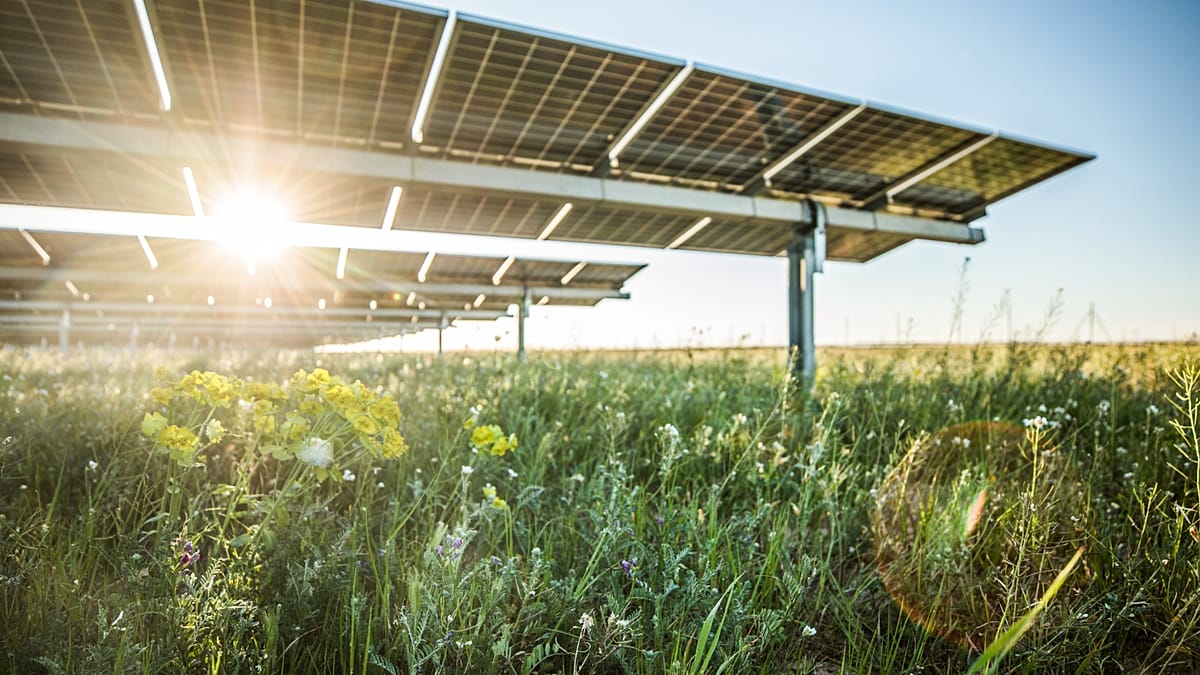
Greece has invested heavily in renewable energy, and the results are striking: roughly 45 percent of its electricity now comes from wind and solar, and about 20 percent of production is exported, mainly to Italy and Balkan neighbours. Yet household electricity bills remain stubbornly high, exposing a structural disconnect between cheap generation and consumer costs.
The problem is not unique to Greece. Across Europe, wholesale renewable electricity prices have fallen steadily, but retail bills have not followed. The root cause lies in how most European power markets are priced: the last and most expensive unit needed to meet demand—often a gas-fired plant—sets the wholesale price for all electricity. With natural gas still costly and geopolitical tensions, such as the closure of the Strait of Hormuz, driving spikes, consumers end up paying gas-linked prices even when the grid is awash with cheap solar and wind power.
Oversupply and the call to halt expansion
Greece's renewable capacity now far exceeds domestic demand, leading to significant curtailment of green power. Exports are not absorbing the surplus because neighbouring countries are also ramping up their own cheap renewable generation. At the Energy Transition Summit in Athens on 13–14 May, Stelios Loumakis, president of the Association of Photovoltaic Energy Producers, was blunt: “We should stop further expansion. We already have too much.” He warned that by 2026, producers' income could be about 40 percent lower than last year due to demand constraints and near-zero wholesale prices. “Renewable energy offers stability and low prices for consumers—but there are limits,” he added.
The oversupply highlights a critical bottleneck: battery storage. Without sufficient capacity to store surplus solar and wind power for release during low-generation periods, the grid cannot absorb all the green electricity produced. Greece expects battery storage units with a combined capacity of around 900 MW to be operational by the first quarter of 2027. Costs for storage have fallen sharply, unlocking a pipeline of projects, though market players caution that the technology is still maturing. Alexandros Flamos, professor and head of the Energy Systems Technoeconomics Laboratory at the University of Piraeus, said: “The accelerated rollout of storage will increase the availability of cheap renewable energy in the grid and, ultimately, reduce costs for the end consumer.”
EU scrutiny and Greek progress
The European Commission is examining four pressure points on energy bills: wholesale electricity costs; network and infrastructure charges; taxes and levies; and regulated charges such as capacity mechanisms and balancing costs. Cristina Lobillo, Director for Energy Security and International Relations at the Commission's DG ENER, stated: “The European Council has given us a mandate to work on these four elements—and we are doing so. The main issue is affordability, particularly in more vulnerable regions such as southeast Europe.” The EU is also grappling with dependence on Chinese battery storage, as energy ministers recently debated.
Greek Prime Minister Kyriakos Mitsotakis pointed to progress: Greece had the highest wholesale electricity prices in the EU in 2019 but now sits below the European average, and has cut CO₂ emissions by nearly 50 percent compared to 2005 levels. Yet for households, the gap between cheap generation and high bills remains a political and economic challenge. As the EU pushes for a unified approach, the experience of Greece underscores that the green transition requires not just more renewable capacity, but smarter market design and storage infrastructure to deliver affordable power to consumers.