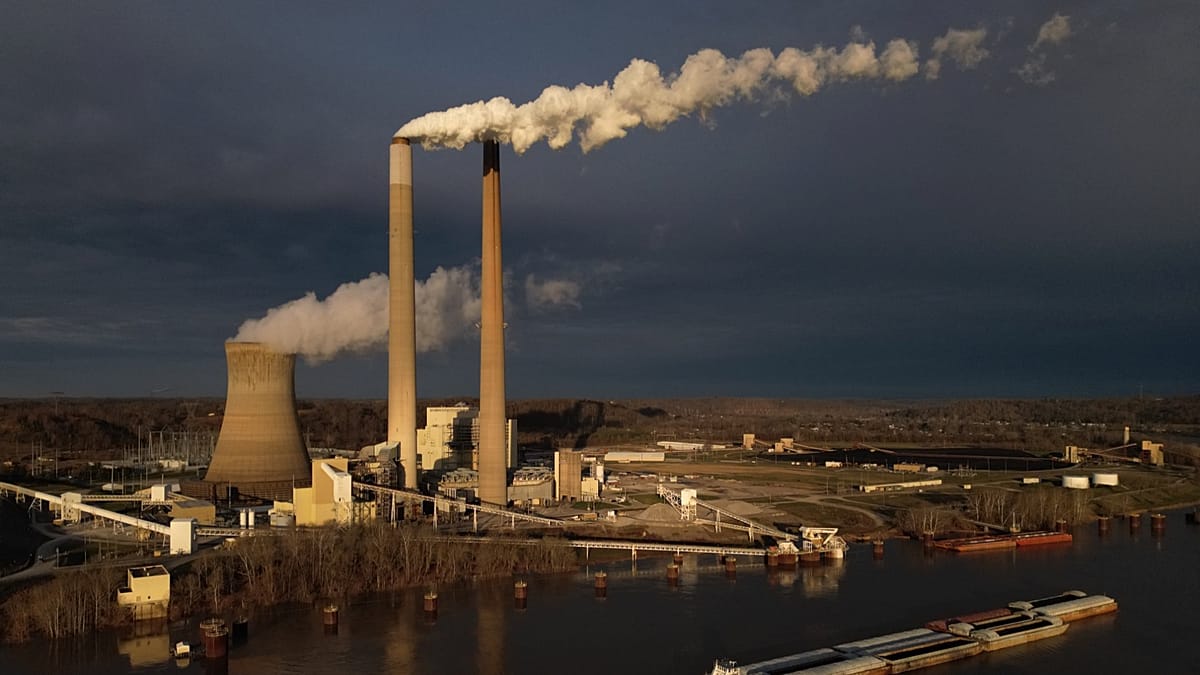
Solar power has been hailed as a cornerstone of the EU’s clean energy transition, but new research from the University of Oxford and University College London (UCL) warns that coal pollution is quietly undermining its effectiveness. The study, published in Nature Sustainability, maps over 140,000 solar photovoltaic (PV) installations worldwide and uses satellite and atmospheric data to quantify how aerosols from coal-fired power plants reduce sunlight reaching solar panels.
The findings are stark: in 2023, aerosols cut global solar electricity generation by 5.8 percent, equivalent to 111 terawatt-hours (TWh) of lost energy — roughly the output of 18 medium-sized coal plants. To put that in context, one TWh covers the annual electricity needs of about 150,000 EU citizens, according to Our World in Data. Between 2017 and 2023, new PV installations added an average of 246.6 TWh per year, but aerosol-related losses from existing systems reached 74 TWh annually — nearly one-third of the gains from new capacity.
A ‘previously unrecognised interaction’
Lead author Dr. Rui Song explains that the study highlights a direct conflict between fossil fuel use and renewable energy. “We’re seeing rapid global expansion of renewable energy, but the effectiveness of that transition is lower than often assumed,” he says. “As coal and solar expand in parallel, emissions alter the radiation environment, directly undermining the performance of solar generation.”
Coal plants emit fine particulate matter that scatters and absorbs sunlight, reducing the amount that reaches nearby solar panels. Dr. Song adds that air pollution also modifies cloud formation, which can further cut solar output. “That means the real impact is likely to be bigger than we’ve measured, so we may be overestimating how much solar power can contribute to reducing emissions if we do not get pollution from coal power under control.”
The effect is particularly pronounced in China, the world’s largest solar producer, where coal and solar capacity have expanded side by side. China generated 793.5 TWh of solar PV electricity in 2023 (41.5 percent of the global total) but experienced the largest aerosol-related losses — a 7.7 percent reduction. Researchers estimate that roughly 29 percent of those losses come specifically from coal-fired power plants.
European implications: Italy’s coal delay and broader risks
Europe is not immune. While the continent has made strides in phasing out coal, several member states still rely on it. Italy, for instance, recently announced it would postpone the permanent shutdown of its coal-fired power plants until 2038 — 13 years later than its original deadline. Environmental groups and the centre-left opposition condemned the move, with Angelo Bonelli, leader of the Europa Verde green party, accusing the government of “climate neglect.”
Such delays could directly hamper the performance of Italy’s growing solar capacity. The study’s co-author, Dr. Chenchen Huang from the University of Bath, warns that overlooking pollution-induced solar energy losses can lead to a “systematic overestimation of renewable energy output by governments, businesses and the broader community.” This is especially relevant for EU countries aiming to meet binding renewable energy targets under the European Green Deal.
For a deeper look at how solar battery storage can help households manage variable output, see our guide on Solar Battery Storage: How It Works and Whether It Cuts Your Bills. Meanwhile, the broader health impacts of coal pollution are also severe: as we reported, Italy tops Europe’s PM2.5 pollution rankings, with the Balkans facing the highest health risks.
The study’s authors argue that policymakers must account for these cross-sector effects when planning energy transitions. Ignoring them, they say, risks over-investing in solar capacity that underperforms due to ongoing coal emissions. As Europe pushes to expand solar — with countries like Türkiye positioning itself as a renewable leader — the message is clear: cleaning up the air is not just a health or climate issue; it is essential for making solar power live up to its potential.