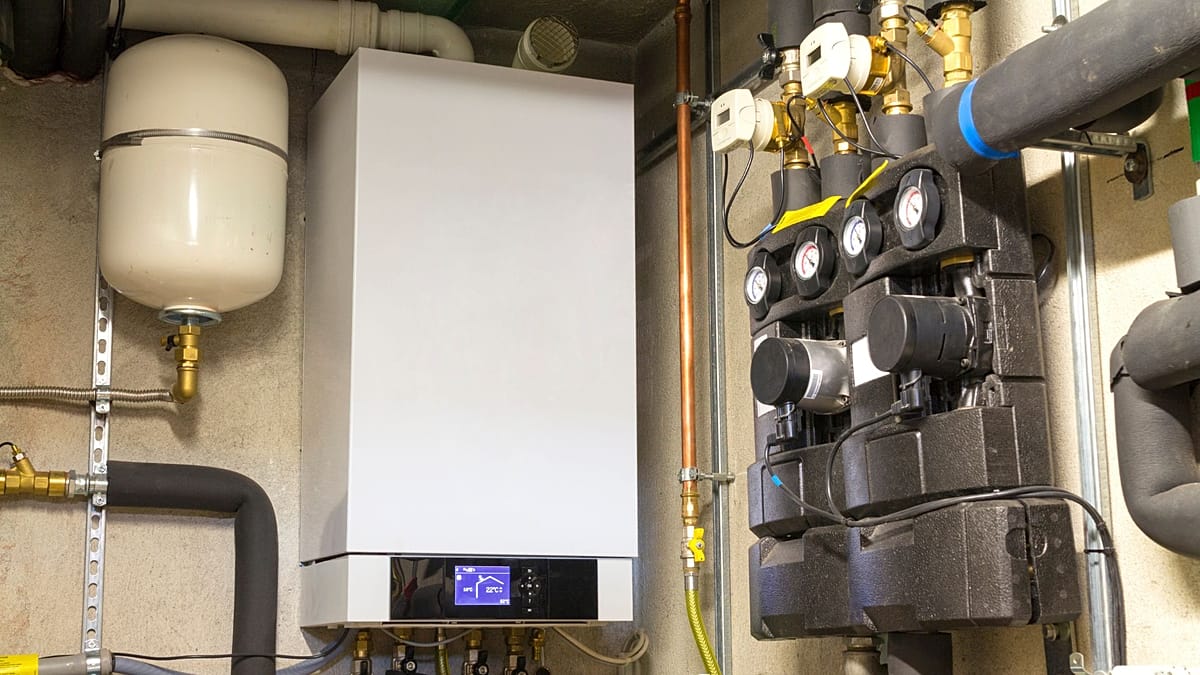
Berlin has effectively scrapped the central pillar of its green heating law, replacing a mandated shift to renewable energy with a more flexible approach that allows fossil fuel systems to remain in use for years to come. The decision, announced on Wednesday by Economics Minister Katherina Reiche, removes the requirement that new heating installations draw at least 65% of their energy from renewable sources—a rule that had been phased in since 2024.
The revised Building Modernisation Act, as it is now called, aims to give homeowners greater freedom of choice and provide what Reiche described as “investment security” for construction firms. Under the new proposal, gas and oil heating systems will still be permitted, and existing installations can remain operational. However, they must gradually incorporate an increasing share of so-called “climate neutral” fuels—biofuels, biomethane, synthetic fuels, and renewable hydrogen—starting at 10% in 2029 and rising to 60% by 2040.
A U-Turn on Climate Ambition?
The original Buildings Energy Act, introduced by the Greens in 2023, had been a flagship policy of the previous coalition. It mandated that from 2024, all new heating systems must be powered by at least 65% renewable energy, effectively banning new oil and gas boilers. The law faced relentless criticism from homeowners worried about upfront costs—often tens of thousands of euros—and from industry groups who argued it stifled investment.
Now, the pendulum has swung the other way. The Greens’ parliamentary leader, Katherina Droege, called the reform “a complete abandonment of Germany's climate targets.” Jan Rosenow, professor of energy and climate policy at Oxford University, described it as “a significant watering down of key provisions” that “postpones necessary decisions and will ultimately make the transition more expensive and more chaotic.” He noted that “the buildings sector has been missing its climate targets for years.”
The timing is particularly striking. According to the European Heat Pump Association (EHPA), heat pumps accounted for 48% of all new heating systems sold in Germany last year, with 299,000 units sold—outselling gas boilers for the first time. In the first quarter of 2026, sales surged another 34% compared to the same period in 2025. Heat pump sales surge in Germany as gas boilers decline across Europe, a trend that had been accelerating as households sought to reduce exposure to volatile gas prices amid the war on Iran.
“The timing is particularly critical: heat pumps are currently gaining significant momentum,” Rosenow said. “Production capacity has been expanded, skilled workers trained, supply chains strengthened. Many homeowners are already voluntarily choosing climate-friendly solutions. At this stage, the reform sends a contradictory signal.”
Industry Cheers, Climate Experts Wary
Germany’s BDI industry federation welcomed the change as “an important step towards finally getting investment back on track,” according to Reuters. The construction sector, which had been hit by uncertainty over the original law, is expected to benefit from the new flexibility.
But climate experts question the reliance on “climate neutral” fuels. Biofuels, made from plant materials such as food crops or agricultural waste, have been promoted as a green alternative, but their production is emissions-intensive, drives deforestation, and competes with food production. Biomethane and synthetic fuels, Rosenow argues, “are limited and expensive resources. They are urgently needed in industry and other sectors. If they are now used to extend the lifetime of fossil heating systems, we are postponing essential structural decisions.”
The reform also implements the EU directive requiring all new buildings to be zero-emissions from 2030. Separately, if an evaluation in 2030 shows the building sector is missing its climate targets, the government has committed to adjusting the legislation. The proposed law is expected to pass before summer 2026.
The political context is hard to ignore. Chancellor Friedrich Merz’s coalition government has been struggling with declining approval ratings amid wrangling over tax, pension, and welfare reforms. The heating law had become a lightning rod for public discontent, and the cabinet’s retreat appears aimed at defusing a politically toxic issue. Yet the move risks alienating climate-conscious voters and undermining Germany’s credibility on its own climate goals—the country has committed to achieving climate neutrality by 2045.
As Europe watches, the question remains whether this flexibility will accelerate or delay the continent’s energy transition. For now, Berlin has chosen to let the market—and homeowners—decide the pace of change.