Energy ministers from across the European Union gathered in Cyprus on Wednesday to confront a mounting strategic challenge: the bloc's heavy reliance on Chinese-made energy storage systems. As wind and solar capacity expands rapidly, the lack of adequate storage infrastructure is leading to wasted clean power, grid instability, and price volatility.
Chinese firms now dominate Europe's battery energy storage market, controlling over 80% of the residential segment and supplying nearly 88% of lithium-ion battery imports, according to data from Wood Mackenzie. This dependency echoes the vulnerabilities exposed by the Russian gas shock and the recent disruption in the Strait of Hormuz, which has added an estimated €35 billion to the bloc's energy costs.
Diverse Storage Technologies Gain Support
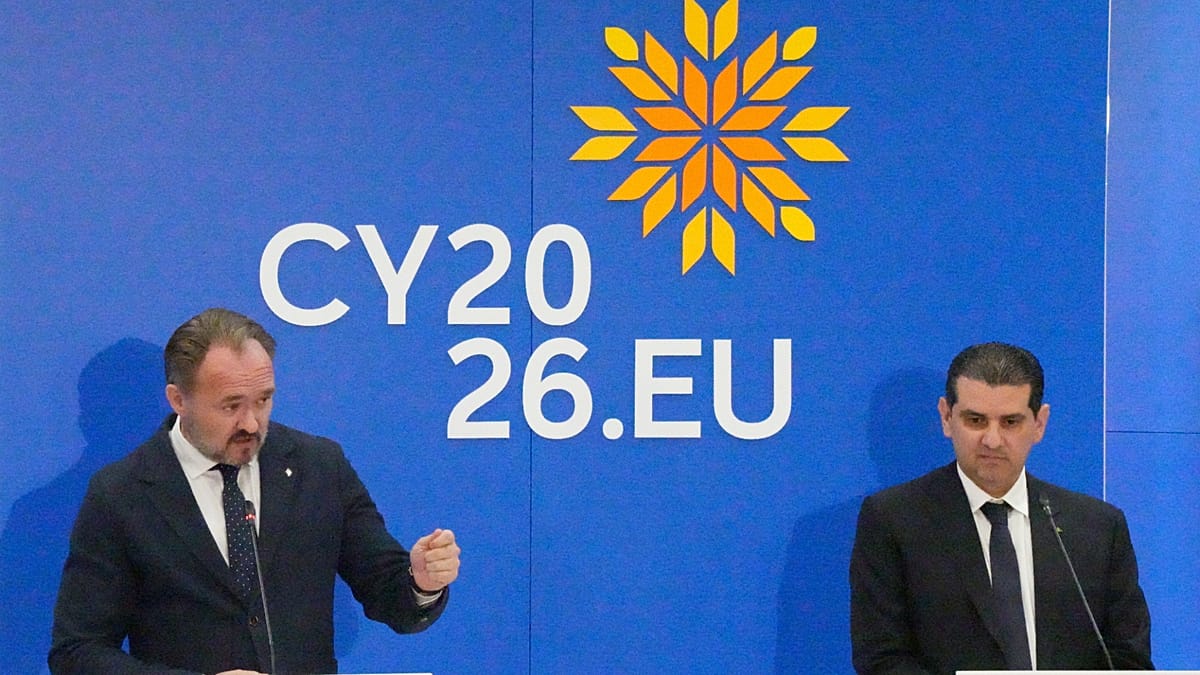
During the steering discussions led by the EU Cyprus Presidency, ministers acknowledged that while lithium-ion batteries remain dominant, a broader mix of storage solutions is needed. A document seen by Euronews reveals that several member states backed pumped hydro and thermal storage as equally important options. Cypriot Energy Minister Michael Damianos told reporters: "Enhancing our electricity storage capacity is a critical tool for ensuring grid stability and providing the non-fossil flexibility required to reduce and stabilise energy prices for all Europeans."
Lithuanian Energy Minister Žygimantas Vaičiūnas highlighted his country's recent installation of over 1 gigawatt of storage capacity, enough to power roughly 750,000 to 1 million homes. "Investing in storage is the way forward," he said.
The push for storage comes as EU leaders frame it as a foundation for both the energy transition and industrial competitiveness. Energy Commissioner Dan Jørgensen noted in October that 2024 set a record for storage installations, with 12 gigawatts added, though still insufficient to meet the bloc's 2050 climate neutrality target.
Electrification and Sovereignty Tensions
Ministers also stressed that electrification of transport and industry, alongside grid upgrades, is essential to achieving climate goals. However, this ambition faces political friction. The European Commission and EU agencies are pushing for stronger supranational governance, while many national governments guard their energy sovereignty. Sweden recently halted plans for a new power cable to Denmark, with Energy Minister Ebba Busch stating: "The EU should not receive Swedes’ electricity money. At the moment, Brussels is not listening to us."
Damianos, acting as mediator under the Cyprus Presidency, argued that coordinated action and accelerated electrification are "essential to mitigating the risks" associated with reliance on imported fossil fuels.
Storage as a Strategic Manufacturing Sector
During the talks, ministers framed energy storage as a strategic manufacturing sector, citing the Net-Zero Industry Act (NZIA) adopted in 2024 to boost domestic production of clean technologies. This mirrors the EU's response to competitive pressure from the United States' Inflation Reduction Act and the recommendations of former Italian Prime Minister Mario Draghi on competitiveness.
Analysts caution that full independence from China in clean energy supply chains is unrealistic within the next decade. Instead, the EU's more realistic goal is selective de-risking. As the bloc navigates these challenges, the outcome of Trump's Beijing visit and broader US-China dynamics could further shape Europe's strategic options. Meanwhile, middle powers are forging new alliances, and Australia is balancing its China trade with diverse partnerships, offering lessons for European policymakers.