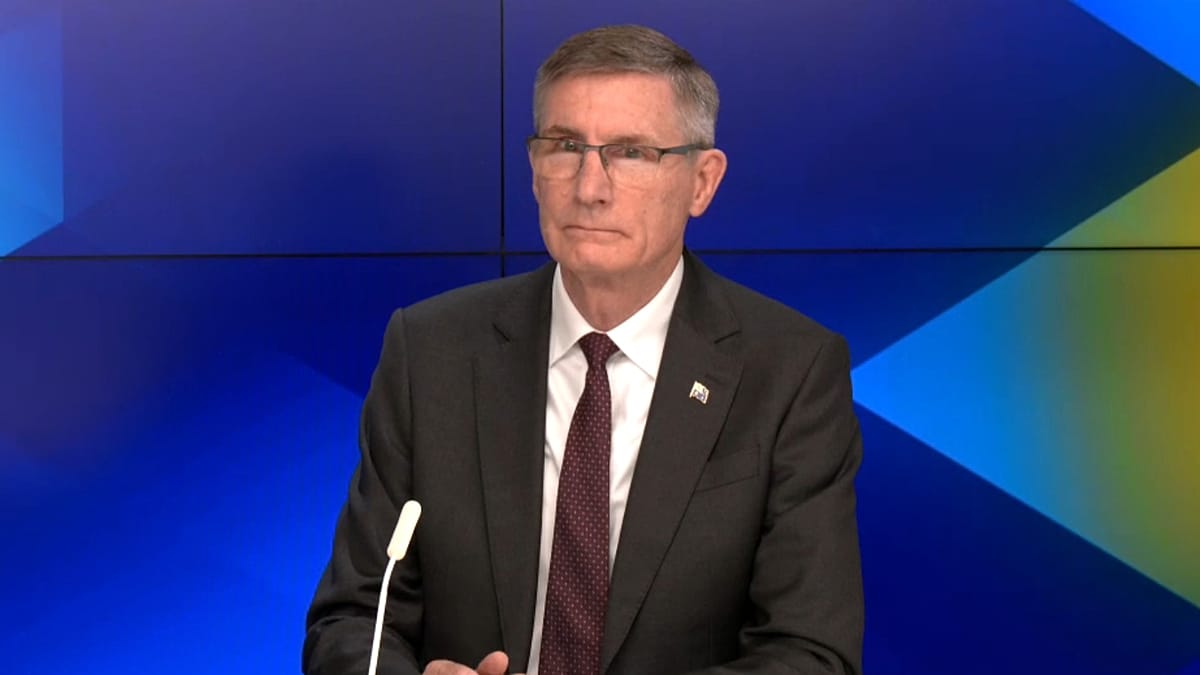
Australia's top diplomat to the European Union and NATO, Angus Campbell, offered a nuanced assessment of Canberra's economic ties with Beijing during a briefing in Brussels. Speaking to Europe Today, Campbell described Australia's trade relationship with China as both 'constructive' and 'very significant,' while underscoring that the country's long-term prosperity hinges on a diversified network of partners.
'Australia trades into North America, into ASEAN, to South Asia, to North Asia and into Europe,' Campbell said, listing the regions that form the backbone of Australia's export strategy. His remarks come as the European Union and Australia finalise a free trade agreement, signed in March by European Commission President Ursula von der Leyen and Australian Prime Minister Anthony Albanese in Canberra. The deal aims to eliminate over 99% of tariffs on EU goods and deepen cooperation in areas such as digital trade and sustainable development.
Strategic Diversification Amid Global Shifts
Campbell's comments reflect a deliberate balancing act. China remains Australia's largest trading partner, absorbing roughly one-third of its exports, primarily iron ore, coal, and natural gas. Yet Canberra has increasingly sought to reduce its reliance on a single market, especially after Beijing imposed trade restrictions on Australian wine, barley, and lobster in 2020–2021, following a diplomatic rift over calls for an inquiry into the origins of the COVID-19 pandemic.
The EU-Australia agreement is a key pillar of this diversification strategy. For Brussels, it opens new opportunities for European exporters of machinery, pharmaceuticals, and agricultural products, while also strengthening supply chain resilience. The pact is part of a broader EU push to secure trade deals with like-minded partners, as tensions with China over industrial subsidies and market access continue to simmer. As EU-China trade tensions mount, the bloc is seeking to reduce its own dependencies, particularly in critical raw materials and green technologies.
Australia's approach mirrors that of many European nations, which maintain robust trade with China while hedging against geopolitical risks. The United Kingdom, for instance, has deepened its economic ties with the Indo-Pacific through its accession to the Comprehensive and Progressive Agreement for Trans-Pacific Partnership (CPTPP), while Germany's export-oriented economy remains heavily exposed to the Chinese market.
Europe's Role in Australia's Calculus
Campbell's emphasis on Europe as a partner is significant. The EU is Australia's third-largest trading partner, after China and Japan, with two-way trade in goods and services exceeding €70 billion annually. The new free trade agreement is expected to boost this further, particularly in services, investment, and government procurement.
Beyond trade, Australia and the EU are cooperating on climate action, digital governance, and defence. Canberra has signed on to the EU's Horizon Europe research programme and is participating in joint initiatives on hydrogen and critical minerals. These areas are central to Europe's own strategic autonomy agenda, as outlined in the European Commission's recent communication on economic security.
Campbell's remarks also come amid a shifting global landscape. The return of Donald Trump to the White House has injected uncertainty into transatlantic relations, with potential implications for trade and security. As Trump's Beijing visit looms, European policymakers are watching closely for any US-China deal that could reshape global trade dynamics. Australia, a key US ally in the Indo-Pacific, is similarly attuned to these developments.
For European readers, Campbell's message is clear: Australia is not choosing between China and its other partners. Instead, it is building a resilient, multi-hub trade architecture. This pragmatic approach offers lessons for EU member states grappling with their own China dilemmas, from Berlin to Paris to Rome. As China hawks gain influence in the European Commission, the Australian model of constructive engagement combined with strategic diversification may provide a template for navigating the complexities of the 21st-century global economy.