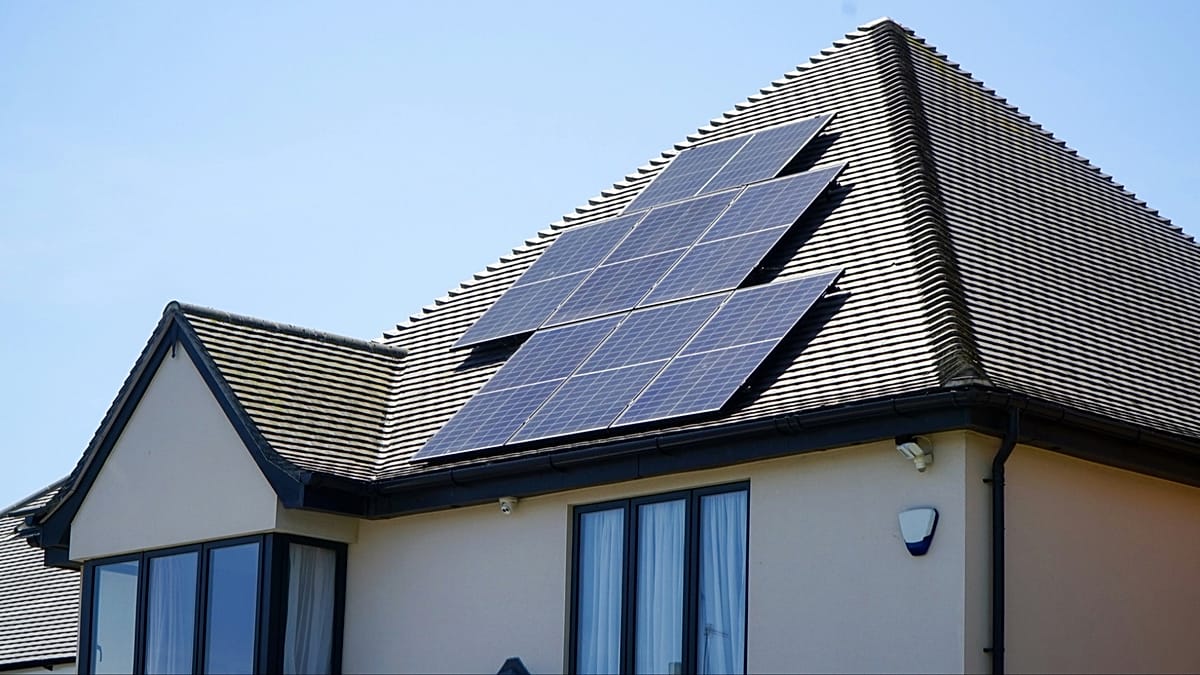
Across Europe, the surge in rooftop solar installations is driving a parallel boom in battery storage systems. As households from London to Berlin seek to shield themselves from volatile fossil fuel prices, the question of whether these batteries are worth the investment has become pressing.
Recent data underscores the scale of the shift. In the United Kingdom, over 27,000 solar installations were completed in March 2026 alone — the highest monthly figure since 2012. That added 2.3 GW of capacity, an 11.7 percent increase over the past year. To put that in perspective, 1 GW can power roughly 876,000 homes for a year. In Germany, Enpal BV reports a 30 percent spike in inquiries for solar panels and heat pumps since the US-Israel conflict escalated in the Middle East, while 1KOMMA5° GmbH has seen interest in solar nearly double.
The UK has also become the latest European country to approve commercial sales of plug-in solar panels, which require no professional installation. According to Carbon Brief, these mini devices could save a typical British household £1,100 (around €1,261) over their 15-year lifespan. Such panels have long been a staple of homegrown energy in Germany.
How Battery Storage Works
Battery storage systems allow households to keep electricity generated during the day — when solar panels are most productive — for use at night or on overcast days. They can also be charged from the mains grid. Most people consume less electricity during daylight hours, when they are at work or school, so batteries bridge the gap between generation and consumption.
“Batteries, when combined with smart tariffs, can significantly lower energy bills,” says Phil Steele of UK energy firm Octopus Energy. “Rather than paying the same flat rate around the clock, smart tariffs like Agile Octopus automatically charge the battery when electricity is at its cheapest and discharge it when prices are at their highest.” Users can also export surplus electricity back to the grid for payment.
This dynamic is especially relevant as Europe grapples with negative electricity prices, a phenomenon where supply outstrips demand. Battery storage can absorb excess power during those periods and release it when demand — and prices — rise.
Costs and Lifespan
According to the International Energy Agency, average battery costs have plummeted by 90 percent since 2010, driven by advances in chemistry and manufacturing. Over the past five years, more than 2,000 GWh of lithium-ion battery capacity has been added worldwide, powering 40 million electric vehicles and thousands of stationary storage projects.
For a typical home, a 5kWh battery from Octopus Energy — enough to power a British household for six to eight hours — starts at £3,447 (around €4,028). A larger 10kWh model, capable of storing energy for about a day and a half, can cost over €7,000. The typical lifespan of a battery is 10 to 12 years, though ongoing research may extend that.
For households unable to afford full rooftop installations, plug-in solar panels offer a lower-cost entry point. Our guide on plug-in solar panels explores whether they can truly power home appliances.
Grid-Level Benefits
Beyond individual savings, battery storage can strengthen Europe’s energy grid. The EU installed 27.1 GWh of new battery storage systems last year, marking 12 consecutive years of record growth. Yet Solar Power Europe warns that the bloc must repeat that tenfold increase to meet its 2030 targets. The IMF has urged the EU to sharpen energy relief for vulnerable households, and battery storage could play a role in stabilizing prices.
As the continent navigates the twin challenges of energy security and decarbonization, solar batteries are emerging as a practical tool — not just for early adopters, but for the grid as a whole.