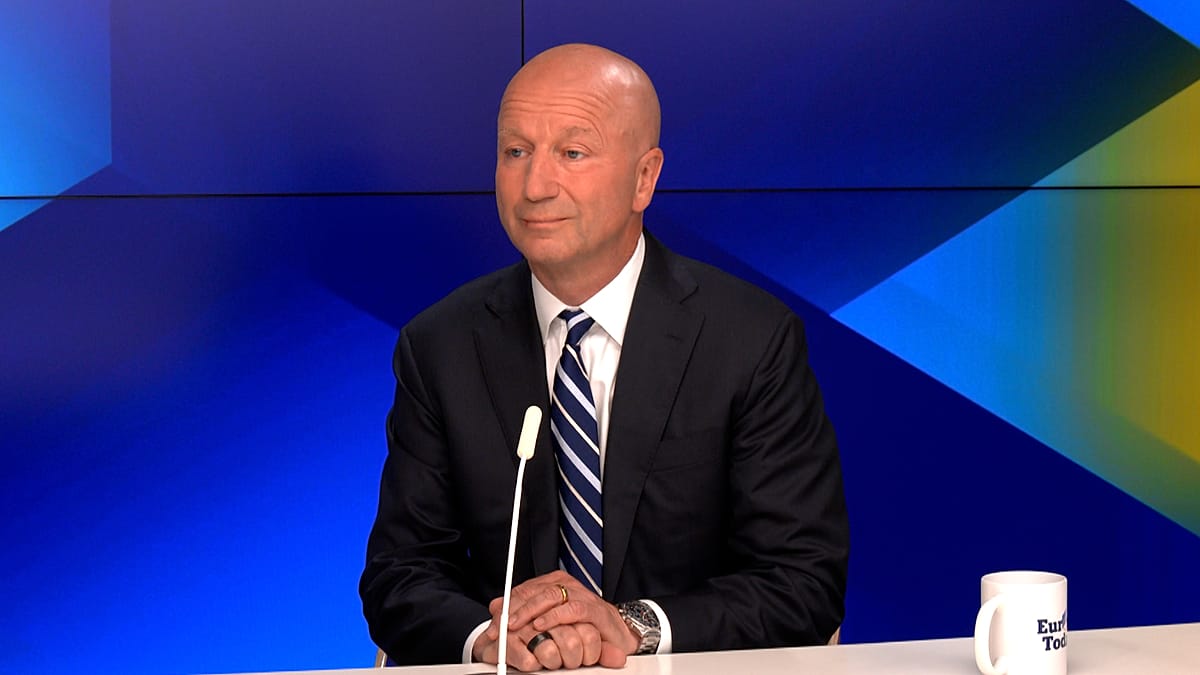
The International Monetary Fund has delivered a blunt assessment of European energy policy: too many governments are still using a blunt instrument. Helge Berger, Deputy Director of the IMF's European Department, told Euronews that most EU member states have “tampered with energy prices” rather than delivering targeted support to those who need it most. “As time passes, if the situation continues, we need to be more targeted,” he said.
Berger’s comments come as oil prices remain elevated and European gas prices hover roughly 45% above pre-war levels, following the closure of the Strait of Hormuz amid the US-led conflict with Iran. Although the current shock is less severe than the 2022 energy crisis triggered by Russia’s invasion of Ukraine, the IMF warns that the cumulative effect still weighs heavily on economic growth across the continent.
Untargeted measures miss the mark
According to IMF analysis shared with eurozone finance ministers during their Monday evening meeting in Brussels, around 70% of the total cost of measures taken in 2022 were either not targeted or distorted prices — or both. In the current crisis, the Fund estimates that 33% of electricity subsidies, if left untargeted, would flow to the richest 20% of households, compared to just 11% reaching the poorest. The gap is even starker for transport-fuel subsidies: 34% would benefit the wealthiest, while only 9% would help the most vulnerable.
“We need to guarantee that measures won’t do more damage than good,” Berger said, acknowledging a “mix of good and bad policies” across EU capitals. He warned against “dampening the price signal” that higher energy prices send, which would discourage conservation and the switch to alternatives. Instead, he urged governments to focus on concrete solutions for vulnerable households.
Several EU governments have lowered energy taxes, making energy artificially cheaper. The IMF argues this approach undermines incentives for energy efficiency and the transition to renewables — a point that resonates as Europe sees a surge in negative electricity prices that threaten investment in clean power.
Eurogroup President Kyriakos Pierrakakis acknowledged the difficult reality. “Expectations for a rapid normalisation of the crisis in the Middle East have not been confirmed,” he said after the meeting. “This is the difficult reality we are facing, and we must address it with realism and responsibility.” He noted that the IMF recognised Europe’s “positive starting point” — a robust labour market with historically low unemployment — but stressed that the effects of the crisis are not evenly distributed. “Net energy importers and economies with limited fiscal space obviously face greater pressure. This obliges us to act with caution, with well-designed and with targeted policies.”
Europe’s resilience and lingering vulnerabilities
The IMF also pointed to a silver lining: energy efficiency gains and a cleaner energy mix have made Europe more resilient. European households now face 12% lower energy costs than five years ago, thanks in part to a higher share of renewables. Yet the continent’s dependence on imported fossil fuels remains a structural vulnerability, as the closure of the Strait of Hormuz has demonstrated. The situation is not as dire as in 2022, but the Fund warns that complacency would be a mistake.
Berger’s message is clear: the era of blanket subsidies must end. As European capitals grapple with the fallout from the Iran conflict, the IMF is urging them to adopt surgical interventions that protect the vulnerable without distorting markets. For countries like Italy, which has deepened energy ties with Azerbaijan through Prime Minister Giorgia Meloni’s visit to Baku, the challenge is to balance diversification with domestic support. For others, like Belgium, which is moving to nationalise nuclear reactors from Engie, the focus is on sovereignty. But the IMF insists that no amount of supply-side fixes can replace the need for targeted demand-side relief.
The coming months will test whether EU governments can learn the lessons of 2022. As Berger put it, “We need to be more targeted.” The question is whether European capitals will listen.