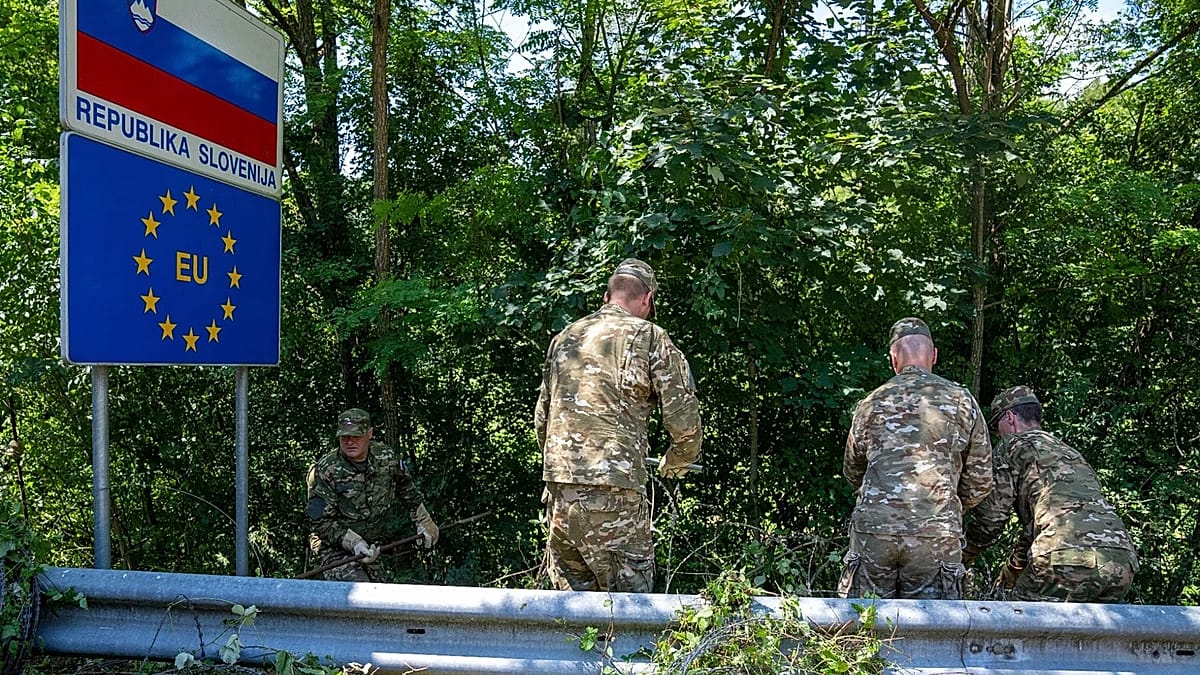
Croatian police reported on Monday that four migrants were discovered dead near the Slovenian border, while two others were taken to hospital in critical condition after being transported in what authorities described as "inhumane conditions" inside a truck. The incident underscores the persistent dangers faced by irregular migrants traversing the Balkan route, a corridor that has seen renewed activity despite being officially declared closed in 2016.
The bodies were found close to the village of Donje Prilišće, approximately 70 kilometres southwest of Zagreb. Police stated that the group had been dropped off by an unidentified smuggler who fled the scene. Thirteen additional migrants were located nearby and subsequently transferred to a detention centre. Investigations are ongoing, but no details on the exact cause of death have been released.
Balkan Route: A Deadly Corridor
Croatia, an EU member state, remains a key transit country for migrants seeking to reach Western Europe via the Balkans. The route gained notoriety during the 2015 migration crisis, when hundreds of thousands passed through Greece, North Macedonia, Serbia, Croatia, and Slovenia en route to Germany and other destinations. The EU-Turkey deal of 2016 effectively shut the corridor, but smuggling networks have adapted, forcing migrants onto increasingly perilous paths.
Earlier this year, a Chinese national died after a boat capsized while crossing the river from Bosnia into Croatia. In March, 30 people were rescued from a marsh along the same border. According to Frontex, the European border agency, more than 12,500 individuals used the Balkan route in 2025 alone. The International Organisation for Migration (IOM) reports that over 400 people have died or gone missing attempting this passage since 2014.
Migrants on this route often face strict border controls, which push them toward dangerous, irregular crossings through forests, rivers, and marshlands to evade detection. The IOM has repeatedly warned that such policies increase the risk of fatalities. The situation has also sparked political debate across the bloc, with some member states tightening controls. German Interior Minister Dobrindt Defends Border Controls Amid Legal and Academic Criticism highlights the tensions between security measures and humanitarian obligations.
The discovery near Donje Prilišće comes amid broader concerns about migrant safety and the effectiveness of EU border policies. While the bloc has invested in surveillance and cooperation with Balkan states, the death toll continues to rise. Europe's First Climate Migrants Face a Life of Constant Fear and Displacement offers a parallel perspective on displacement within the continent.
Local authorities in Croatia have not commented on whether the deceased have been identified or if any suspects have been apprehended. The incident is likely to reignite calls for safer migration pathways and more humane treatment of those attempting to reach Europe. Fact Check: Can Spain's Regularised Migrants Move to Other EU Countries? examines the complexities of intra-EU mobility for migrants.
As the Balkan route remains a focal point of irregular migration, the European Union faces ongoing pressure to balance border security with the protection of fundamental rights. The deaths near the Slovenia-Croatia border serve as a grim reminder of the human cost of a system that often leaves migrants with no safe alternatives.