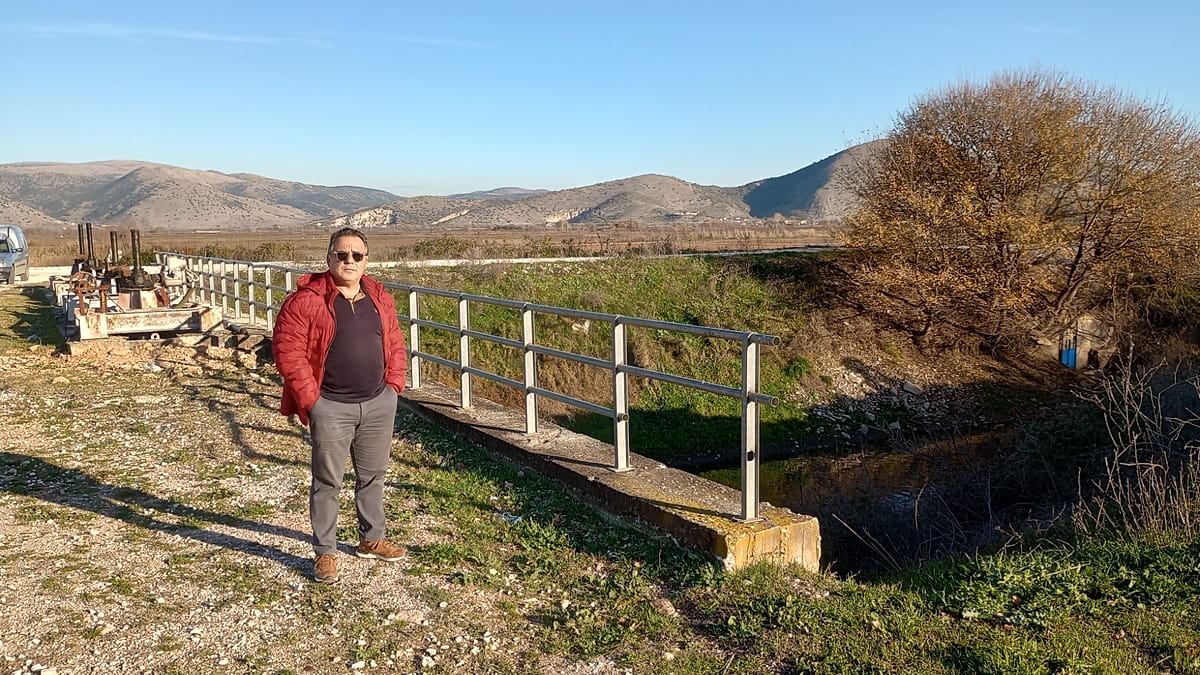
For Vaios Giatropoulos, the memory of the worst night of his life is etched in the helplessness in his son's eyes. 'Now what, dad? We've lost everything,' the boy asked tearfully as they stood on the roof of their semi-truck for nine hours, floodwaters rising dangerously close to their feet. Storm Daniel, which struck central Greece in September 2023, devastated their hometown of Palamas, leaving behind a chaotic mix of mud, debris, dead cattle, and shattered lives.
Giatropoulos eventually moved with his family to a village on higher ground. Returning is unthinkable. 'I don't want to feel that sense of dread with every drop of rain. For several months, we feared it would flood again. I even thought about seeing a psychologist,' he recalls. He considers his family fortunate because they found a new home nearby quickly. Many Palamas residents, he says, were forced to relocate to nearby cities, to Athens, or even abroad in search of a better life and drier land.
Hundreds of Thousands Displaced Across Europe
Giatropoulos belongs to a steadily expanding group: Europe's first climate migrants. The Geneva-based Internal Displacement Monitoring Centre (IDMC) estimates that approximately 413,000 people were displaced in the EU between 2008 and 2023. So far, 2023 has been the worst year on record, with over 200,000 Europeans internally displaced, mostly due to wildfires and storms. The experience varies greatly from one country to another, but the underlying trend is clear: extreme weather is reshaping where and how Europeans live.
In Germany, the type of extreme weather people fear depends on the region. In the northeast, increasing drought has made wildfires more common and severe. Last year was Germany's worst wildfire year on record in terms of hectares burned. While most people in this region need not fear a wildfire coming for their home, some farmers have already begun to feel the effects of diminishing rainfall. Meanwhile, in much of southern and western Germany, the most immediate danger comes from too much water at once. The IDMC recorded 84,000 internal displacements in Germany from 2008 to 2024, the vast majority (78,000) caused by flooding.
The devastating Ahr Valley floods in 2021 represent one of Germany's most impactful natural disasters in recent history, killing 134 people and affecting roughly 40,000 more. Martin von Langenthal, who was involved in the disaster response as deputy head of the EU Civil Protection and Resource Management Unit for the Red Cross, estimates that 3,500 people were at least temporarily displaced by that event, with homes requiring serious repair or rebuilding. Beyond the immediate physical destruction, survivors faced long-term resource shortages, living with damaged infrastructure including washed-out bridges and wastewater facilities, and a severe lack of essential medical care, doctors, and prescription drugs. 'There were a lot of people who could live in their houses again pretty soon, but there was a large group who couldn't live in their houses anymore because they were completely gone or too damaged to enter,' Langenthal says. 'And for those people, container homes and sort-of refugee homes were created initially for short-term housing, but the containers were still being used more than two years later.'
A Greek Village Torn in Two
Due to its Mediterranean location, Greece is particularly vulnerable to climate-related disasters. The IDMC estimates that nearly 300,000 Greeks have been displaced since 2008, most due to wildfires, storms, and floods. An example is the village of Vlochos in Thessaly, central Greece. Situated at the lowest point in the region, the village has long been prone to flooding. Older residents still remember with trepidation the floods of 1953 and 1994 when parts of the village were ruined. But when Storm Daniel struck in 2023, the scale of the destruction was unprecedented. In many homes, water levels rose as high as two metres, leaving them uninhabitable with all furniture destroyed.
In the first weeks following the storm, a sense of togetherness prevailed. Younger residents helped older ones, and families shared whatever resources they had, recalls Vassilis Kalogiannis, the village's president, with a bittersweet mix of pride and melancholy. Yet that unity soon eroded, as the scale of the disaster made it clear that relocating the community to higher ground might be the best way to prevent future disasters. The government has offered such an option, provided it is accepted by a clear majority of the village's residents. In the nearby village of Metamorphosis, around 95 per cent of households voted for relocation. The decision is not easy: 'Where should we go? This is our home,' one resident lamented.
The psychological toll is profound. 'Everyone has gone mad after the storm. It's a form of collective PTSD,' says one Greek villager faced with relocation. This sense of dread is echoed across the continent, as more Europeans confront the reality that their homes may no longer be safe. The Copernicus Report has already warned that Europe's climate crisis is an unequivocal threat to food, health, and the economy, and the displacement of communities is just one symptom of a broader upheaval.
As Europe grapples with this new reality, the question of how to support climate migrants—and whether to prevent further displacement through adaptation—remains urgent. For now, families like Giatropoulos's are left to rebuild their lives, haunted by the memory of what they lost and the fear of what may come next.