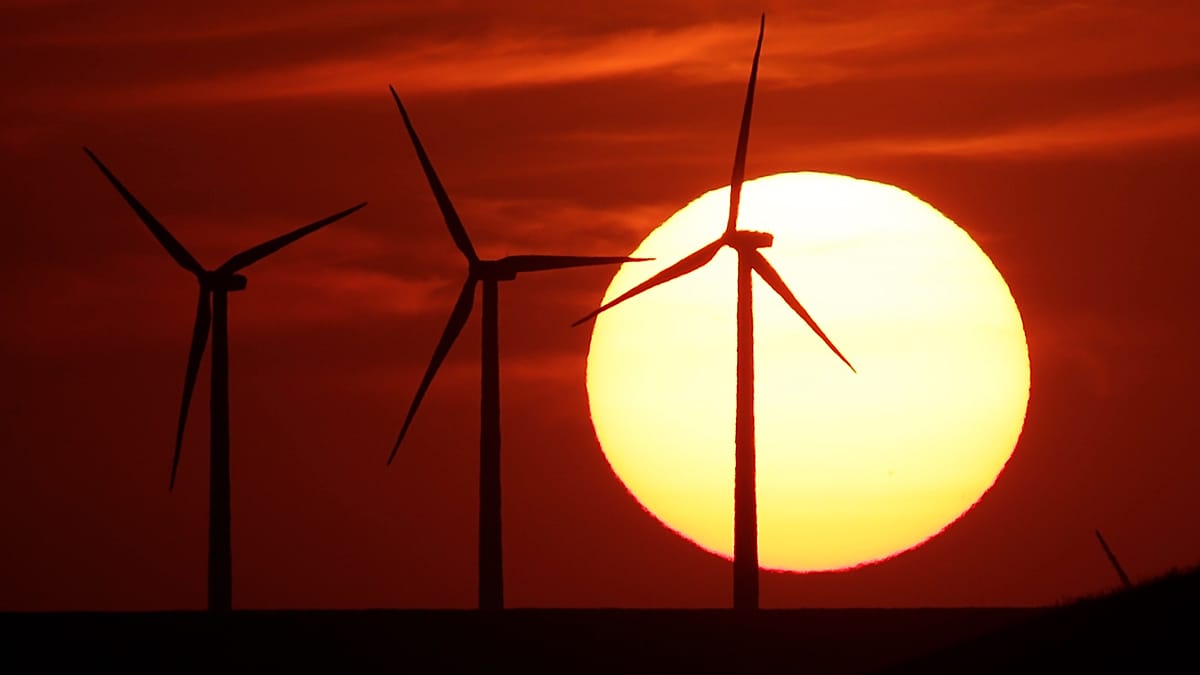
Across Europe, a paradoxical trend is emerging: electricity prices are plunging below zero with increasing frequency. While this might sound like a boon for consumers grappling with high energy costs, the reality is far more troubling for the continent's energy transition.
According to analytics firm Montel, the Iberian Peninsula set a new record for negative electricity prices in the first quarter of 2026. Spain endured 397 hours of sub-zero wholesale prices between January and March, a dramatic leap from 48 hours in the same period of 2025. Portugal logged 222 hours of negative pricing. A separate analysis by Bloomberg, using data from Epex Spot SE, found that France nearly doubled its number of sub-zero hours compared to 2025, while Germany saw a 50 percent increase.
Most of these negative episodes occurred in April, when longer daylight hours boosted solar generation and blustery conditions across the continent amplified wind output. The result: more electricity than the grid can absorb. On 5 April, Germany recorded its lowest daily average price at minus €16.34 per megawatt-hour, according to Spanish consultancy AleaSoft Energy Forecasting. France hit minus €3.56 per MWh, while Belgium averaged just €0.05 per MWh. British, Nordic, and Dutch markets also saw their lowest daily averages since October 2025, at €6.85, €7.61, and €14.46 per MWh respectively.
Why Negative Prices Are a Red Flag
Negative pricing occurs when supply outstrips demand in Europe's day-ahead wholesale market. Generators submit bids for the electricity they will produce the next day, and when renewable output surges—especially on sunny, windy days or public holidays when demand is low—producers undercut each other to avoid being forced offline. They can afford to do so because subsidies or long-term contracts still guarantee them revenue, or because shutting down and restarting would cost more.
Last year, Britain wasted an estimated £1.47 billion (around €1.67 billion) by curtailing wind turbines and paying gas plants to ramp up, a stark illustration of the inefficiencies at play. The core problem is that Europe's aging grid was built for centralized fossil-fuel plants, not for the decentralized, often remote locations of solar farms and wind parks. As a result, clean energy frequently cannot reach homes and businesses when it is abundant.
While grid investment across the EU has risen 47 percent over the past five years to roughly €70 billion annually, experts say it remains insufficient. A report by energy think tank Ember warns that more than 120 gigawatts of anticipated renewable capacity—including 16 GW of rooftop solar affecting over 1.5 million households—are at risk due to inadequate grid capacity.
Some propose giving away free or discounted energy during surplus periods, an idea being explored in the UK. Greg Jackson, CEO of Octopus Energy, has long advocated for such permanent reforms to encourage electrification rather than curtailment. But the most widely touted solution is battery storage.
Battery Storage: The Missing Link
The fundamental issue is that excess electricity is difficult to store. Europe's battery energy storage systems (BESS) have grown rapidly—the EU installed 27.1 GWh of new capacity last year, marking 12 consecutive years of record growth. According to a 2026 Solar Power Europe report, the EU battery fleet has expanded tenfold since 2021 to over 77 GWh, but that is still far from the 750 GWh needed by 2030 to meet climate targets.
Five EU markets accounted for more than 60 percent of new BESS capacity in 2025: Germany and Italy led, followed by Bulgaria as the fastest-growing market, then the Netherlands and Spain. Yet without a massive scaling of storage and grid modernization, negative prices will continue to undermine the economics of renewables, potentially slowing investment at a critical moment for Europe's energy transition.
As the continent grapples with these challenges, related developments underscore the fragility of energy markets. For instance, the EU has relaxed state aid rules to help businesses cope with energy shocks from the Middle East, while rising energy costs are pushing inflation higher in Germany and Spain ahead of the ECB's next rate decision. Meanwhile, Belgium's deal to nationalize nuclear reactors highlights the search for stable baseload power. The message is clear: negative prices are not a gift—they are a symptom of a system struggling to adapt.