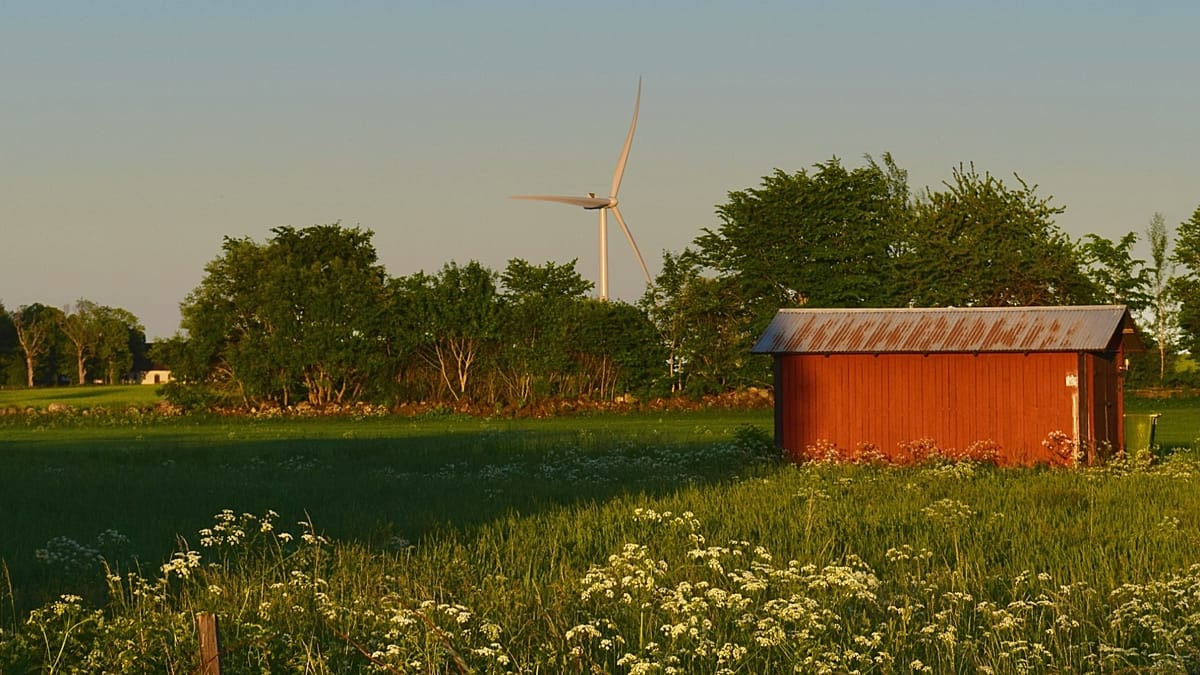
Sweden leads Europe in clean electricity generation, with 99 percent of its power coming from low-carbon sources in 2025—the highest share of any EU member state. Hydropower accounts for 40 percent, nuclear for 27 percent, wind for 23 percent, and solar for two percent, according to energy think tank Ember. Fossil fuels make up just 1.2 percent of the mix, keeping emissions per capita well below the EU average. Yet a new investigation reveals that this green success story is under threat from a coordinated wave of disinformation targeting wind power, with Sweden bearing the brunt.
Mapping the Anti-Wind Ecosystem
WindEurope, the industry association, partnered with CASM Technology to map Europe's anti-wind energy system for the first time. The study analyzed more than 42,000 social media posts across Facebook, Instagram, X, YouTube, TikTok, and LinkedIn from May 2024 to February 2026. These posts generated 6.3 million active engagements—likes, shares, and comments—and tens of millions of views. Crucially, 68 percent of the sampled posts were classified as dis- or misinformation, while the remainder constituted non-disinformation oppositional content.
The largest share of problematic posts originated in Sweden—nearly 7,000—followed by France, Norway, Finland, the United Kingdom, and Germany. Together, these six nations accounted for 75 percent of the dataset. However, the study notes that countries producing the most anti-wind content are not always those attracting the most reaction. Poland, Bulgaria, Slovakia, Italy, Greece, and the Czech Republic generated less content but saw higher engagement per post. The UK had the highest overall engagement, with Germany, Norway, and France following. Sweden ranked seventh, with over 419,000 active engagements.
The report describes a “vast ecosystem across Europe” involving actors from media, politics, civil society groups, and individual activists. This network spreads narratives that researchers warn could be weaponized by external rivals to undermine European energy security and economic competitiveness—a concern amplified by ongoing geopolitical tensions, such as the threats to Strait of Hormuz shipping that highlight Europe's vulnerability to energy disruptions.
Four Pillars of Misinformation
The study categorizes anti-wind dis- and misinformation into four main narratives. The most common, ‘fraud and anti-democratic narratives,’ portray developers and supporters of wind projects as greedy actors willing to accept environmental and social harm for profit, or as an imposition by distant elites on unwilling local populations. ‘Environmental destruction narratives’ claim turbines harm nature and wildlife, creating a misleading impression of net negative impact—despite expert consensus that the benefits of reducing fossil fuels far outweigh any local disturbances. A recent radar and AI-based study tracking over four million bird movements found that more than 99.8 percent of migratory birds reliably avoid turbines.
‘Technological unviability and economic failure narratives’ make up over 8,000 posts, depicting wind as destabilizing, falsely linking it to blackouts, and framing projects as economically nonsensical. Earlier this year, ENTSO-E, Europe's network of transmission system operators, published its final report on the large-scale blackout that left parts of Spain and Portugal without power on 28 April 2025. Despite claims blaming renewables, the report found that wind turbines were not among the root causes.
Such debunked claims are shaping public perception. The report notes that a majority of Germans, Belgians, Dutch, French, and Swiss now believe transitioning to renewables will raise household power prices, despite the International Energy Agency confirming the opposite. In France, Poland, Belgium, and Switzerland, roughly half or more believe electric vehicles are as bad for the planet as petrol or diesel cars, contradicting strong academic consensus on their lower environmental impact. An EU social media survey found that over 80 percent of citizens believe they have encountered disinformation in the past week, and about half struggle to differentiate reliable information from climate change falsehoods on social media.
Consequences for Europe's Energy Future
The study argues that dis- and misinformation pose a major threat to democracy and public discourse, and can be exploited by the EU's rivals to attack the business model of European companies. Delaying Europe's transition to home-grown, competitive renewables not only impacts businesses but also casts a shadow on economic competitiveness and wider energy security. Policymakers may capitalize on anti-wind sentiments for electoral gain, a pattern that has historically led to policy reversals and investment uncertainty.
Sweden's experience is a cautionary tale for the continent. As Europe grapples with the challenge of scaling up renewables to meet climate targets and reduce dependence on external energy sources—a challenge underscored by the strain on power grids from AI and other demands—the spread of coordinated disinformation risks derailing progress. The findings come as Sweden prepares to launch a new foreign intelligence agency by 2027, a move that reflects growing awareness of hybrid threats, including information warfare.
For now, the message from researchers is clear: Europe's energy security depends not only on technological innovation and investment but also on the resilience of its information ecosystem. Without addressing the coordinated attack on wind power, the continent may find its clean energy ambitions undermined from within.