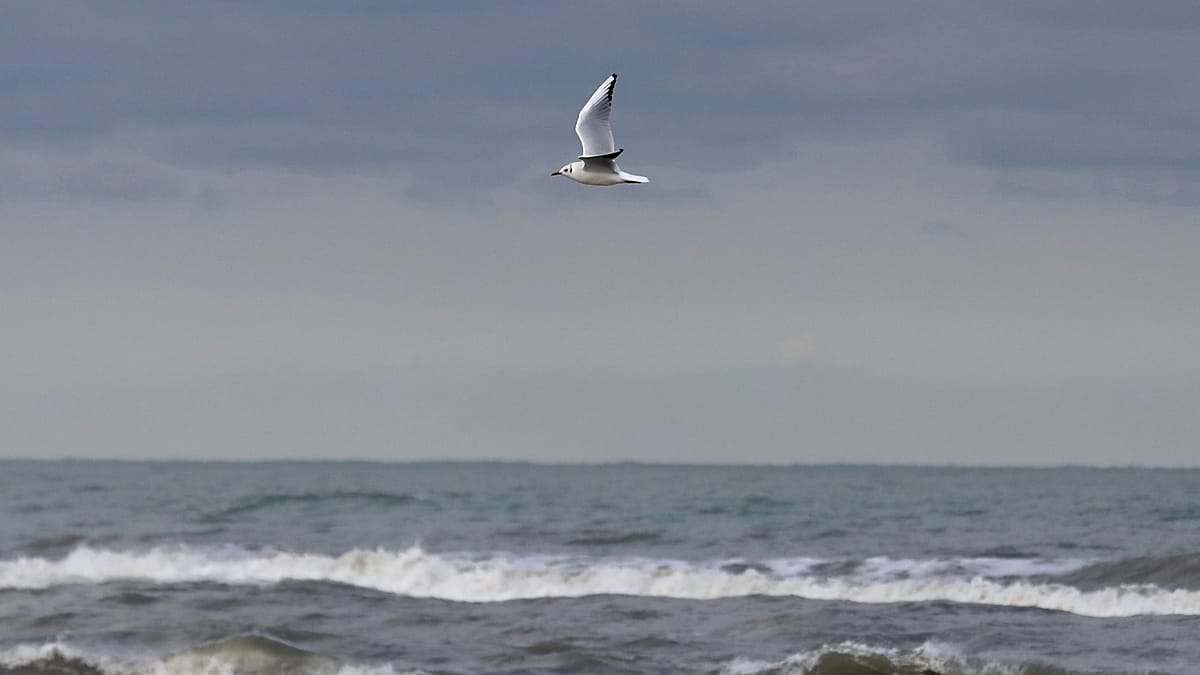
The Caspian Sea, the world's largest inland water body, is shrinking at an alarming rate. Satellite observations and hydrological studies confirm a consistent decline in water levels since the mid-1990s, with visible impacts along the coastlines of Azerbaijan, Iran, Kazakhstan, Russia, and Turkmenistan.
In Azerbaijan, the retreat is starkly evident on the Absheron Peninsula, where shallow coastal zones have become exposed and shorelines are shifting. The Surakhani Museum Ship, once afloat offshore, now sits in shallow waters—a tangible marker of the changing landscape.
Why the Caspian is Drying Up
The Caspian Sea is a closed basin with no natural outlet, meaning its water level depends entirely on the balance between river inflow, precipitation, and evaporation. The Volga River provides the majority of freshwater inflow, but hydrological research shows that changes in river discharge, combined with rising regional temperatures, have increased evaporation and disrupted this balance.
“Climate change is accelerating evaporation and disrupting the water balance of the Caspian Sea,” explains Dr Elnur Safarov, a Caspian Sea studies expert at the environmental organisation IDEA Public Union and coordinator of the Caspian Integrated Scientific Network (CASPISNET). He warns that continued warming could intensify the long-term decline and pressures across the basin.
Ecosystems Under Threat
The falling water levels are reshaping coastal habitats and putting pressure on biodiversity. The Caspian seal, an endangered species according to the International Union for Conservation of Nature (IUCN), is a key indicator of ecosystem health. “The population decline of the Caspian seal moves this already endangered species closer to extinction risk,” says zoologist Dr Nijat Hasanov, highlighting habitat loss, reduced ice formation in northern areas, pollution, and bycatch as compounding factors.
Fish populations, including sturgeon and other endemic species, are also losing their natural habitats. “Declining populations are becoming a concern both from biodiversity and food security perspectives,” Hasanov notes. The region provides nesting, breeding, and resting habitats for millions of birds, including pelicans, flamingos, and ducks, all dependent on stable coastal conditions.
Human Impact and Adaptation
Coastal communities are feeling the effects. Fishermen in Azerbaijan now have to travel deeper into the sea to catch the same amount of fish they once caught near the shore. “They have to go deeper into the sea to catch the same amount of fish they used to catch nearby the shore,” says Farhad Mukhtarov, an expert on water governance at the International Institute of Social Studies. He notes that some fishermen are now travelling significant distances offshore, facing increased exposure to changing weather and sea conditions. Despite these pressures, Mukhtarov adds that communities are adapting through cooperation and local resilience.
Regional Cooperation Under the Tehran Convention
Environmental cooperation across the basin is coordinated through the Tehran Convention, signed by Azerbaijan, Iran, Kazakhstan, Russia, and Turkmenistan. The framework supports cooperation on pollution prevention, biodiversity protection, and environmental monitoring. According to Mahir Aliyev, Coordinator of the Secretariat of the Tehran Convention, the decline in water levels is a shared concern. “The continued decline in the level of the Caspian Sea is a matter of serious concern for all five Caspian littoral states. As the world’s largest enclosed inland water body, the Caspian Sea is particularly sensitive to climate variability and human pressures. The combination of reduced inflows and increased evaporation linked to rising temperatures is altering the Sea’s delicate hydrological balance.” He emphasises that coordinated regional action is essential to manage the environmental consequences.
The challenges facing the Caspian Sea are part of a broader climate-driven shift affecting closed inland water systems globally. As Europe grapples with its own environmental pressures—such as the need for climate shelters highlighted in Spain's Climate Shelters: A Model for Europe as Heat Deaths Mount—the Caspian's plight underscores the urgency of cross-border cooperation. Meanwhile, the EU's budget struggles, as detailed in EU Budget Overhaul Falls Short as Defence, Climate, and Enlargement Pressures Mount, reflect the continent's own difficulties in funding environmental resilience.
Satellite observations, hydrological studies, and ecological monitoring all indicate that the Caspian Sea is undergoing a sustained decline. Without concerted regional action, the world's largest lake may not recover, taking with it unique ecosystems and the livelihoods of millions.