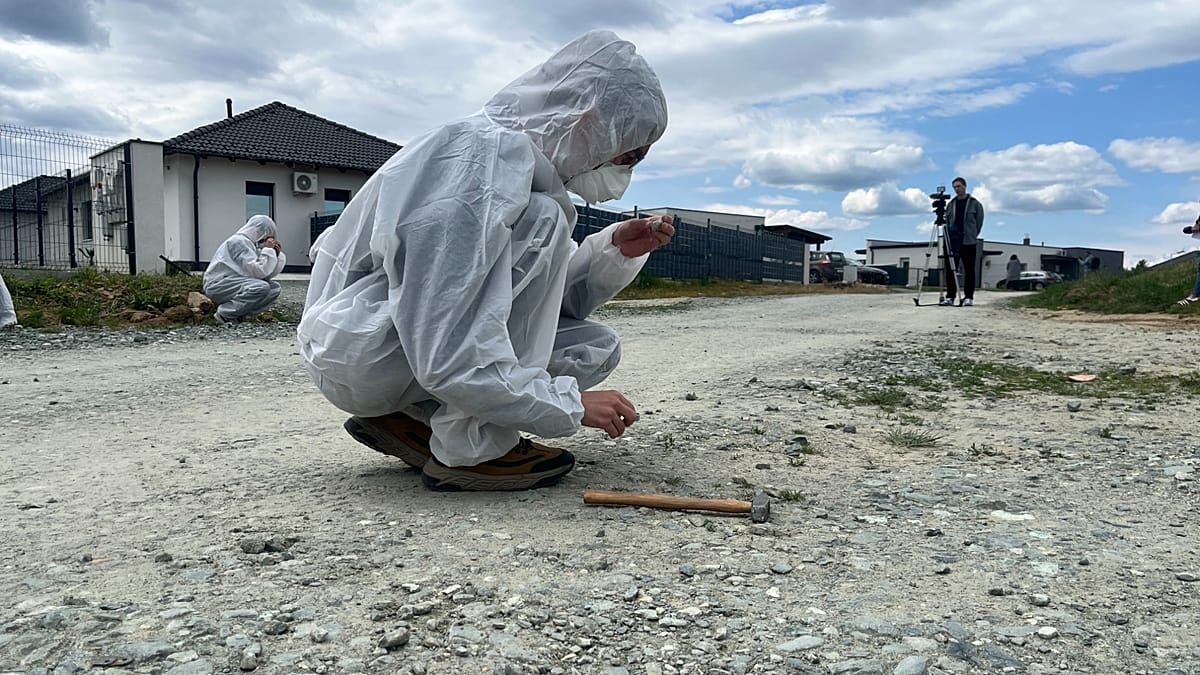
Hundreds of road surfaces in western Hungary may be contaminated with asbestos, according to recent measurements. The affected areas include the Oladi plateau, a suburban district of Szombathely currently undergoing construction, where contamination may have persisted for eight to ten years. The source appears to be aggregates transported from mines in Austria.
Tamás Weiszburg, a geologist and former head of the mineralogy department at Eötvös Loránd University, explained the dangers of asbestos to Euronews. “On its own, it is just a piece of rock; it is the form that matters. It is a very fine fibre that can evade the body’s defence mechanisms and can therefore be a serious carcinogen,” he said. “Like a snake, it enters the airflow and can travel down into the bronchi without being expelled. And because it is long, it cannot be properly ingested by phagocytes, which can lead to a permanent inflammatory state. A permanent inflammatory state can then, over time, develop into cancer.”
Weiszburg described asbestos as a “slow killer,” noting that tumours can develop decades after inhalation of the fibres. However, he stressed that roads built with asbestos-containing aggregates pose no risk if they are properly sealed or asphalted. In western Hungarian counties, hundreds of kilometres of roads are considered safe because they have been adequately sealed.
Government Response and Local Concerns
Hungarian Environment Minister László Gajdos visited the Szombathely district on Thursday, an area primarily inhabited by families with young children. Mayor András Nemény informed the minister that reducing vehicle speeds has already helped minimize dust kicked up by cars, and the area is being constantly watered.
Gajdos confirmed that “three counties are affected,” but the government still does not know “where the stones from Austrian mines, four of which have already been closed, were taken.” He added, “I think this issue should be discussed between ministries and a decision should be taken quickly. I will therefore submit the matter to the government on Monday.”
The case highlights a broader regulatory gap across Europe. According to Weiszburg, there are currently no preventive regulations in the European Union concerning natural asbestos. “It is possible for one side of the same mine to contain asbestos while the other does not. So this is not a case of deliberate environmental damage,” he explained. “There is of course a legal loophole, and it is worth looking for those responsible, but it must also be understood that although it was scientifically and geologically known that some mines contained asbestos, it was neither possible nor desirable to ban mining in Austria, simply because there is no law governing this.”
The contamination underscores the need for stricter oversight of construction materials across the continent. As Hungary’s government prepares to address the issue, the incident may prompt broader discussions about EU-wide standards for natural asbestos, especially given the mineral's severe health risks. For now, local authorities in Szombathely are taking precautionary measures, but the long-term implications for public health and infrastructure remain uncertain.