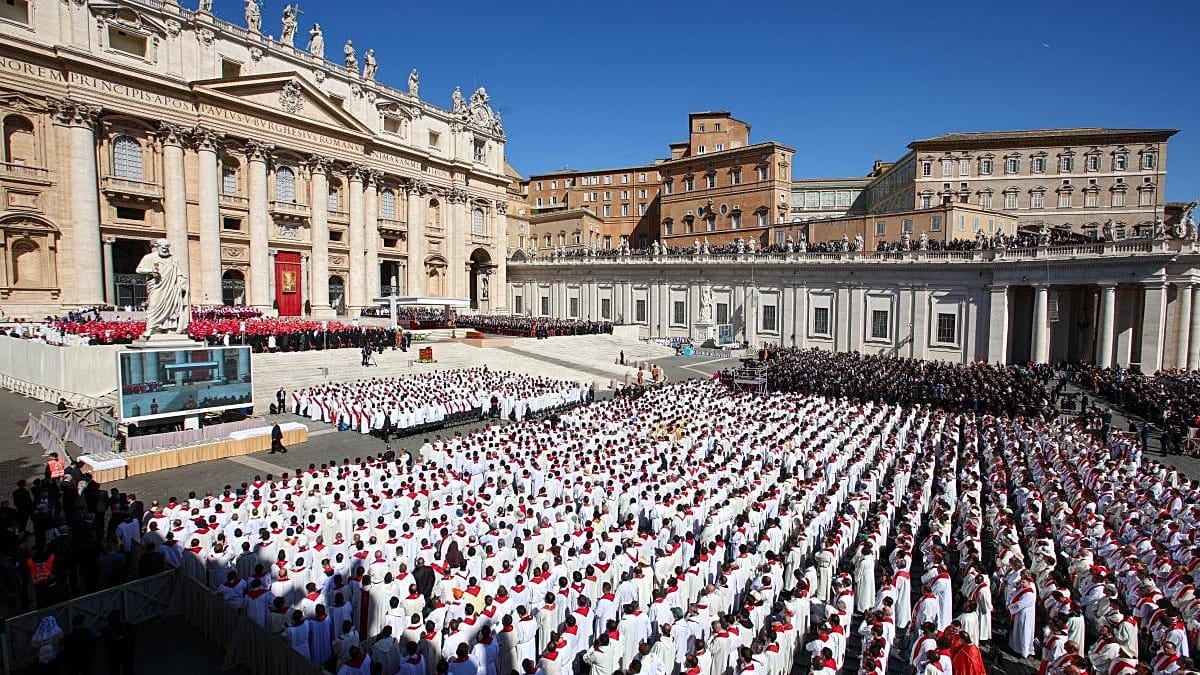
A broad coalition of Christian organisations has issued a stark warning to European Union institutions: tax the record profits of fossil fuel companies and commit to a swift, just transition away from carbon-based energy. The appeal, signed by 120 groups from 20 member states, marks the first coordinated faith-based intervention of its kind on EU energy policy.
“Europe has a unique opportunity and the moral responsibility to accelerate the phase out of fossil fuels and shift to clean energy, including through a permanent tax on the colossal profits of fossil fuel companies,” the document states. The signatories note that the world’s top 100 oil and gas firms generated over $30 million (€25.8 million) in profit every hour during the first month of the US-Israeli conflict in Iran, according to data published by The Guardian.
Faith and the Ecological Crisis
The appeal, titled “Europe, Be Faithful for our Common Home,” argues that for Christians, care for creation is not optional but “essential to a life of virtue.” It poses a pointed question: “What does it mean to love one’s neighbour at a time of deepening ecological crisis, which disproportionately impacts the poorest?”
Signatories include the Laudato Si’ Movement, Caritas Europa, and the Central Committee of German Catholics (ZdK), alongside national episcopal bodies, religious orders, and development charities. They call on the EU to support the Global South by cancelling unsustainable debts and providing grants rather than loans for climate action. In 2024, developing countries held $31 trillion (€26 trillion) in debt, according to UN Trade and Development.
Tax the Polluters, End Subsidies
The coalition insists that Europe faces a stark choice: “lead the phaseout of fossil fuels, or side with the most polluting companies responsible for half of global carbon emissions.” They demand an end to fossil fuel subsidies, which reached $620 billion (€534 billion) in 2023, according to the International Energy Agency. The revenue from a windfall tax should “finance the energy transition and support the most vulnerable households.”
The appeal also takes aim at the European Commission’s so-called “environmental omnibus” legislation, which the signatories say is dismantling existing climate safeguards. While the Commission frames the changes as reducing administrative burdens, environmental groups and the faith coalition argue they weaken industrial emissions monitoring and water protection. “Too often, ‘simplification’ has led to deregulation,” the document warns, “delaying climate commitments, increasing fossil fuel dependence, weakening due diligence, and cutting social and environmental safeguards.”
This pushback comes as the EU also debates broader energy market reforms, including the role of flexible gas power in the transition—a topic explored in our analysis of the TotalEnergies-EPH gas deal.
Concrete Demands for Brussels
The Christian groups outline three specific demands. First, a clear strategy to exit coal by 2030, gas by 2035, and oil by 2040, alongside an immediate ban on new fossil fuel exploration and infrastructure permits. Second, a massive scale-up of investment in renewable energy, energy efficiency, and electrification, coupled with energy sufficiency and a circular economy. Third, the next seven-year EU budget—due by late 2027—must prioritise households struggling with energy bills over corporate interests.
The appeal underscores a growing rift between civil society and EU institutions over climate ambition. As the bloc prepares for the next budget cycle, the debate over who pays for the transition—and how fast it should happen—is likely to intensify. The coalition’s message is clear: Europe’s founding values of human dignity and the common good demand nothing less than a decisive break from fossil fuels.