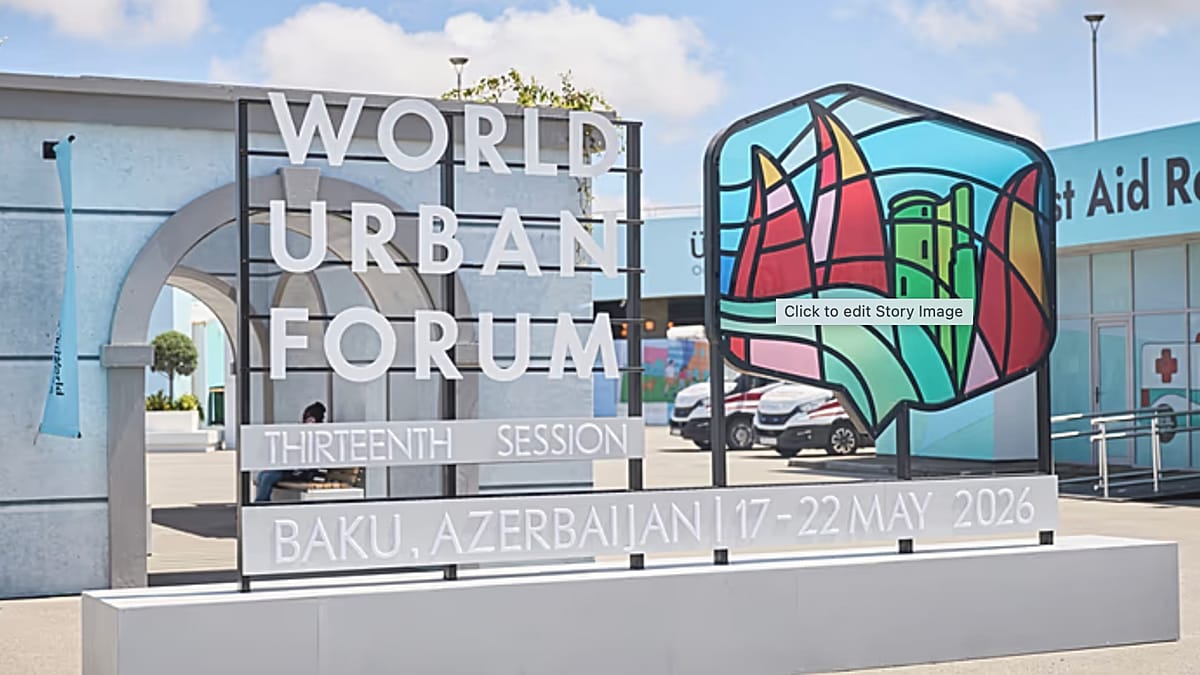
At the World Urban Forum in Baku, World Bank Senior Economist Mark Roberts delivered a clear message to governments that often view urban growth as a challenge: no country has ever achieved full development without urbanising. Speaking to Euronews, Roberts argued that cities are engines of opportunity, not liabilities.
Roberts emphasised that the scale of investment required, particularly in Africa, far exceeds the capacity of any single actor. "When it comes to urban infrastructure, the financing needs are tremendous for Africa in particular, as well as all the very fast-urbanising regions," he said. "No one agency, donor organisation or the public sector by itself is sufficient. It's really about catalysing finance from a range of different sources, including from the private sector."
The forum, which runs from 17 to 22 May under the theme "Housing the world: Safe and resilient cities and communities," has drawn more than 40,000 delegates from 182 countries. For the first time, Azerbaijan convened a dedicated session at heads of state level. The event is one of the largest in the forum's history, reflecting the urgency of urban challenges worldwide.
Urbanisation as Opportunity, Not Threat
Roberts acknowledged the common complaints about urban growth—traffic congestion, rising land prices, housing strain—but reframed them as signs of success. "We get traffic congestion within cities, land prices tend to increase, but that's because cities are attracting people," he said. "And that attraction of people to cities provides these tremendous opportunities in terms of economic growth and job creation." He added: "Urbanisation is not something to be feared."
However, not everyone shares this optimism. Experts and local leaders argue that rapid, poorly managed urbanisation in Africa and South Asia has produced vast informal settlements, worsening inequality and environmental degradation. Dr Moges Tadesse, chief resilience officer for the city of Addis Ababa, warned that the pressures of rapid urban growth are already outpacing governments' ability to respond. "Climate change is a global challenge, but it doesn't affect only housing. It affects the economy, it affects also the human life, and it is very disastrous," he told Euronews, calling for greater international investment to help vulnerable countries absorb costs generated largely by wealthier nations.
Roberts also cited flooding and extreme heat as threats already disrupting how cities function. These climate risks are particularly acute in fast-urbanising regions where infrastructure is often inadequate.
The World Urban Forum, established by the UN General Assembly in 2001 alongside UN-Habitat, has been held in a different city every two years since its first edition in Nairobi in 2002, which drew around 1,200 participants. Previous host cities include Barcelona, Vancouver, Rio de Janeiro, Abu Dhabi, Katowice and Cairo. The current session in Baku underscores the global nature of urban challenges and the need for cross-border solutions, as highlighted in related coverage.
For European readers, the debate carries particular resonance. Many European cities—from Paris to Warsaw—face their own housing crises and infrastructure strains, though from a different starting point. The lessons from Africa's rapid urbanisation may inform how European policymakers approach densification, climate adaptation, and public-private partnerships. As Roberts noted, the financing gap is not unique to the Global South; it is a universal challenge that requires innovative solutions.
The forum's focus on safe and resilient cities also connects to broader European priorities, such as the EU's Urban Agenda and the European Green Deal. The global housing crisis demands coordinated action, and Baku has become a key venue for that dialogue.