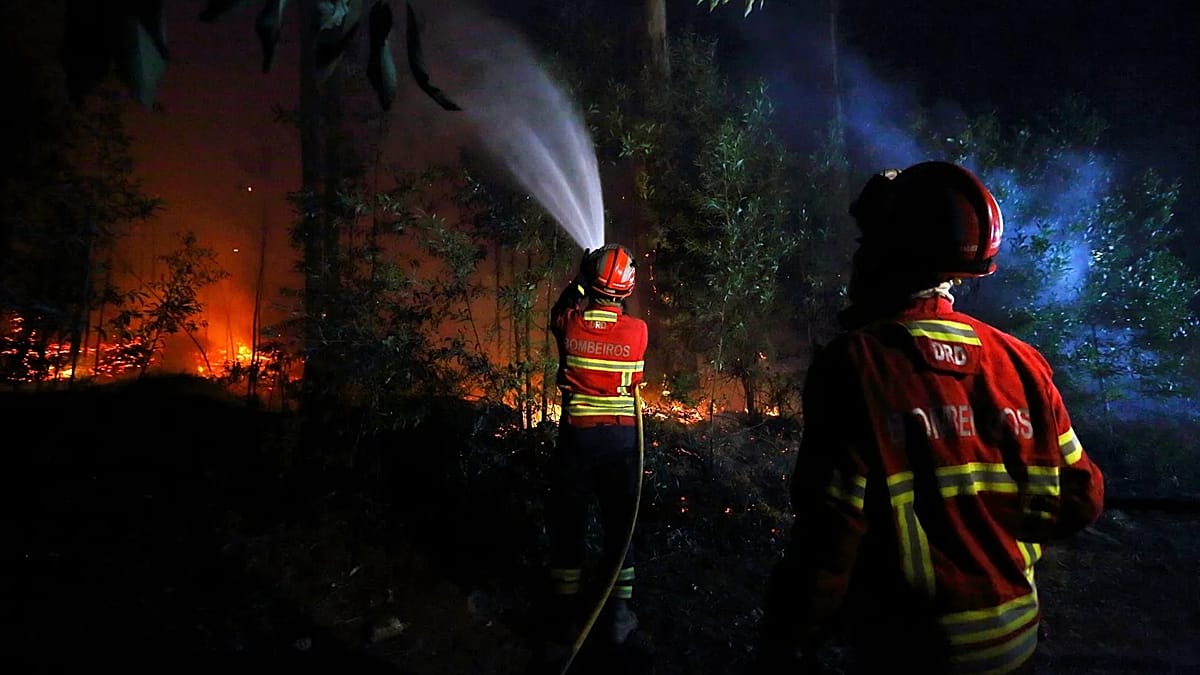
Portugal is deploying more than 2,000 emergency personnel and around 20 aircraft to combat a series of rural fires that have flared up over the past few days, according to the country's Civil Protection authority. The fires come amid a prolonged spell of hot, dry weather that has put much of the mainland on high alert.
By mid-afternoon on Tuesday, three significant incidents were still active. The most worrying remains the fire in Torre de Moncorvo, in the northeastern district of Bragança, which started on Saturday. More than 400 firefighters, backed by over 140 vehicles and four aircraft, were working to contain the blaze. Local mayor José Meneses told public broadcaster RTP that authorities hoped to declare the fire under control within hours and then move into the mop-up phase. Since Saturday, more than 2,000 hectares have been scorched in the area.
Fires in Arouca and Santo Tirso
Another fire demanding attention is in Arouca, in the northern coastal district of Aveiro, which broke out on Monday night. By Tuesday afternoon, over 300 firefighters, around a hundred vehicles, and two aircraft were deployed. The fire, burning through scrubland, had four active fronts in the morning, according to SIC Notícias. Civil Protection has taken preventive safety measures in some communities to protect homes and lives.
In Santo Tirso, in Porto's metropolitan area, about 200 personnel, supported by more than 60 vehicles and one aircraft, were fighting a fire that started late Monday afternoon. It has already consumed over 900 hectares.
The Portuguese Institute for Sea and Atmosphere (IPMA) has placed nine districts under an orange warning until 18:00 Tuesday, with the rest of mainland Portugal—except Lisbon, Setúbal, and Faro—under a yellow warning. The National Authority for Emergency and Civil Protection warned of maximum temperatures above 40°C in several regions, accompanied by low air humidity across most of the territory.
The northern and central inland regions, where temperatures are expected to be highest, face a very high to maximum risk of rural fire. Authorities are urging residents to adopt preventive measures, such as avoiding open flames and reporting any signs of smoke immediately.
Prime Minister Luís Montenegro, speaking after a meeting on the fire situation, warned that the country still faces "weeks of heightened complexity." He stressed that Portugal is "under high risk, which places a duty of care on everyone" to reduce the impact of the fires. He described 2026 as "another tough year" for forest fires but insisted that the operational response is "the largest ever." According to government figures, the burnt area so far this year is about four times less than in 2025.
Montenegro also praised Luís Neves, the minister for internal administration, who has been embroiled in controversy but attended Tuesday's meeting at Civil Protection headquarters. The prime minister said Neves had done "an absolutely extraordinary job" with a "strong sense of responsibility" in coordinating resources.
The fires in Portugal are part of a broader pattern of extreme wildfire activity across southern Europe this summer. In neighbouring Spain, fires have burned thousands of hectares in Aragon, while other countries have also faced severe blazes. The European Union has mobilised firefighting aircraft and personnel through its Civil Protection Mechanism to assist affected member states.
As the heatwave persists, experts warn that climate change is increasing the frequency and intensity of such fires. Portugal, which has suffered devastating wildfires in recent years, has invested in better prevention and response, but the challenge remains immense. The coming weeks will test the country's resilience and the effectiveness of its emergency services.