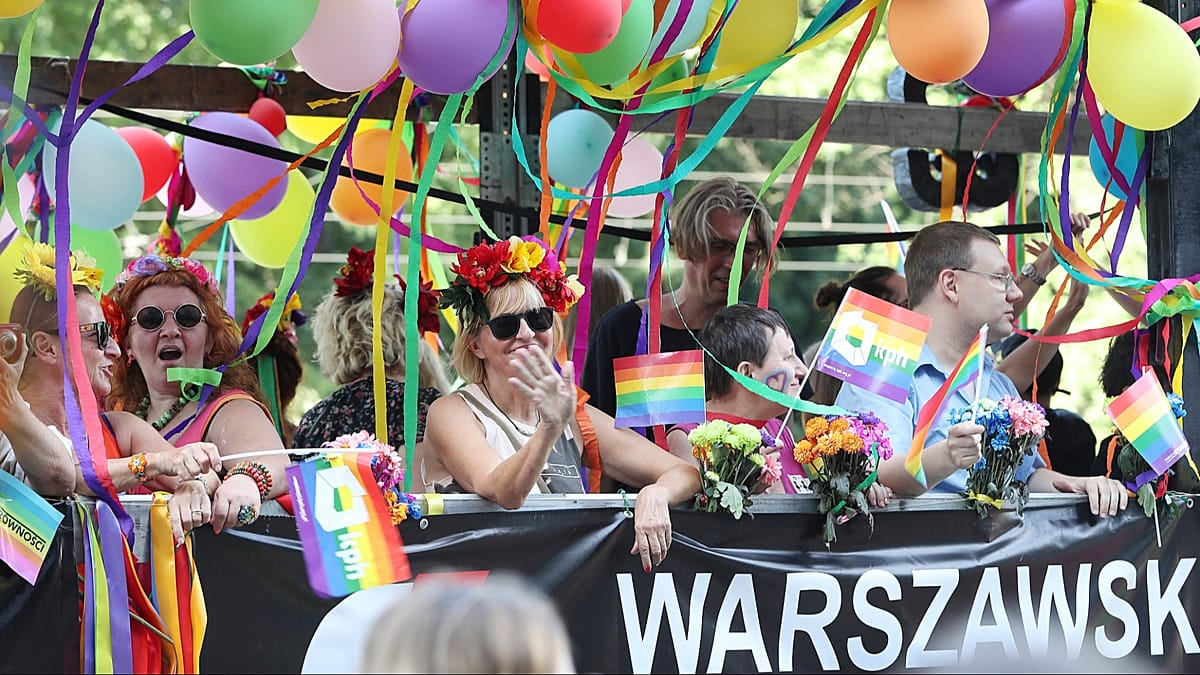
Warsaw made history on Thursday by registering its first same-sex marriage, a direct consequence of recent rulings from the European Union's highest court and Poland's Supreme Administrative Court. The move marks a significant step for LGBTQ+ rights in a country where same-sex marriage and civil partnerships remain illegal under domestic law.
Mayor Rafał Trzaskowski confirmed the development, stating: “This morning we issued the first transcription of a marriage certificate for a same-sex couple, in accordance with the court rulings.” He added that the city would proactively recognize other Polish same-sex marriages registered elsewhere in the EU, even without specific court orders.
EU Court Precedent
In November, the Court of Justice of the European Union (CJEU) ruled that Poland must register same-sex marriages that were legally performed in other EU member states, even if Polish law does not permit such unions. The decision stemmed from a case involving two Polish men who married in Germany. In March, Poland's Supreme Administrative Court cited the CJEU ruling when ordering authorities to recognize that marriage.
Prime Minister Donald Tusk addressed the issue on Tuesday, apologizing “to all those who, for many years, felt rejected and humiliated.” He appealed to Polish officials, regardless of their personal views, “to respect the dignity of each individual and to remember that these people live around us, among us, near us, and that they deserve the same feelings of respect, dignity and love as any other person.”
Despite these developments, the rulings do not compel Poland to legalize same-sex marriage domestically. Tusk's government, which came to power with a promise to introduce civil unions for same-sex couples, has faced resistance from conservatives within his own coalition and from President Karol Nawrocki, a staunch Catholic. Two motions to introduce civil partnership bills have failed due to lack of support from more conservative lawmakers.
Public opinion, however, appears to be shifting. An Ipsos+ poll from last year found that 67% of Poles support same-sex marriage or legal recognition of unions for LGBTQ+ couples. This aligns with broader European trends, where many countries have moved toward marriage equality or civil partnerships.
The registration in Warsaw is a practical application of EU law, reinforcing the principle that member states must respect rights acquired in other member states. It also highlights the ongoing tension between national legislation and EU legal frameworks, a dynamic seen in other policy areas such as trade disputes—for instance, Poland recently took its disagreement over the EU-Mercosur trade deal to the European Court of Justice.
For LGBTQ+ activists in Poland, the registration is a hard-won victory after decades of struggle. While the path to full equality remains blocked by political and religious opposition, the EU's intervention has provided a tangible breakthrough. As Warsaw leads the way, other Polish cities may follow, further chipping away at the legal barriers that have long marginalized same-sex couples.