A senior US defence official has cast doubt on the effectiveness of Ukraine's long-range strikes inside Russia, arguing that they have done little to change the course of the war and may have strengthened domestic support for the Kremlin. The remarks, made at NATO headquarters in Brussels, have triggered a sharp rebuke from key European allies.
Elbridge Colby, the US Under Secretary of Defence for Policy, told a meeting of the Ukraine Defence Contact Group on Tuesday that Washington's assessment is that such strikes "have not been effective in driving an end to the war, nor do they contribute to blunting Russia's advances on the front line." He went further, suggesting that attacks targeting civilian infrastructure, such as the Wildberries warehouse complex, "have actually probably hardened the Russian public's resolve and the Kremlin's own willingness to escalate."
Colby argued that future support for Kyiv should concentrate on "enabling and advancing Ukraine's ability to hold the line of battle and where possible make gains," rather than pursuing a strategy of deep strikes that he described as ineffective.
European allies push back
The US position drew immediate criticism from European defence leaders. German Defence Minister Boris Pistorius called the warning "quite a stupid thing," while British Defence Secretary Wes Streeting expressed confidence that Ukraine's long-range operations have "helped to degrade Putin's war machine, buying time and saving lives."
Their comments reflect a broader divide between Washington and some European capitals over how best to support Ukraine as the war enters another winter. While the US has increasingly urged Kyiv to focus on defensive operations, European allies have been more willing to endorse aggressive strikes on Russian soil, particularly against military and energy targets.
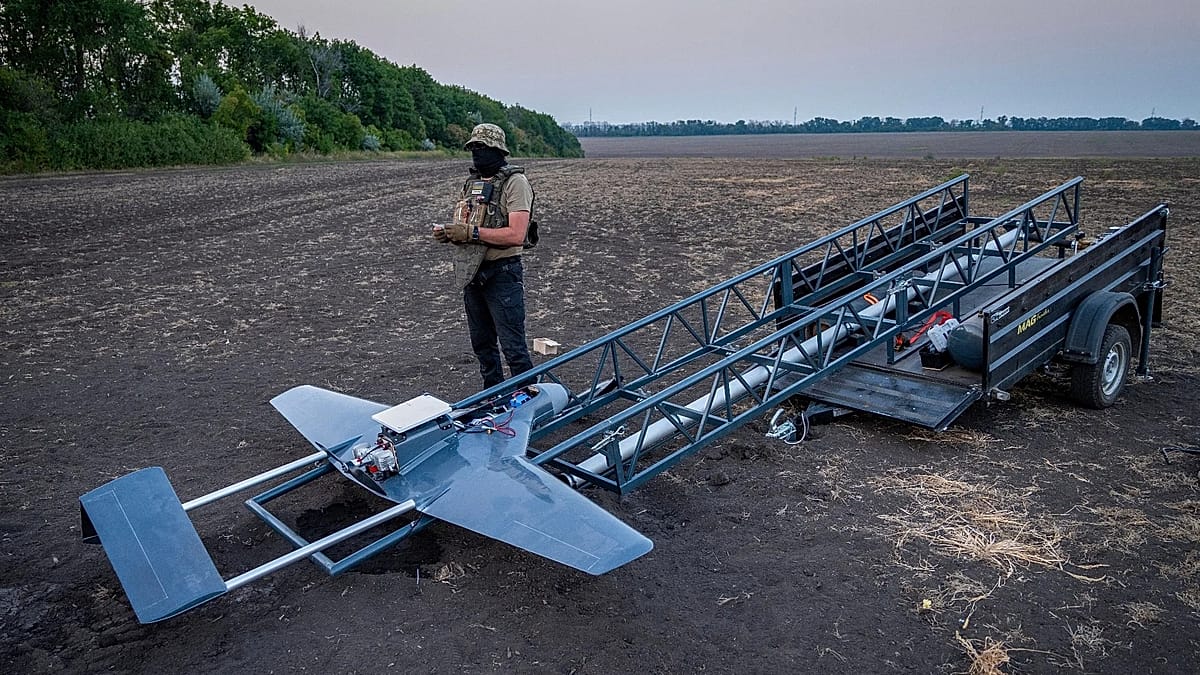
Ukraine has used its expanding fleet of drones to hit oil refineries, terminals, and air bases deep inside Russia, aiming to disrupt the country's economy and logistics. President Volodymyr Zelenskyy has repeatedly defended these tactics, insisting they are essential to weakening Moscow's ability to sustain its invasion.
The debate comes as Zelenskyy renewed his appeal for faster deliveries of air defence systems. Speaking via video link to the Brussels meeting, he asked for Patriot and IRIS-T interceptors "from the stocks you already have right now," and specifically urged the United States not to delay shipments. He also said Ukraine needs an additional 40 F-16 fighter jets to bolster its air defences.
These requests underscore the urgency of the moment. Ukraine is bracing for another brutal winter, with Russian forces expected to intensify attacks on the country's energy grid in an attempt to break civilian morale. Moscow has used this tactic in previous winters, and there is little sign it will change course.
The friction between Washington and its European partners is not new. Earlier this year, President Donald Trump reportedly pressed Ukraine to halt strikes on Russian oil refineries, citing concerns about rising global diesel prices. That pressure has now been formalised in the Pentagon's public assessment, which some European officials see as a concession to Russian narratives.
For now, the alliance remains publicly united in its goal of supporting Ukraine, but the disagreement over deep strikes highlights the growing difficulty of maintaining a common strategy. As the war grinds on, European capitals are increasingly asserting their own views on how to bring it to an end, even when those views clash with Washington's.
The coming months will test whether the transatlantic consensus can hold. With winter approaching and the front line largely static, the debate over long-range strikes is likely to intensify, not fade.