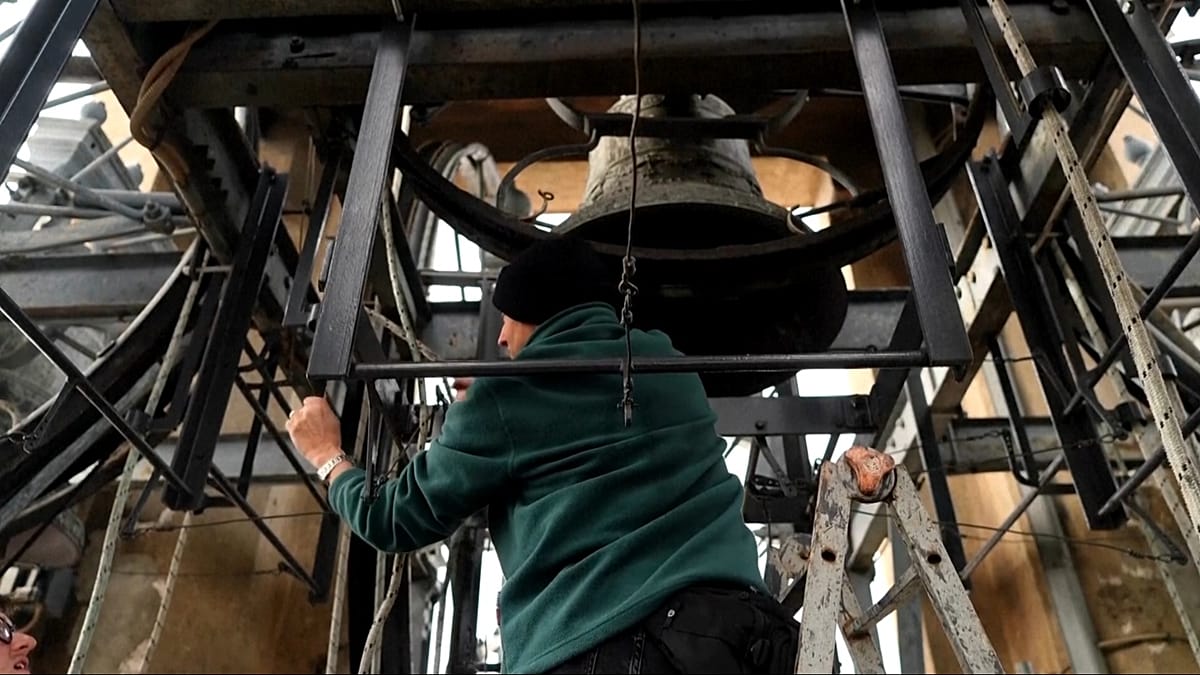
In the quiet town of Bellusco, Lombardy, the bells of the Church of Saint Martin the Bishop ring out with a distinctly human touch. Here, a new generation is pulling the heavy ropes, determined to keep alive a centuries-old craft that is rapidly disappearing across Europe.
Manual bell ringing, once a common feature of village life, has been largely replaced by automated systems that chime with mechanical regularity. But a small but passionate community, led by the Federation of Ambrosian Bell Ringers, is fighting back. Corrado Codazza, the federation's president, insists that bells are not just loud objects but musical instruments deserving of the same respect as any orchestral piece. "We are protecting a cultural heritage that was on the verge of vanishing," he says.
The federation has attracted several dozen enthusiasts, more than half of them under 30. For these young Italians, bell ringing is not a nostalgic hobby but a demanding discipline. It requires physical strength, precise timing, and the ability to follow a conductor's cues—much like playing in an orchestra. Training happens inside the bell towers themselves, where novices gradually learn to control the swinging bells.
Simone Malinverno, 21, recalls his own introduction: "You start knowing little to nothing, perhaps having watched a few videos online to get an idea of what it's like, before stepping into the world of manual bell ringing."
An art of improvisation
What sets manual ringing apart from automation is its inherent creativity. While a machine repeats the same sequences endlessly, a human conductor can introduce variations, change rhythms, and improvise. Alessandro Dameno, a 28-year-old computer programmer, appreciates this uniqueness. "I like to think that people notice when the bell tower is playing something different," he says. "While an automated system always delivers the exact same rendition, a manual performance incorporates the inventiveness of the conductor, who may call upon the bells in a different sequence, ensuring there is always something new. No two performances are ever the same."
This creative aspect has helped attract a younger audience, many of whom discover the craft through social media or local festivals. The federation organizes workshops and public performances, turning bell towers into stages for a living tradition.
The significance of this effort was recognized internationally in December 2024, when UNESCO added manual bell ringing to its list of intangible cultural heritage. The designation acknowledges not only the skill involved but also the role it plays in community identity across Europe.
For the ringers of Bellusco, the recognition is both a validation and a responsibility. "We are not just preserving a technique," says Codazza. "We are keeping alive a dialogue between the past and the present, between the tower and the town square."
As automated systems continue to spread, the young ringers of northern Italy offer a reminder that some traditions are worth the effort of keeping alive. Their dedication ensures that the bells of Lombardy—and beyond—will continue to speak with a human voice.