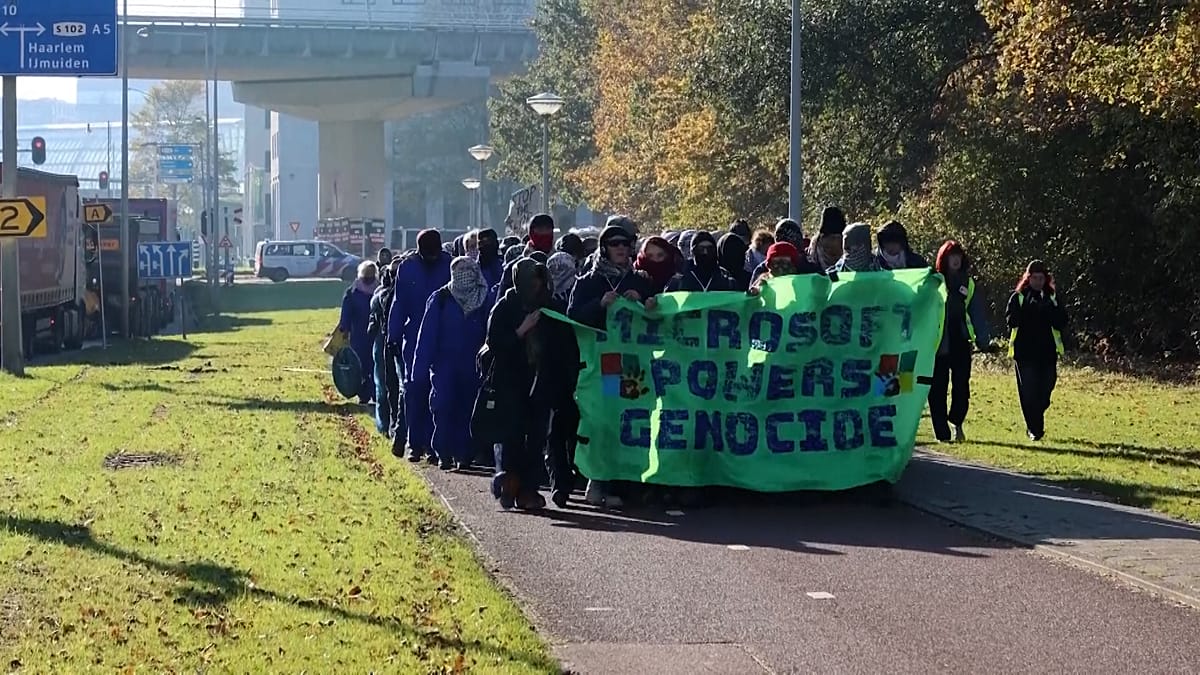
On 6 November, a group of protesters forced their way into a construction site in Amsterdam where a new data centre for Microsoft is being built. The activists climbed cranes and displayed banners criticising artificial intelligence and accusing the tech giant of complicity in the conflict in Gaza.
The action, which took place in the Dutch capital, highlights growing European opposition to the rapid expansion of data centres, which are seen as both energy-intensive and emblematic of the unchecked power of Big Tech. Similar concerns have already prompted campaigners across Europe to demand a freeze on new data centres.
Protest tactics and demands
Video footage from the scene showed demonstrators scaling the cranes and hanging banners that read "AI kills" and "Stop Microsoft's genocide". The group, which appears to be affiliated with climate and social justice movements, said the protest was aimed at drawing attention to the environmental cost of AI and to Microsoft's business relationships in the Middle East.
Microsoft has not yet commented on the incident. The company has previously stated that it is committed to sustainable practices and to human rights, but activists argue that its cloud and AI services are being used to support military operations, including those in Gaza.
The protest comes amid a wider European debate about the role of data centres in the digital economy. While they are essential for cloud computing and AI development, they consume vast amounts of electricity and water. In the Netherlands, where the grid is already under strain, local communities have repeatedly objected to new data centre projects.
Similar tensions have emerged elsewhere on the continent. In the United States, a backlash against AI data centres is reshaping state politics, and in Europe, the issue is increasingly becoming a flashpoint for environmental and social activists.
Broader context
The Amsterdam protest also reflects a broader unease about the geopolitical implications of AI. As European governments and institutions debate how to regulate the technology, civil society groups are pushing for more transparency and accountability from the companies that build and operate these facilities.
Earlier this year, tech giants and green groups drafted data centre guidelines in the US, but similar voluntary frameworks have yet to gain traction in Europe. Meanwhile, the financial markets have shown signs of nervousness about the sustainability of the AI boom, with doubts about AI data centres contributing to a global sell-off.
For now, the protest in Amsterdam serves as a reminder that the physical infrastructure of the digital age is not immune to public scrutiny. As the Netherlands prepares for a new government, the incident may add pressure on policymakers to reconsider the country's stance on data centre development.
The police have not reported any arrests, but an investigation is likely to follow. The construction site, located in the Amsterdam Science Park area, has been temporarily closed to assess the damage and ensure safety.